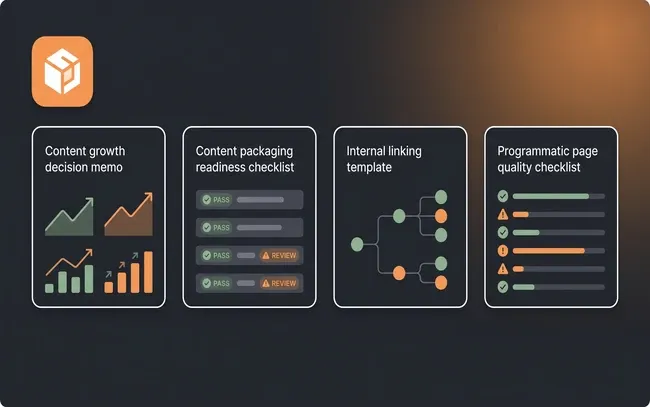
How to validate the content idea has visible demand before production
A content idea that moves directly into production without demand evidence produces polished assets that nobody searches for. The reviewer should confirm that each content idea entering the production pipeline carries proof of demand: search volume data for topic, audience question volume in communities or forums, competitor content performing above average views for channel, or existing owned-content data showing the topic attracts the intended audience. An idea selected because it is easy to produce or fits a calendar slot but lacks demand signal will consume production capacity without generating growth.
The demand check should also verify that the packaging makes the value obvious to someone encountering the content cold. The title must state a specific promise. The thumbnail must communicate that promise visually in a format that survives a three-second feed scan. If a content idea has demand but the packaging is weak, production should be paused until the title, hook, and thumbnail are revised. An audience that can't understand what they will gain from content within three seconds will scroll past regardless of production quality. The reviewer should hold publishing until both demand evidence and packaging clarity are confirmed.
- Confirm each content idea has demand proof before entering production: search volume, questions, or competitor views.
- Verify title states a specific promise and the thumbnail communicates that promise in a three-second scan.
- Test packaging with someone unfamiliar with topic to confirm the value is obvious without context.
- Hold production if either demand evidence is missing or packaging fails the three-second clarity test.
How to check channel fit and audience focus before publishing
A channel that publishes content across multiple unrelated topics confuses both the audience and the platform recommendation algorithm. The reviewer should check if channel is focused enough for audience to understand what the next video or piece of content will deliver and for platform to identify which viewers to recommend it to. A channel that publishes a cooking tutorial on Monday, a software review on Wednesday, and a travel vlog on Friday will not build an audience in any of those niches because each piece of content resets viewer expectations.
The reviewer should evaluate if content fits within a defined content lane that the audience expects and the platform algorithm can classify. If the content lane boundaries are unclear, the channel substitutes volume for focus and each new piece erodes the audience signal rather than strengthening it. The reviewer should recommend a content-lane review before increasing production cadence. A focused channel publishing twice a week will grow faster than an unfocused channel publishing daily because the platform can reliably match content to viewers who have demonstrated interest in that specific topic.
- Check channel's content fits within defined lanes the audience and platform algorithm can classify.
- Verify that a new viewer can identify what the channel delivers within five seconds of landing on page.
- Evaluate whether each piece of content strengthens the audience signal or resets viewer expectations.
- Recommend a content-lane review before increasing cadence if niche boundaries are unclear or overlapping.
How to audit repurposing quality across distribution channels
Content repurposing fails when derivative assets preserve the format of the original without adapting to consumption pattern of target platform. A long-form video transcript posted as a blog article strips the visual demonstration that made the original valuable. A blog article read aloud as a short-form video loses the pacing and visual hooks that platform-native content requires. The reviewer should check whether each repurposed asset preserves the original context while fitting the channel where it will be distributed. The format, length, pace, and visual structure must be adapted to match what the platform algorithm and audience expect on that specific channel.
The reviewer should also verify that each repurposed asset carries a link or conversion path back to original source. A repurposing workflow that produces twenty derivative assets but none of them point back to long-form original or capture a conversion event generates reach without an outcome. If source context or platform fit can't be confirmed for a derivative asset, the asset should remain a draft rather than being scheduled for publication. Publishing repurposed content that fails the platform-fit test wastes distribution effort on content the platform will not serve to viewers.
- Check each repurposed asset for channel-specific adaptation in format, length, pace, and visual structure.
- Verify each derivative asset carries a link or conversion path back to original source content.
- Confirm the derivative asset preserves the core value of the original while fitting target platform context.
- Keep assets as drafts rather than scheduling them if source context or platform fit can't be confirmed.
How to diagnose the creative message against the buyer belief
The creative message is bridge between the content topic and the audience action. A message that addresses the wrong belief or objection produces views without conversions because the viewer consumes the content but doesn't take the next step. The reviewer should map the creative message to specific buyer belief or objection it is designed to move. The hook should address a specific audience tension. The promise should match what the content actually delivers. The proof point should provide credible evidence that the promise is real. If any of these three elements is missing or generic, the message isn't ready.
The reviewer should also check if creative message matches the landing context where the audience will encounter it. A video titled for a search query answering a specific question needs different framing than a video designed to appear in a broad recommendation feed. The intent state of the viewer is different in each context and the message must match. If the creative message can't be mapped to a specific audience belief, or if the hook, promise, and proof point don't form a coherent chain, the reviewer should hold the content and recommend a message test before publishing.
- Map creative message to specific buyer belief or objection it is designed to move or address.
- Verify hook, promise, and proof point form a coherent chain that moves the viewer toward the intended action.
- Check message matches the landing context including search intent or feed placement intent state.
- Hold content and recommend a message test if the creative can't be mapped to a specific audience belief.
How to gate the packaging and close with production approval
The final gate confirms that the packaging is clear enough for audience to understand the value promise before asset is published. The reviewer should verify the title-thumbnail pair as a unit, not as separate elements. A strong title paired with a weak thumbnail still loses the scroll. A strong thumbnail paired with a vague title earns the click but delivers a disappointed viewer who will not return. The opening hook must deliver on promise within the first few seconds. The open loop or curiosity gap must be strong enough to sustain attention through full piece. The script outline must deliver on hook promise without bait-and-switch.
The reviewer should also confirm that the packaging has been tested against production constraints. A thumbnail concept that can't be executed within the available design time, a hook that requires footage the production team can't source, or a script that exceeds target length creates a gap between packaging promise and production reality. If any packaging element is unclear, the reviewer should require revision before publication. The output should be approved only when the title, thumbnail, hook, open loop, and script outline are confirmed as coherent and producible, and the packaging has been tested against the three-second scan from a viewer unfamiliar with content.
- Verify title-thumbnail pair as a unit with both elements working together to communicate the value promise.
- Confirm the opening hook delivers on title promise within the first few seconds of the content.
- Check open loop or curiosity gap is strong enough to sustain attention through full piece.
- Test packaging against production constraints and the three-second scan from an unfamiliar viewer.
Sample Review Note
All five diagnostic gates were checked for this Content Packaging Readiness review. Content idea demand was validated with search volume, audience question data, competitor performance benchmarks, or owned-content analytics before production resources were committed, and the packaging was tested for three-second value clarity with an unfamiliar viewer. Channel fit and audience focus were confirmed by verifying content aligns within defined content lanes that the platform algorithm can classify and the audience expects. Repurposing quality was audited by checking channel-specific adaptation in format, length, and pace for each derivative asset, and each asset was confirmed to carry a link back to original source. Creative message diagnosis was performed by mapping the message to a specific buyer belief and verifying the hook, promise, and proof point form a coherent chain. The title-thumbnail pair, opening hook, open loop, and script outline were confirmed as coherent and producible before publication approval.
Recheck triggers include a content idea entering the production pipeline without demand validation, a channel that publishes content outside its established content lanes, a repurposed asset that doesn't carry channel-specific adaptation, a creative message that can't be mapped to a specific audience belief, or a packaging element that fails the three-second clarity test. If a recheck is needed, publication should remain paused until the reviewer accepts the updated evidence across all five gates.