01
Connect context
Products, reviews, campaign history, email behavior, analytics, customer language, and brand voice become the source material.

A campaign workflow for ecommerce marketers. 10X reads store, ad, email, creative, analytics, and customer signals, drafts the queue, checks the guardrails, and waits for review. You approve the move.
The marketer does not need another prompt box. The marketer needs reviewed work ready to approve.
This is the workflow shape behind Growth OS. The operating layers read the context, name the goal, draft the campaign pieces, run guardrails, and queue the exports.
Products, reviews, campaign history, email behavior, analytics, customer language, and brand voice become the source material.
Acquisition, launch, retargeting, seasonal push, or win-back. The goal decides which operating layers join the queue.
Hooks, UGC script, email and SMS draft, PDP module, offer angle, budget note, and export notes arrive as one campaign queue.
Claims, voice, offer, and destination are checked before anything leaves the queue.
Meta brief, Klaviyo draft, creator script, product-page change, analytics note, and Memory update move to the right surface.
The Growth OS example becomes marketer proof here: concrete work a founder, paid media buyer, retention operator, or creative lead can review.
Turn product proof, customer language, past winners, and analytics into fresh buyer angles the team can test.
Three scenes: old routine, product proof, payoff moment. CTA matches the product customers already repeat.
Subject line, SMS angle, segment note, and send guardrail for a retention operator to review.
Best-for row, key outcome, source review, usage caveat, and claims note for storefront approval.
The workflow is useful because it moves without pretending trust is automatic. Sensitive campaign work sits behind clear approval gates.
Every performance claim needs a source: catalog field, customer review, order pattern, or approved brand proof.
Memory checks the draft against approved PDPs, emails, ads, FAQs, and past responses.
Bundles, discounts, deadlines, exclusions, urgency language, and budget movement stay in the team's control.
The same queue can move to Meta, Klaviyo, a creator brief, storefront update, analytics note, or weekly operator queue.
The campaign starts with a growth signal, then pulls the right operating layers into the move. Each surface gets the piece it owns.
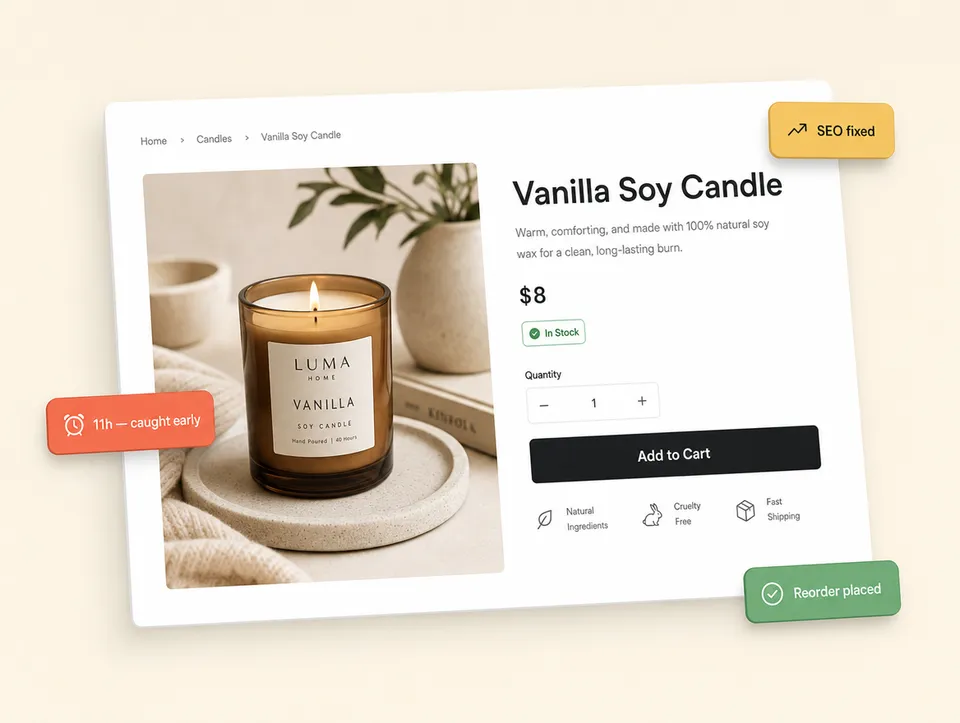
Storefront proof, product page module, reviews, and SKU context.

Fresh angles, audience note, budget note, and launch-ready brief.

Email, SMS, segment, and send guardrail.
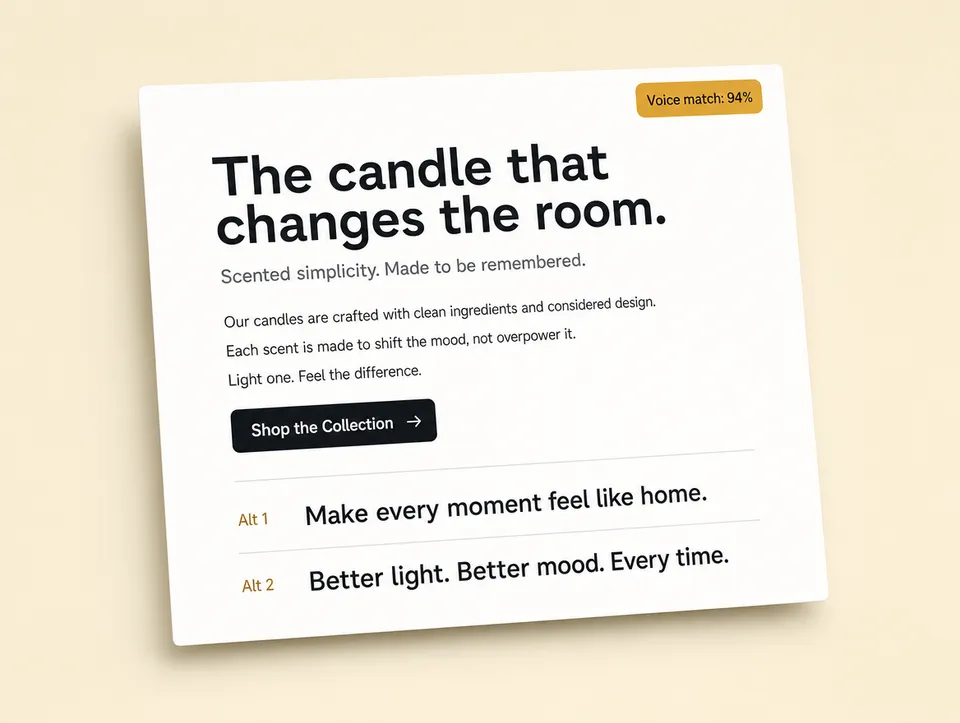
Hooks, subject lines, captions, and proof-backed copy.

Creator shot list, product frames, and brand-locked assets.
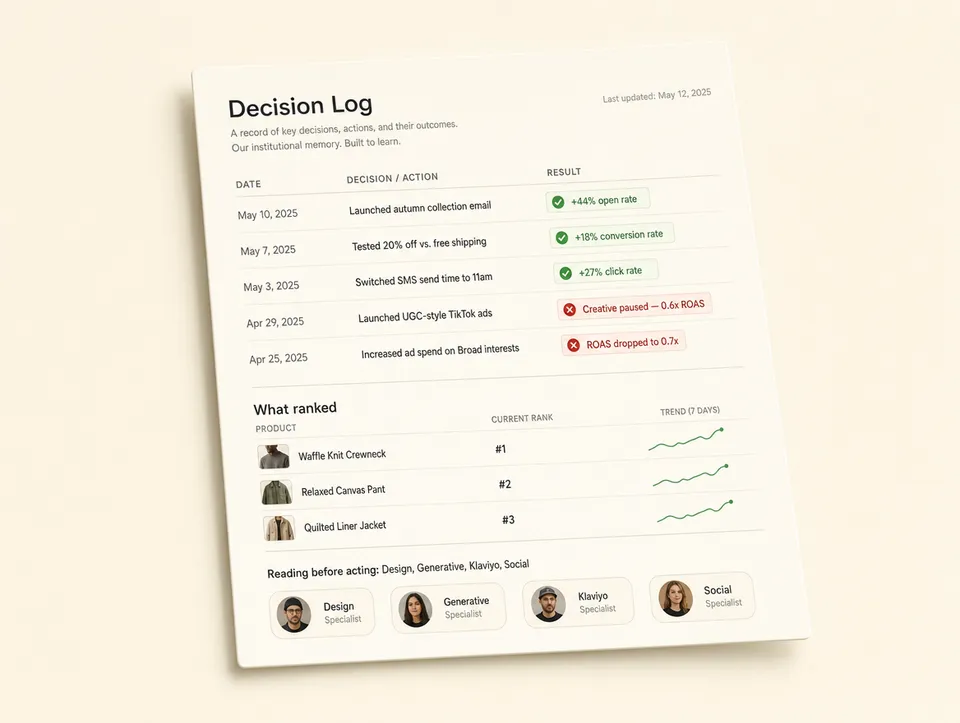
Approved language, past wins, losses, and source notes.
The workflow maps the pressure points marketers feel every week: stale creative, old flows, product-page cleanup, and customer-facing replies.
New hooks and opener frames come from product proof, not from a blank document.
Segments, offers, and subject lines are drafted from order behavior and approved customer language.
Claims, caveats, SEO modules, and product proof move into the storefront instead of staying in a spreadsheet.
Returns, order-status, and policy replies can be drafted without handing the whole customer relationship to autopilot.
The example is deliberately review-first. Growth work still needs clean ownership.
Default posture is draft and queue. Claims, offers, voice, budget, and destination stay gated until you approve the class of work. You can raise autonomy later per surface.
Products, reviews, approved brand voice, ads, email history, customer segments, policies, analytics, and the Memory attached to your ecommerce. Each source is used to ground the campaign queue.
Yes. Existing products, customers, reviews, campaigns, flows, and analytics make the read sharper. A new brand can start with a smaller Memory; an existing team brings more source material.
Built-in AI usually helps inside one surface. Growth OS crosses storefront, ads, email, creative, analytics, and Memory, then returns one reviewed queue instead of loose drafts.
For new brands. For existing growth teams. Give the OS context and approve the campaign work that comes back.
Build this workflow
Start on Starter, connect context when ready, and use the workflow page as the path from signal to approval.