Analytics Data Quality Memo
Write an analytics data quality memo that separates setup defects, reporting caveats, consent gaps, and approval-ready recommendations.
Summarize which analytics quality issues should change the recommendation, which can be monitored, and which require a setup fix before action.
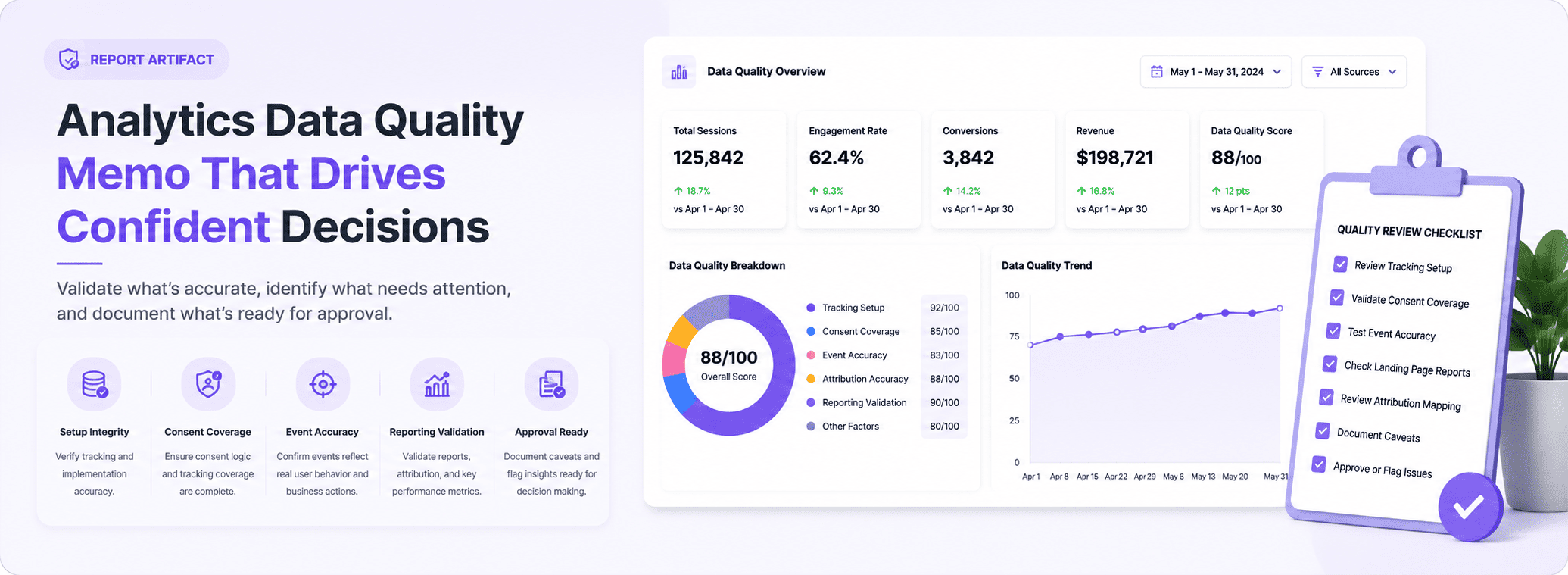
Three steps to a confident decision
Understand which business situation this page was built for and confirm it matches your current context.
Go item by item — each check has a clear pass/hold condition so you know exactly what qualifies.
Use the growth decision statement and analyst questions to brief your team and move forward with confidence.
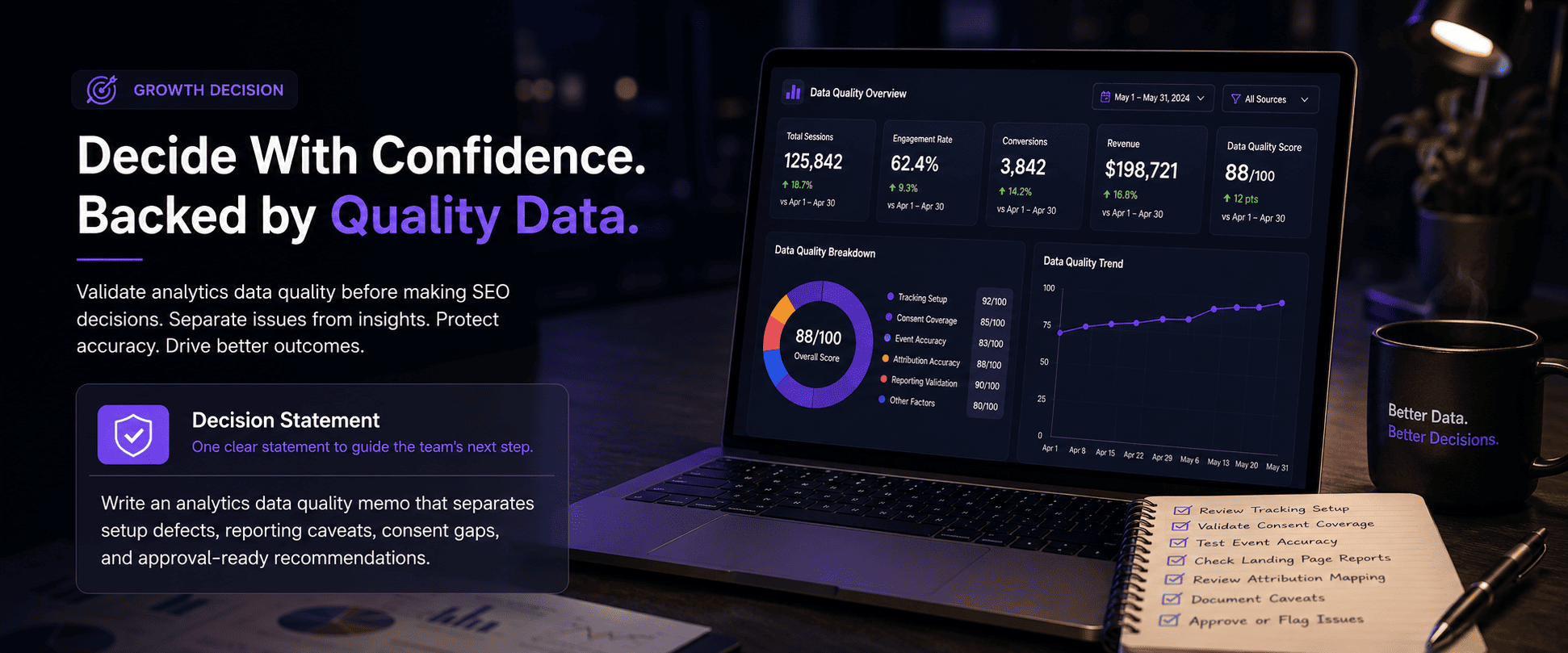
Analytics Data Quality Memo
Summarize which analytics quality issues should change the recommendation, which can be monitored, and which require a setup fix before action.

What this page helps a team decide
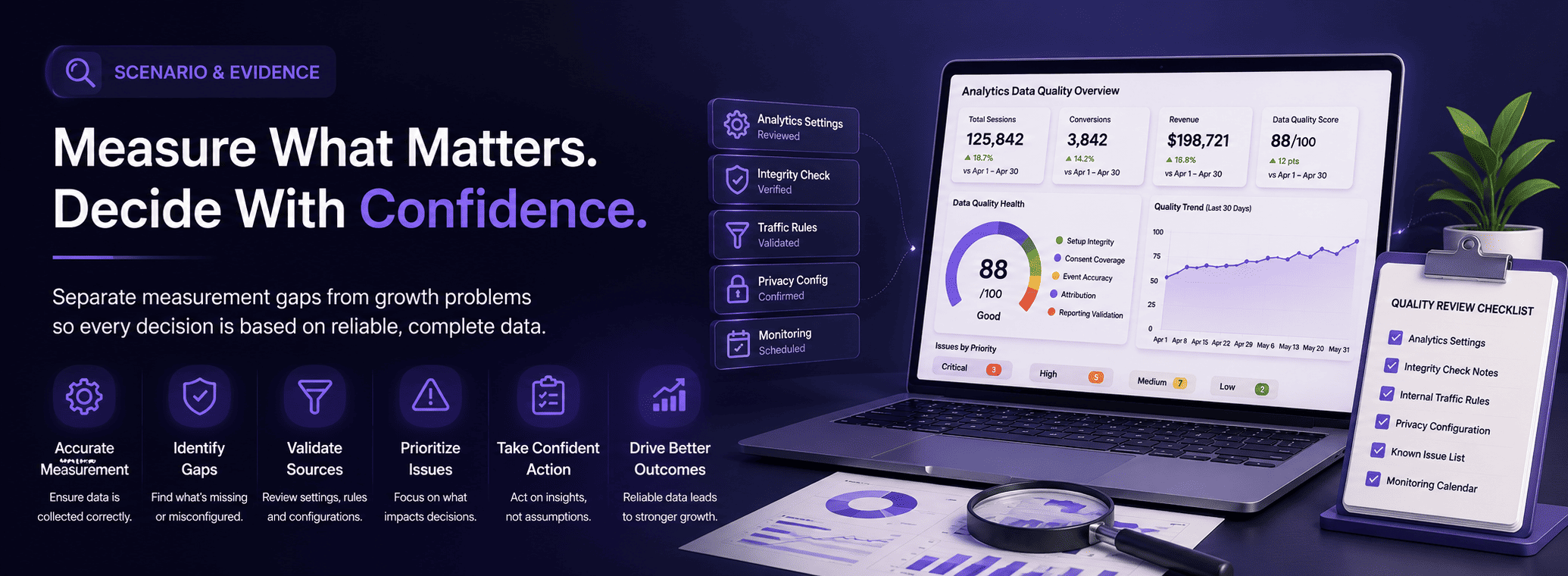
A manager needs a decision memo that separates measurement gaps from growth problems, so the next action is not based on noisy or incomplete reporting.
- Analytics settings.
- Integrity check notes.
- Internal traffic rules.
- Privacy configuration.
- Known issue list.
- Monitoring calendar.
What analysts ask before deciding
What decision is the SEO lead trying to make for analytics data: approve, hold, or send back for evidence?
Which input would make the marketer trust the analytics data read enough to change the page, link, or indexation decision?
What caveat should stay visible before the team changes the page, link, or indexation decision?
Who owns the next action if the review is approved, and what stays on hold if it is not?
What usually goes wrong
- The SEO lead treats source readiness and caveat labeling as settled before checking the connected analytics source is fresh, scoped, and reliable enough before interpreting movement.
- The recommendation skips the event and parameter decision quality caveat, so the next step looks safer than the evidence allows.
- Follow-up moves forward before the approval-gated analytics recommendation approval rule is accepted.
What 10x.in checks
- Check whether the connected analytics source is fresh, scoped, and reliable enough before interpreting movement.
- Review whether the events and parameters used in the decision match the business question and have been tested recently.
- Separate the measured finding from the action it might imply so the team can review the caveat before execution.
- Connect ad cost and creative promise to the post-click path before blaming the campaign.
- Separate decision-driving conversions from diagnostic events and caveated attribution signals.
OpenAnalyst should review Analytics Data Quality Memo, compare the decision evidence with the caveats, and keep the next recommendation approval-gated until the reviewer accepts it.
FAQ
What makes the data quality memo decision-ready instead of just descriptive?
It names the affected decision, the suspected measurement defect, the evidence behind it, the size of the caveat, and whether the next action is a setup fix, a monitoring task, or a held recommendation. In this review, the answer should be tied back to the operating rule rather than left as advice. The analyst should state what changes, what stays held, and what evidence would make the recommendation stronger.
When should a reporting issue be treated as a measurement blocker?
Treat it as a blocker when collection scope, internal traffic, consent behavior, event setup, or reporting latency could reverse the recommendation or change which team owns the fix. In this review, the answer should be tied back to the operating rule rather than left as advice. The analyst should state what changes, what stays held, and what evidence would make the recommendation stronger.
What should the memo say when the metric is directionally useful but not exact?
The memo should label the metric as directional, explain the precision or completeness caveat, and limit the recommendation to decisions that do not require accounting-level accuracy. In this review, the answer should be tied back to the operating rule rather than left as advice. The analyst should state what changes, what stays held, and what evidence would make the recommendation stronger.
Analytics Data Quality Memo for SEO Reporting and Measurement Decisions
Analytics data can look complete on the surface while still carrying important quality issues underneath. Traffic numbers may appear stable, reports may load correctly, and dashboards may show clear patterns, but decisions made on weak measurement often lead SEO teams toward the wrong priorities.
An analytics data quality memo helps separate what is verified, what requires caution, and what is ready for approval before changes are made to content strategy, reporting, or technical SEO execution.
For SEO teams, the goal is not only collecting analytics data. The goal is collecting reliable analytics data that can support ranking analysis, traffic reporting, conversion visibility, and decision-making without overstating certainty.
Why Analytics Data Quality Matters in SEO
SEO relies on data across multiple systems.
- Organic traffic reporting
- Landing page performance
- Event tracking
- Goal completion
- Conversion attribution
- Revenue tracking
- Search intent analysis
- Technical diagnostics
If one measurement layer breaks or becomes unreliable, SEO decisions may become inaccurate even when reports still appear active.
1. Review Analytics Setup Integrity
Start with the implementation layer.
- GA4 property setup
- Tag Manager configuration
- Measurement IDs
- Cross-domain setup
- Enhanced measurement
- Event trigger rules
- Page-view consistency
The purpose is to confirm data collection is functioning as expected.
2. Review Consent and Tracking Coverage
Consent directly affects visibility and reporting completeness.
- Consent banner logic
- Accepted vs declined traffic
- Regional tracking coverage
- Cookie firing behavior
- Consent mode signals
- Tracking exclusions
Missing consent coverage often creates reporting gaps.
3. Review Event Accuracy
Events should reflect real user behavior.
- Click tracking
- Form submissions
- Scroll depth
- Downloads
- Outbound links
- Conversions
- Custom events
Incorrect events create misleading insights.
4. Review SEO Landing Page Reporting
Check whether landing page analytics match expected SEO traffic patterns.
- Top entry pages
- Organic sessions
- Bounce trends
- Engagement rate
- Session duration
- Exit behavior
- Conversion paths
This validates page-level reporting accuracy.
5. Review Attribution and Channel Mapping
Organic traffic should remain clearly attributed.
- Organic search grouping
- Referral overlap
- Direct traffic inflation
- UTM conflicts
- Assisted conversions
- Revenue attribution
This helps avoid misreporting SEO impact.
6. Review Reporting Caveats
Not every report should be treated as final.
- Sampling limitations
- Delayed reporting
- Consent exclusions
- Historical gaps
- Tracking updates
- Migration changes
Documenting caveats protects future analysis.
7. Review Approval-Ready Insights
After validation, classify findings.
- Approved and reliable
- Usable with caveat
- Requires testing
- Needs implementation fix
- Blocked until verified
This turns analytics into decision-ready output.
Common Analytics Data Quality Risks
- Duplicate events
- Broken tags
- Missing consent signals
- Organic traffic misattribution
- Reporting lag
- Cross-domain errors
- Historical inconsistency
- Dashboard mismatch
Analytics Data Quality Memo Workflow
- Audit setup
- Review consent
- Validate events
- Check landing page reports
- Confirm attribution
- Document caveats
- Approve or block recommendations
Final Takeaway
An analytics data quality memo helps SEO teams separate confirmed reporting from incomplete or uncertain measurement.
That distinction improves trust in dashboards, protects reporting accuracy, and prevents teams from making decisions based on incomplete analytics evidence.
Reliable SEO decisions begin with reliable analytics data. A strong review process makes future reporting clearer, faster, and more actionable.