What Is an Analytics Debugging Decision Memo?
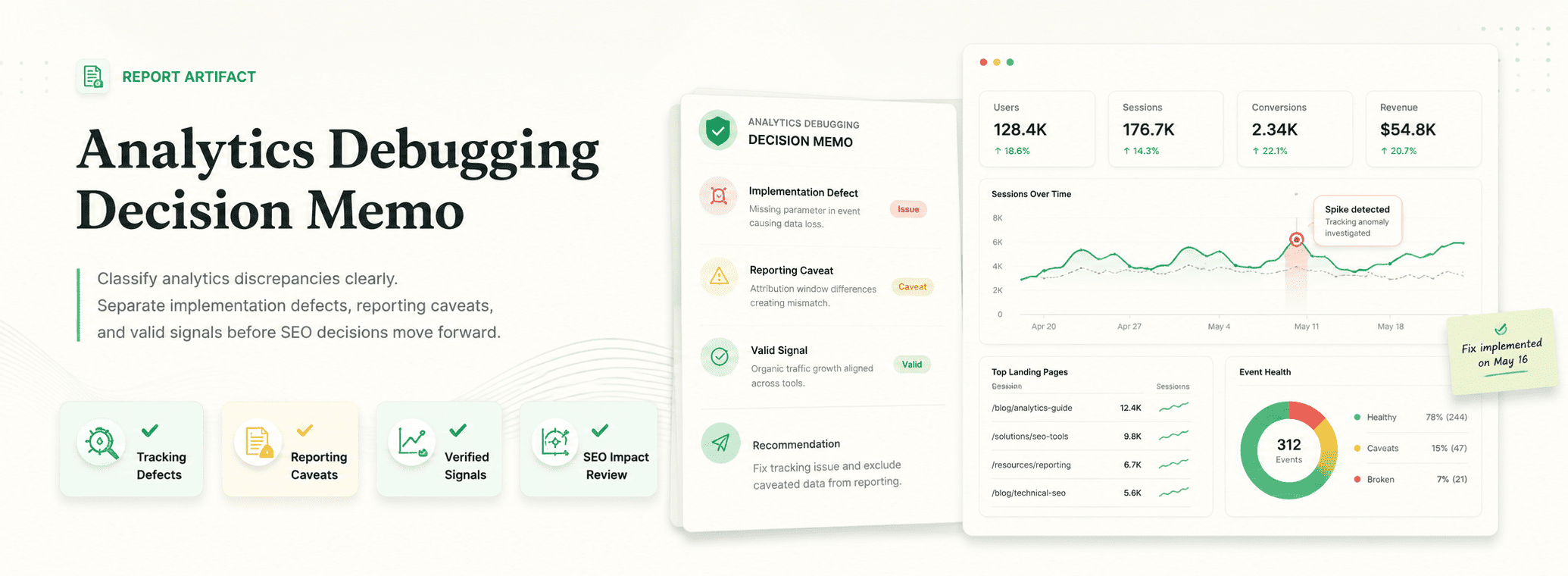
An Analytics Debugging Decision Memo is a structured review document used to determine whether unusual analytics behavior represents an implementation defect, a reporting limitation, or a valid measurement signal. Before SEO teams, growth teams, or analysts act on unexpected traffic movement, missing conversions, attribution shifts, or reporting discrepancies, they need evidence that explains what actually happened and whether corrective action is required.
Many analytics investigations fail because teams jump directly from observation to action. A traffic decline may be treated as a performance problem when the real issue is tracking failure. A missing conversion may trigger implementation work even though reporting filters excluded the affected users. The purpose of the memo is to separate observable evidence from assumptions and document whether the finding is ready to support a recommendation.
Rather than functioning as a troubleshooting log, the memo acts as a governance-controlled decision artifact. It records the evidence reviewed, documents unresolved caveats, identifies ownership, and determines whether the issue should move into implementation, remain under investigation, or be closed as expected behavior.
Why Analytics Discrepancies Require Structured Review
Analytics systems contain multiple layers of complexity. Browser behavior, consent management, tag execution order, network requests, event processing, attribution logic, reporting filters, and dashboard configuration can all influence the numbers visible to stakeholders.
Without a structured debugging process, organizations often waste time fixing symptoms instead of identifying root causes. Teams may redesign campaigns, change SEO priorities, or modify reporting workflows based on discrepancies that originate from measurement issues rather than actual user behavior.
The Analytics Debugging Decision Memo introduces a repeatable framework that ensures findings are reviewed consistently before decisions are approved.
- Validate whether the issue exists.
- Confirm where the issue occurs.
- Identify the affected reports.
- Determine the likely cause.
- Assign ownership.
- Define retest requirements.
- Document approval status.
Step 1: Validate the Observed Event
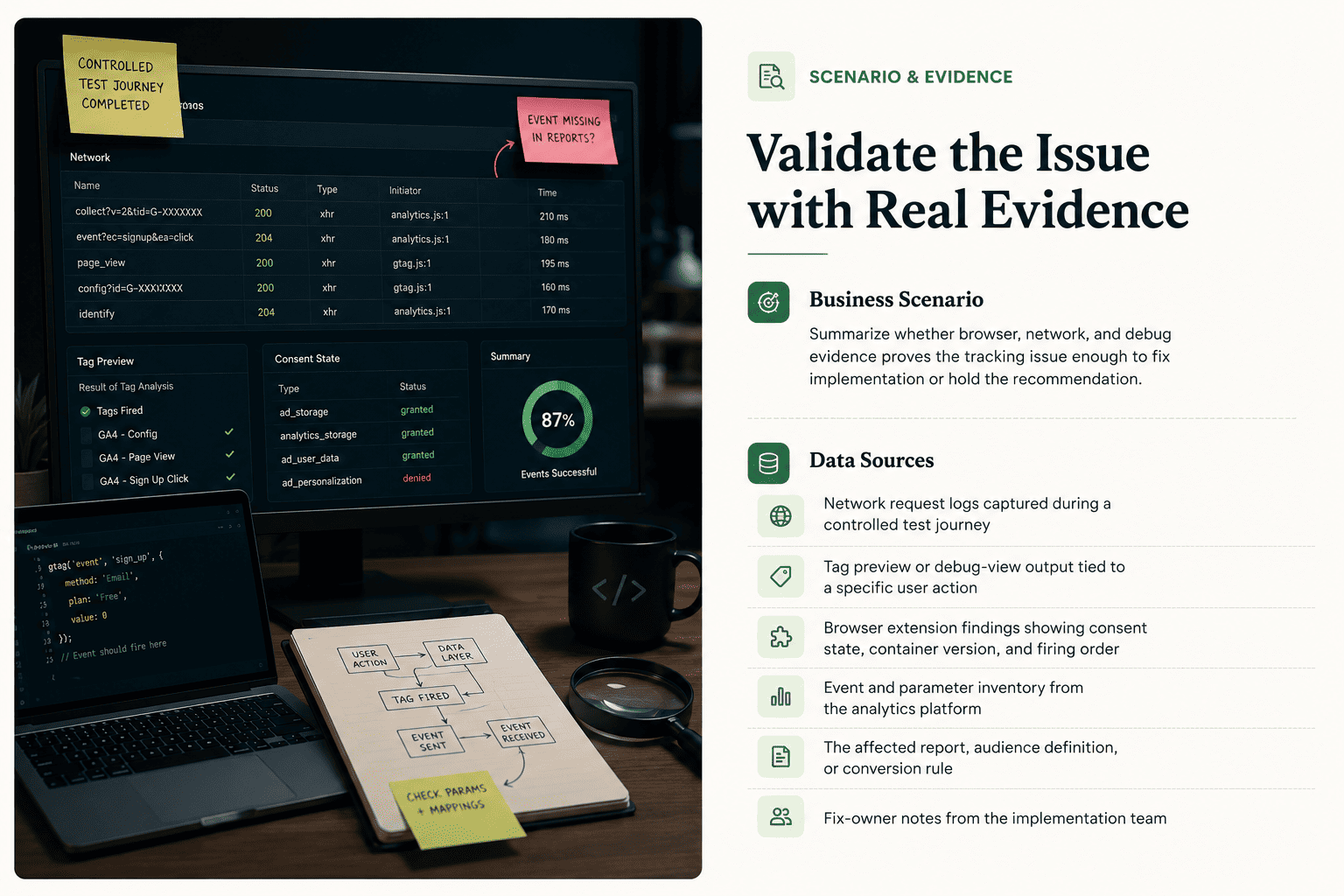
Every debugging investigation should begin by confirming that the reported discrepancy actually occurred. Assumptions based on screenshots, dashboard observations, or anecdotal reports should be replaced with evidence captured during a controlled test journey.
The review should connect:
- The observed user action.
- The expected event name.
- The associated parameters.
- The destination platform.
- The timestamp of occurrence.
If the event cannot be tied to a specific request and a specific user action, the finding should remain in investigation status rather than being treated as a confirmed defect.
Step 2: Review Browser and Network Evidence
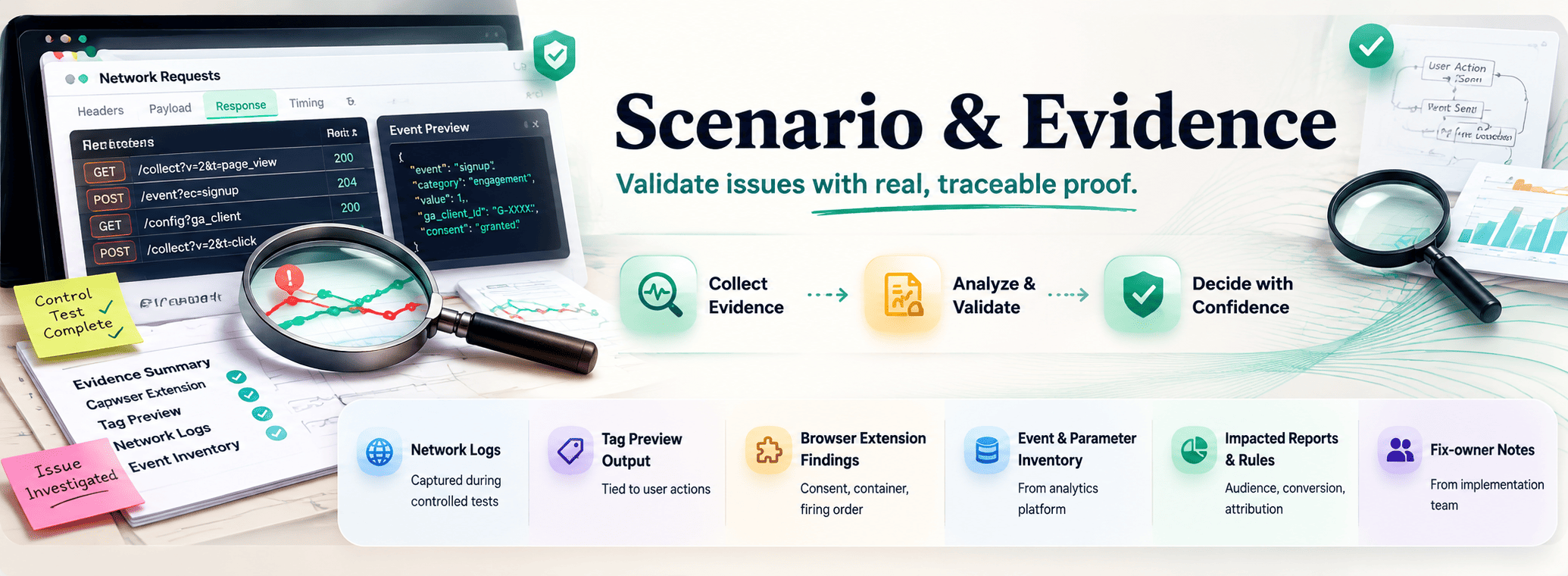
Browser-level validation provides the strongest proof that an event was attempted. Debugging teams should review actual network activity rather than relying exclusively on platform reporting interfaces.
The memo should document:
- Network requests generated during testing.
- Request payload contents.
- Parameter transmission quality.
- Consent state during execution.
- Container version and deployment status.
- Request success or failure indicators.
This stage helps determine whether the issue originates within the browser, the implementation layer, or downstream reporting systems.
Step 3: Compare Debug Evidence with Reporting Outcomes
A common source of confusion occurs when debugging tools show expected behavior while reporting systems display different results. This discrepancy does not automatically indicate a defect.
Several factors may explain the difference:
- Processing delays.
- Attribution logic.
- Consent restrictions.
- Audience filters.
- Sampling behavior.
- Custom report configurations.
- Segment exclusions.
The memo should explicitly document whether reporting differences are expected, unexplained, or confirmed defects requiring remediation.
Step 4: Classify the Finding
After evidence collection is complete, the reviewer should classify the issue. This classification drives the operational response and determines whether implementation work is justified.
Most findings fall into one of three categories:
- Implementation Defect: Tracking behavior does not match the expected specification.
- Reporting Caveat: Data is technically correct but requires interpretation constraints.
- Valid Measurement Signal: The observed movement reflects genuine user behavior.
This classification step is critical because different categories require different actions. A defect requires remediation. A caveat requires documentation. A valid signal may support a growth recommendation.
Step 5: Identify Cause, Owner, and Retest Conditions
Once a finding has been classified, the memo should translate the technical observation into an operationally actionable outcome.
The review should specify:
- Likely root cause.
- Affected events or reports.
- Implementation owner.
- Expected corrected behavior.
- Retest requirements.
- Approval conditions.
A debugging investigation without ownership often becomes a permanent backlog item. Documenting ownership ensures accountability and supports resolution tracking.
Common Causes of Analytics Debugging Escalations
Certain patterns appear repeatedly across analytics investigations and frequently trigger unnecessary concern.
- Consent-management changes.
- Tag-manager deployment issues.
- Event parameter mismatches.
- Tracking-code regressions.
- Cross-domain configuration errors.
- Attribution processing differences.
- Dashboard filter changes.
- Audience-definition updates.
- Conversion-rule modifications.
- Reporting latency.
Understanding these patterns helps teams prioritize investigations more efficiently and avoid escalating expected behavior as a critical defect.
Approve, Hold, or Escalate
The final purpose of the Analytics Debugging Decision Memo is to produce a decision-ready outcome. Every investigation should conclude with a clearly documented status.
- Approve: Evidence supports the recommendation or confirms expected behavior.
- Hold: Additional validation is required before action can be taken.
- Escalate: A confirmed implementation issue requires corrective work.
The approval status should always include the supporting evidence, unresolved caveats, assigned owner, retest requirements, and expected next action.
Why the Memo Matters Operationally
An Analytics Debugging Decision Memo is not simply a troubleshooting record. It is a governance-controlled review artifact that protects organizations from acting on incomplete investigations. By connecting technical evidence, reporting interpretation, implementation ownership, and approval status into a single framework, the memo helps teams distinguish real measurement issues from reporting noise and ensures corrective action is based on verified evidence rather than assumptions.