What Is a Spreadsheet Analysis QA Memo?
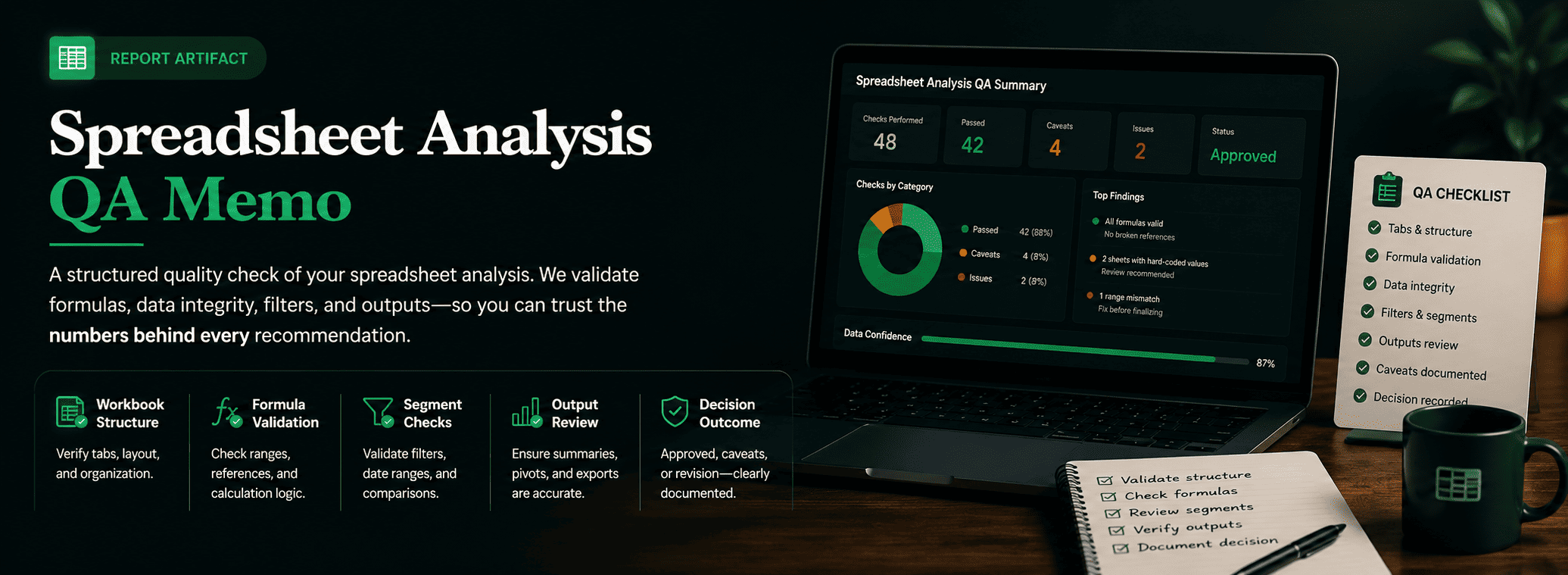
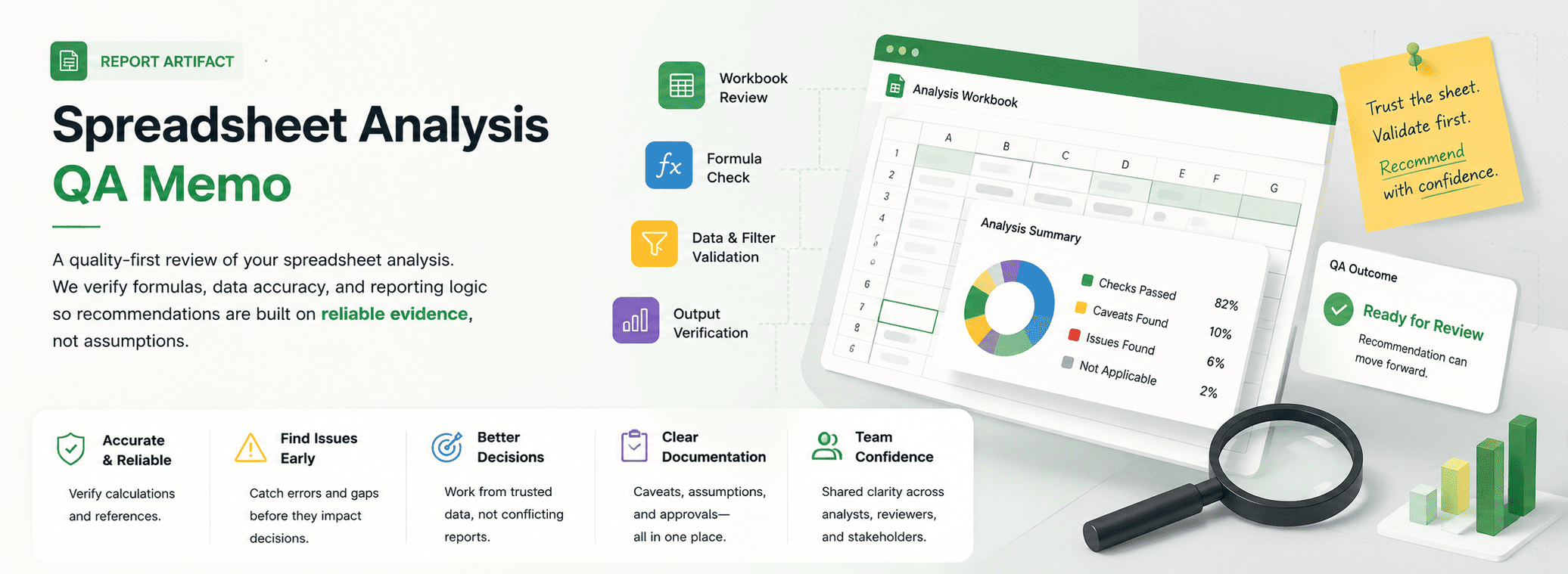
A Spreadsheet Analysis QA Memo is a structured review artifact used to determine whether spreadsheet-based marketing analysis is reliable enough to support an SEO, reporting, attribution, content, or campaign decision. Before a recommendation moves into implementation, reviewers need evidence that workbook logic, formulas, lookups, validation rules, and summarized outputs are functioning as expected.
The purpose of the memo is not to restate spreadsheet findings. Its purpose is to document which quality checks passed, which issues remain unresolved, what caveats should remain attached to the recommendation, and whether the next action should be approved, held, or sent back for additional evidence.
Workbook Structure and Data Integrity Review
The first stage of spreadsheet QA focuses on workbook integrity. Reviewers validate whether worksheets are organized correctly, source data is complete, references remain connected, and supporting tabs required for analysis are present.
- Verify worksheet naming conventions and workbook organization.
- Confirm source data imports completed successfully.
- Review hidden sheets and supporting calculations.
- Check reporting tabs against source datasets.
- Validate date ranges, filters, and segmentation logic.
If workbook structure cannot be trusted, downstream calculations and recommendations should remain on hold until integrity issues are resolved.
Lookup Validation and Join QA
Many spreadsheet-driven marketing reports rely on lookup functions to connect campaigns, landing pages, channels, keywords, audiences, or attribution records. A lookup failure can silently introduce incorrect conclusions into the final recommendation.
The QA memo should document:
- Unmatched lookup keys.
- Duplicate join values.
- Missing fallback labels.
- Lookup direction errors.
- Match-rate percentages across joined datasets.
Recommendations should remain approval-gated when lookup discrepancies affect reporting accuracy or decision confidence.
Formula Audit and Calculation Validation
Formula validation ensures that spreadsheet outputs accurately represent the underlying data. Reviewers should evaluate both calculation correctness and error-handling behavior.
- Review formula consistency across rows and columns.
- Identify broken references and circular dependencies.
- Validate totals against source data.
- Confirm expected handling of blank values and exceptions.
- Review calculated metrics used in reporting decisions.
Any unresolved calculation issue should be documented inside the memo together with its likely impact on the recommendation.
Exception Handling and Validation Controls
A spreadsheet can contain technically correct formulas while still producing unreliable outputs because of invalid user inputs or incomplete records. Validation controls help prevent this situation.
- Review data-validation rules.
- Inspect protected ranges and locked formulas.
- Identify rows that fail business rules.
- Evaluate conditional-formatting alerts.
- Document unresolved exceptions requiring review.
The memo should clearly distinguish between informational exceptions and issues that block approval.
Approval, Hold, and Send-Back Decisions
The final responsibility of the QA memo is to determine whether the spreadsheet evidence is strong enough to support the proposed action.
- Approve: Workbook integrity, formulas, lookups, and validation checks support the recommendation.
- Hold: Caveats exist that materially reduce decision confidence.
- Send Back: Additional evidence, fixes, or validation is required before review can continue.
The approval status should always identify the recommendation owner, unresolved caveats, and the next required action.
What the Final QA Memo Should Include
A complete Spreadsheet Analysis QA Memo should summarize passed checks, failed checks, unresolved caveats, exception counts, validation outcomes, approval status, ownership, and follow-up actions. This structure allows SEO teams, analysts, and stakeholders to understand whether spreadsheet evidence is reliable enough to support operational decisions.