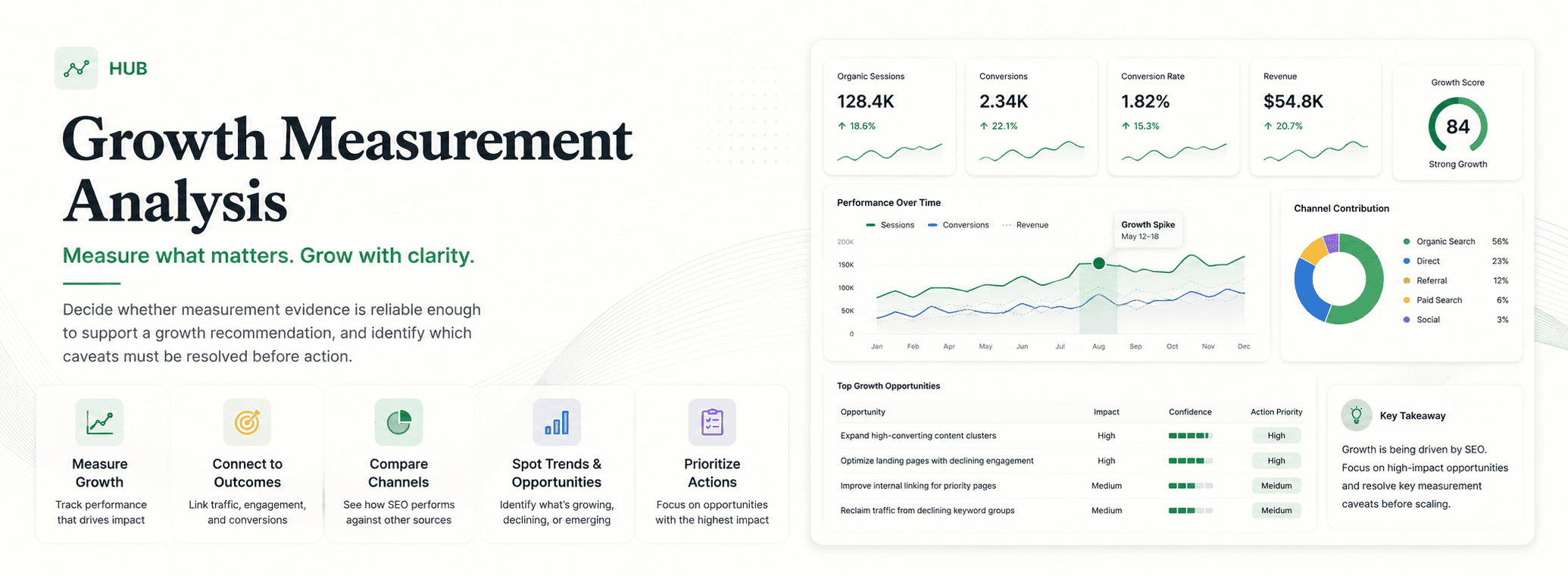
Growth Measurement Analysis
Decide whether measurement evidence is reliable enough to support a growth recommendation, and identify which caveats must be resolved before action.
Decide whether measurement evidence is reliable enough to support a growth recommendation, and identify which caveats must be resolved before action.
Three steps to a confident decision
Understand which business situation this page was built for and confirm it matches your current context.
Go item by item — each check has a clear pass/hold condition so you know exactly what qualifies.
Use the growth decision statement and analyst questions to brief your team and move forward with confidence.
Growth Measurement Analysis
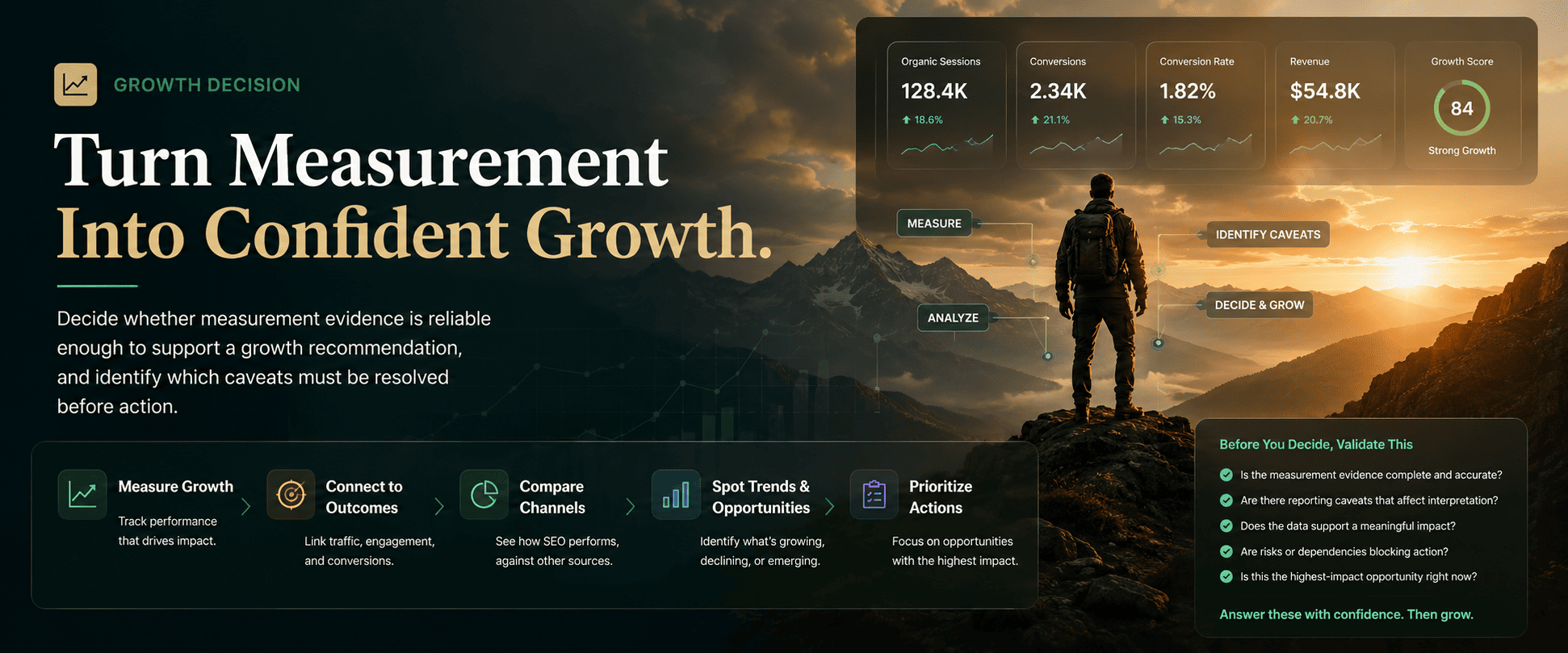
Decide whether measurement evidence is reliable enough to support a growth recommendation, and identify which caveats must be resolved before action.
What this page helps a team decide
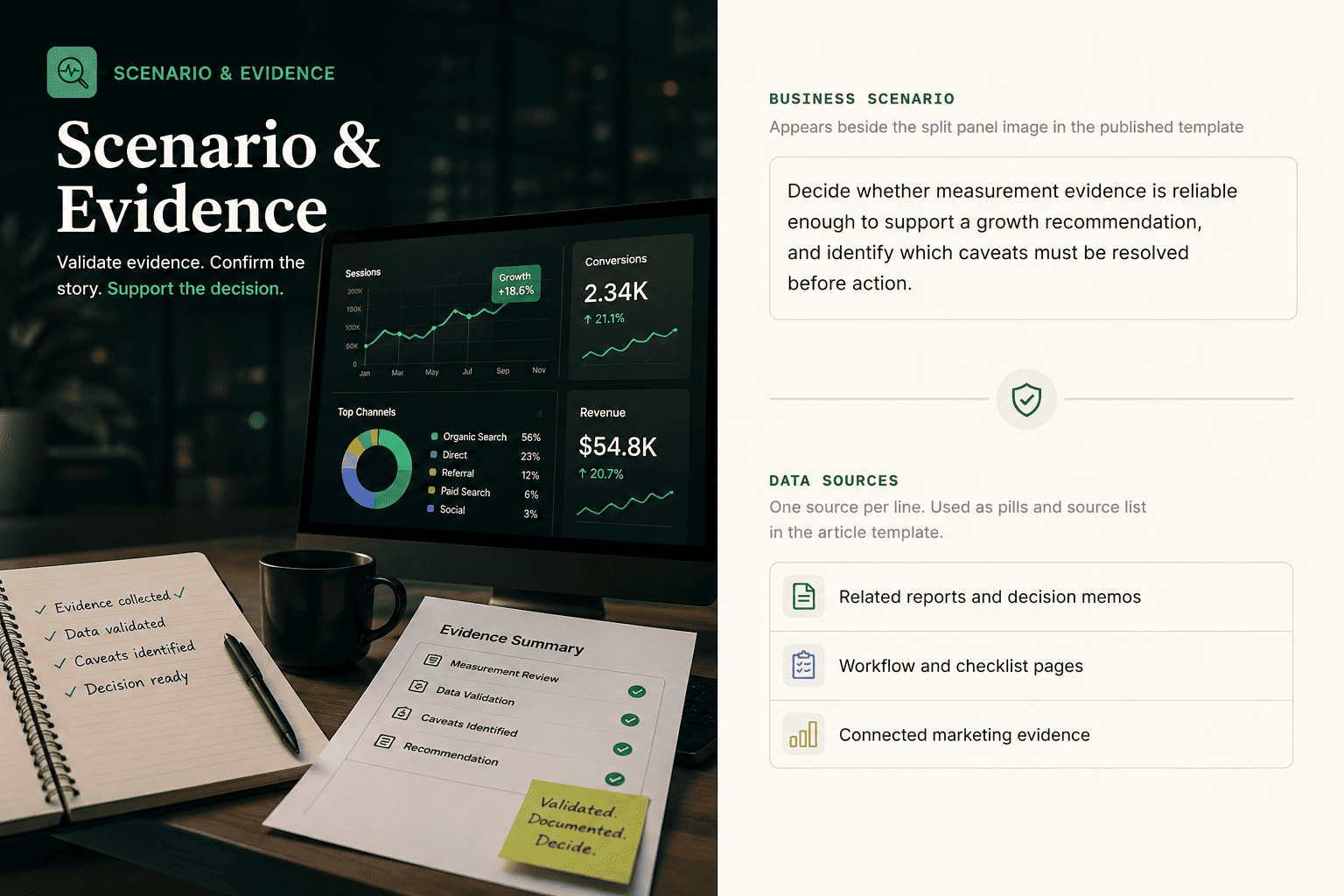
Decide whether measurement evidence is reliable enough to support a growth recommendation, and identify which caveats must be resolved before action.
- Related reports and decision memos
- Workflow and checklist pages
- Connected marketing evidence
What analysts ask before deciding
What decision should the marketer make first for growth measurement analysis: approve, hold, or investigate?
Which connected source would make the growth measurement analysis recommendation trustworthy enough to change the next marketing action?
What caveat should stay visible before spend, content, reporting, or workflow changes?
Who owns the next approved action, and what stays on hold if evidence is incomplete?
What usually goes wrong
- The marketer treats growth measurement analysis as a channel tactic before checking which source should drive the decision.
- The team changes spend, page, workflow, or reporting language before the evidence owner has accepted the caveat.
What 10x.in checks
- OpenAnalyst compares the hub's reports, workflows, and checklists to find the strongest decision input.
- OpenAnalyst keeps the approval caveat attached to the recommendation until the marketer can name the owner and next action.
Review growth measurement analysis signals, name the caveat, and draft one recommendation the marketer can approve, hold, or assign.
FAQ
What should the reviewer approve after the checklist?
For Growth Measurement Analysis, the reviewer should approve only the next step tied to evidence coverage. If the required evidence for evidence coverage is not visible, the output should be a hold note.
Can OpenAnalyst make the change automatically?
No. For Growth Measurement Analysis, OpenAnalyst can draft the recommendation or follow-up, but execution stays approval-gated.
What Is Growth Measurement Analysis?
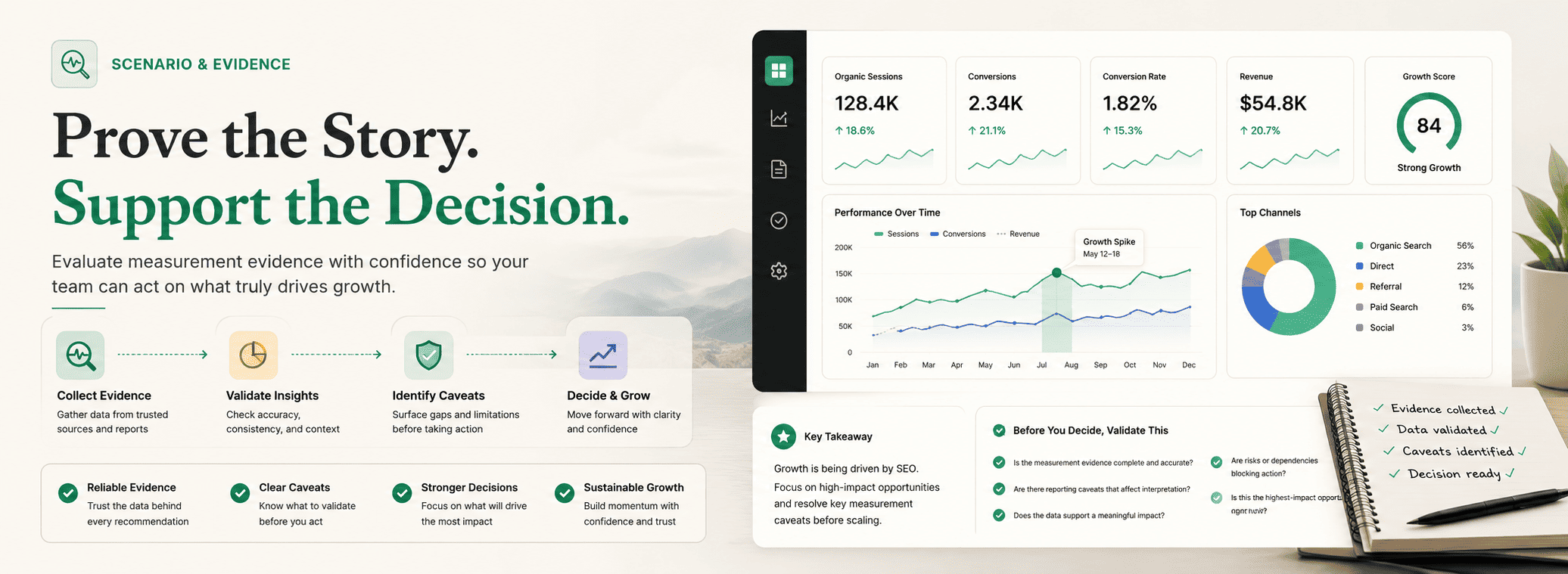
Growth Measurement Analysis is the process of determining whether performance signals, reporting outputs, attribution evidence, conversion trends, and measurement systems provide enough confidence to support a business decision. Before a team changes content strategy, SEO priorities, campaign budgets, reporting frameworks, landing pages, or tracking configurations, they need to understand whether the evidence driving the recommendation is reliable.
Many organizations struggle because performance dashboards provide movement without explanation. Traffic increases do not automatically indicate successful optimization. Conversion declines do not automatically indicate campaign failure. Growth Measurement Analysis exists to separate observable performance changes from the assumptions often attached to those changes.
This solution hub connects measurement validation workflows, reporting reviews, attribution analysis, diagnostic investigations, and decision frameworks into a structured system that helps teams determine whether a recommendation should be approved, investigated further, or held until additional evidence becomes available.
Why Measurement Confidence Matters
Most marketing decisions depend on analytics systems. SEO teams rely on search performance reports. Demand-generation teams depend on attribution models. Content marketers evaluate engagement trends. Revenue teams review conversion data. Every recommendation inherits the strengths and weaknesses of the measurement systems that produced it.
When confidence in measurement is low, organizations often invest resources in solving the wrong problem. Teams may react to reporting anomalies as if they were performance issues. They may interpret attribution shifts as changes in customer behavior. They may prioritize initiatives based on incomplete tracking implementations.
Growth Measurement Analysis reduces this risk by introducing structured review processes that evaluate data quality before recommendations move into execution.
- Validate whether tracking systems are functioning correctly.
- Review whether reports answer the intended business question.
- Identify measurement limitations before recommendations are approved.
- Separate reporting observations from operational decisions.
- Document caveats that could change interpretation.
Core Components of Growth Measurement Analysis
Reliable growth analysis requires more than dashboard review. Multiple evidence sources contribute to decision quality, and each source introduces its own strengths, limitations, and operational considerations.
The Growth Measurement Analysis framework typically evaluates:
- Traffic acquisition performance.
- Conversion measurement quality.
- Attribution reliability.
- Campaign reporting accuracy.
- Channel contribution analysis.
- SEO performance measurement.
- Audience engagement indicators.
- Tracking implementation quality.
- Data governance controls.
- Reporting reproducibility.
A recommendation should only move forward when the supporting evidence remains consistent across these measurement layers.
How Growth Measurement Supports SEO Decisions
SEO programs generate large volumes of measurement data. Rankings, impressions, clicks, sessions, engagement metrics, conversions, and assisted outcomes all contribute to decision-making. However, not every signal should carry the same weight.
Growth Measurement Analysis helps SEO teams determine whether observed movement represents a genuine opportunity, a reporting artifact, a tracking issue, or a temporary fluctuation.
- Validate organic acquisition signals.
- Review landing-page performance trends.
- Evaluate search-driven conversions.
- Compare acquisition quality across channels.
- Identify attribution conflicts.
- Assess measurement caveats before prioritization.
This approach prevents organizations from changing content, technical SEO priorities, or optimization roadmaps based on weak evidence.
Common Measurement Failures That Distort Growth Decisions
One of the primary objectives of this solution is identifying situations where measurement systems create misleading confidence. Many growth decisions fail because the underlying evidence contains hidden limitations that were never documented.
Common examples include:
- Broken tracking implementations.
- Incorrect event definitions.
- Sampling-related reporting distortions.
- Attribution model misunderstandings.
- Unexplained traffic-source reclassification.
- Conversion tracking gaps.
- Reporting configuration changes.
- Incomplete data collection.
- Segment misalignment.
- Dashboard interpretation errors.
Growth Measurement Analysis introduces governance processes designed to identify these issues before they influence operational planning.
Approval, Hold, and Investigation Framework
A central goal of this solution hub is ensuring that recommendations remain evidence-driven. Every analysis should produce a clear outcome that stakeholders can review and approve.
Most measurement reviews result in one of three states:
- Approve: Evidence quality supports the recommendation.
- Hold: Caveats materially affect confidence and require resolution.
- Investigate: Additional validation is required before a decision can be made.
This framework creates accountability around measurement quality and prevents teams from treating uncertainty as confirmation.
How Reports, Workflows, and Decision Memos Work Together
The Growth Measurement Analysis hub combines multiple operational assets into a connected review system. Reports summarize findings. Workflows explain validation procedures. Checklists standardize reviews. Decision memos document approvals, caveats, and ownership.
Together, these assets help organizations build repeatable measurement-governance processes rather than relying on isolated analytics reviews.
The result is a more reliable decision-making environment where growth recommendations remain connected to validated evidence, documented caveats, operational ownership, and measurable business outcomes.
Why Growth Measurement Analysis Matters
Growth Measurement Analysis is not simply a reporting activity. It is a decision-governance framework that helps organizations determine whether performance evidence is reliable enough to justify action.
By connecting measurement validation, attribution review, reporting governance, and approval workflows, teams can prioritize opportunities with greater confidence while reducing the risk of acting on incomplete or misleading data. The objective is not to generate more reports. The objective is to make better decisions using evidence that can withstand operational review.