Why Advanced Tag Management Readiness Matters
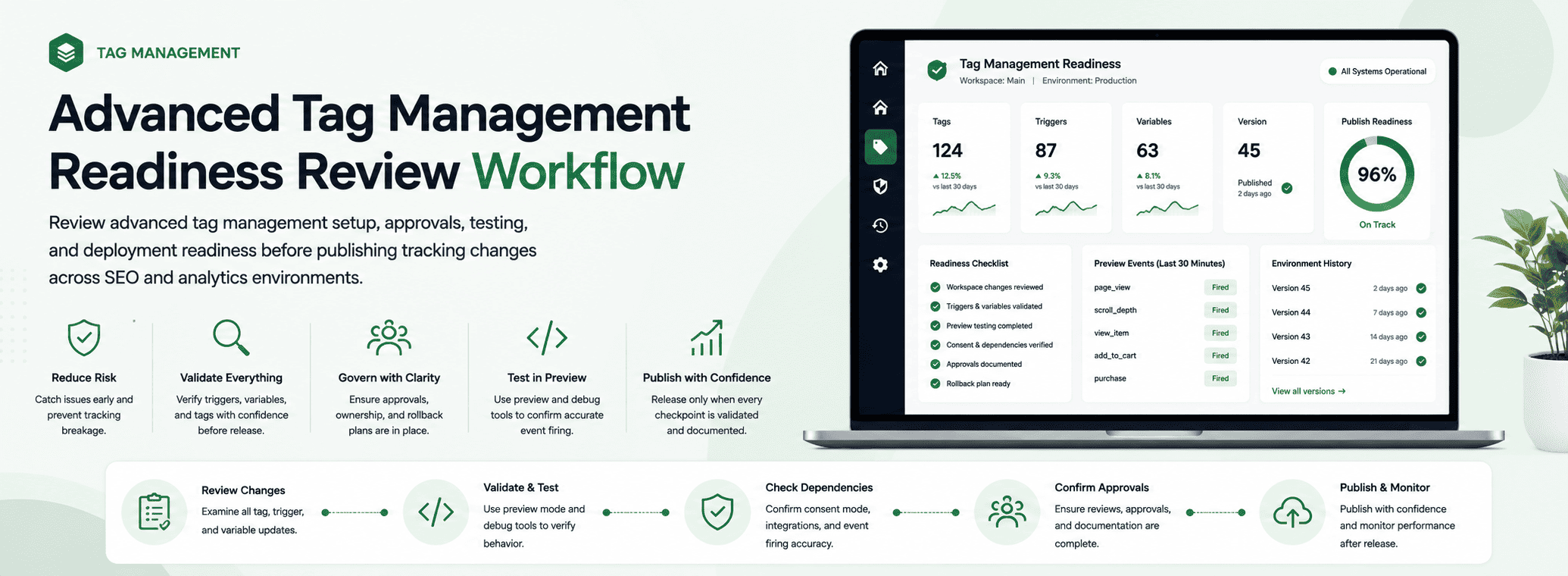
Advanced tag management controls how analytics events, SEO signals, remarketing pixels, and conversion tracking are published across the website. A structured readiness review helps teams verify that every tag, trigger, variable, and environment behaves correctly before deployment.
Without a review workflow, teams risk duplicate events, broken attribution, missing conversion signals, or publishing changes that impact reporting accuracy and SEO performance.
Core Areas To Review Before Publishing
1. Container And Workspace Validation
Review all active workspace changes before release. Confirm that the correct container is selected, draft changes are intentional, and naming conventions are consistent across tags and variables.
- Confirm workspace matches release scope
- Review changed tags and modified variables
- Remove outdated or duplicate drafts
- Verify naming standards and folder structure
2. Trigger Logic And Variable Accuracy
Validate that trigger conditions fire only on intended pages and user actions. Variables should return accurate values for URLs, click targets, products, and custom dimensions.
- Check page-level trigger conditions
- Validate click and interaction triggers
- Review variable mappings and outputs
- Confirm custom JavaScript safety
3. Preview And Debug Testing
Use preview mode and browser debugging tools to verify event firing behavior before publishing.
- Test landing pages and templates
- Validate event sequence
- Confirm tags fire once only
- Check browser console for errors
4. Consent And Tracking Dependencies
Advanced tags often depend on consent settings and external integrations. Review these dependencies before release.
- Validate consent mode behavior
- Check blocked vs allowed events
- Review platform integrations
- Confirm fallback behavior
5. Environment And Release Governance
Before publishing, confirm approvals, rollback readiness, and ownership.
- Check publish history
- Document release version
- Assign deployment owner
- Confirm rollback plan
Common Risks During Advanced Tag Releases
- Duplicate firing from overlapping triggers
- Broken variable references
- Consent conflicts blocking analytics
- Unapproved workspace changes going live
- Missed rollback documentation
Decision Framework
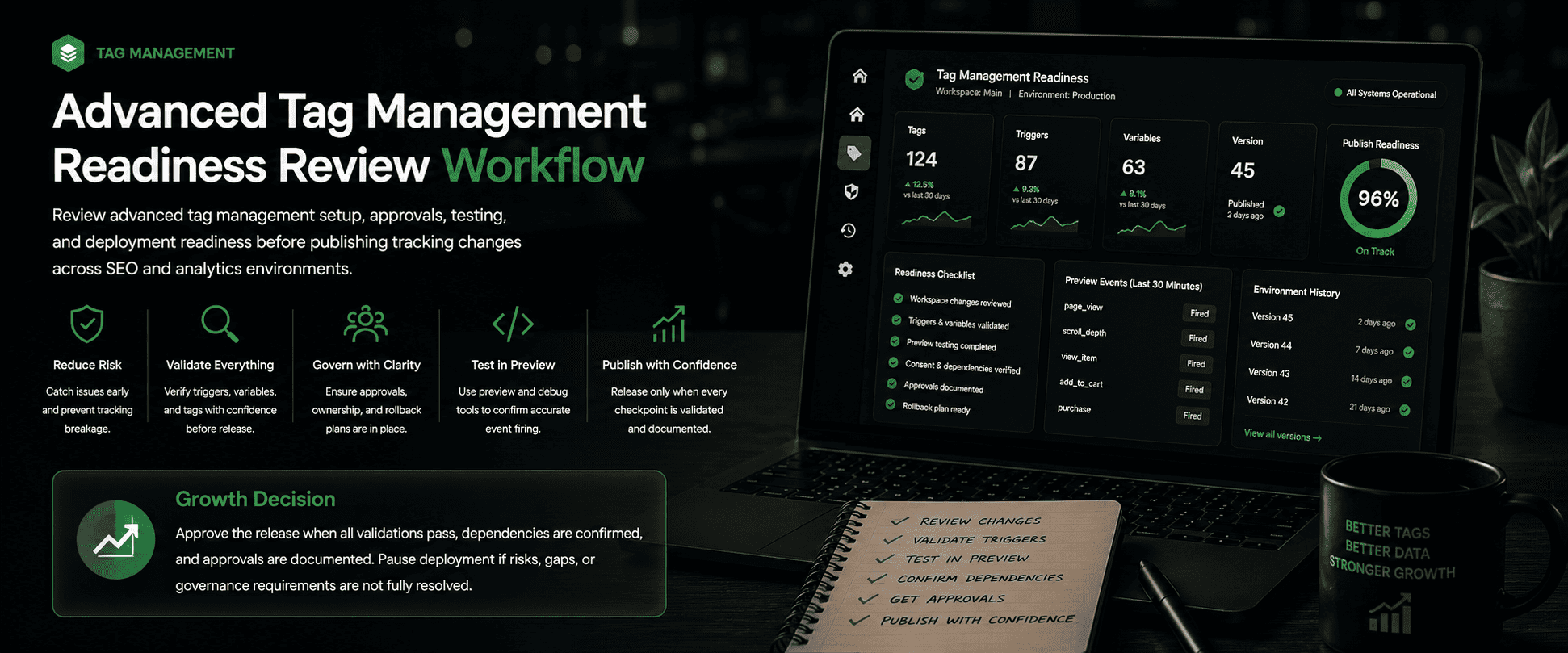
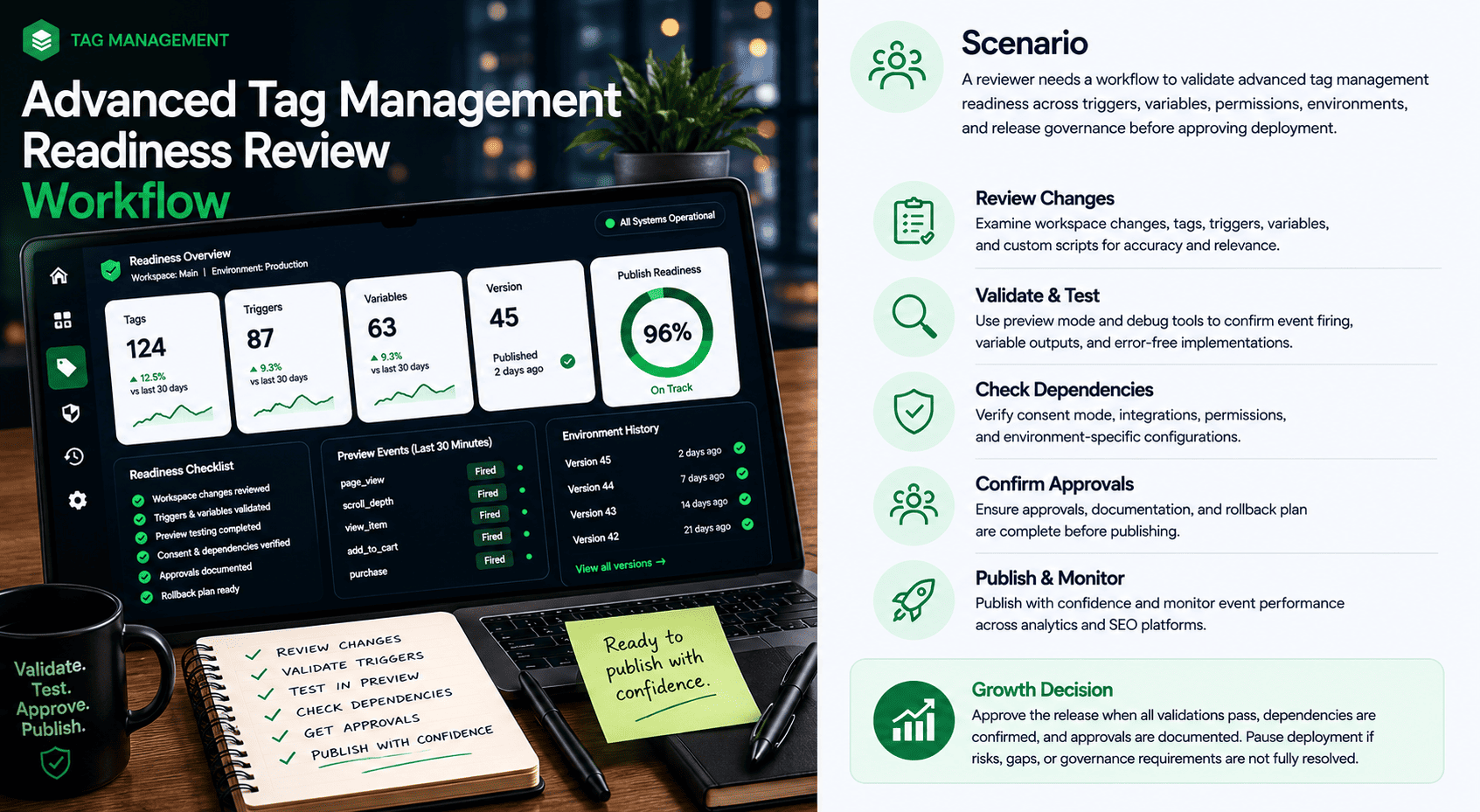
Approve the release when preview testing passes, variables return expected values, dependencies are confirmed, and approvals are documented.
Pause deployment when trigger logic is inconsistent, consent rules fail validation, or release governance remains incomplete.
Final Takeaway
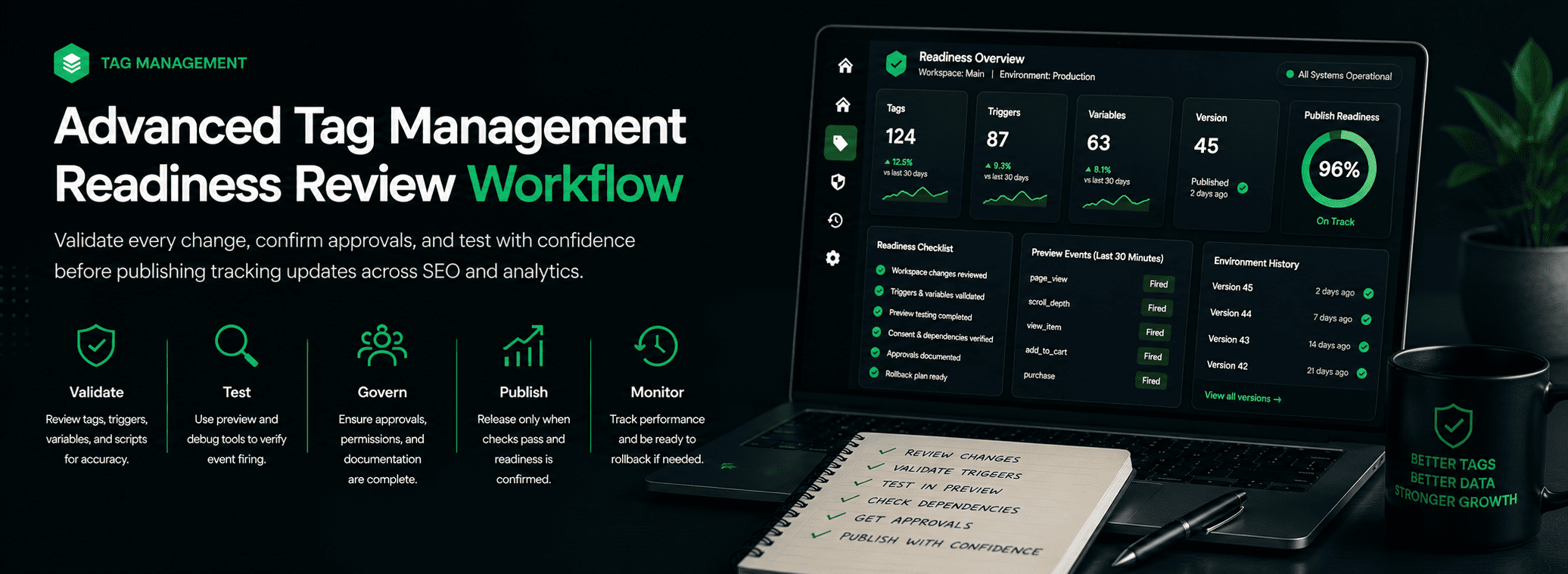
Advanced tag management requires structured validation before release. A consistent readiness review workflow reduces tracking risk, protects reporting quality, and ensures SEO and analytics teams publish with confidence.