Attribution Model Caveat Review
Review attribution model caveats before using channel performance movement to support budget, campaign, or reporting decisions.
Decide whether attribution and user-identity caveats are too material to use channel performance movement as the basis for a budget, campaign, or reporting decision.
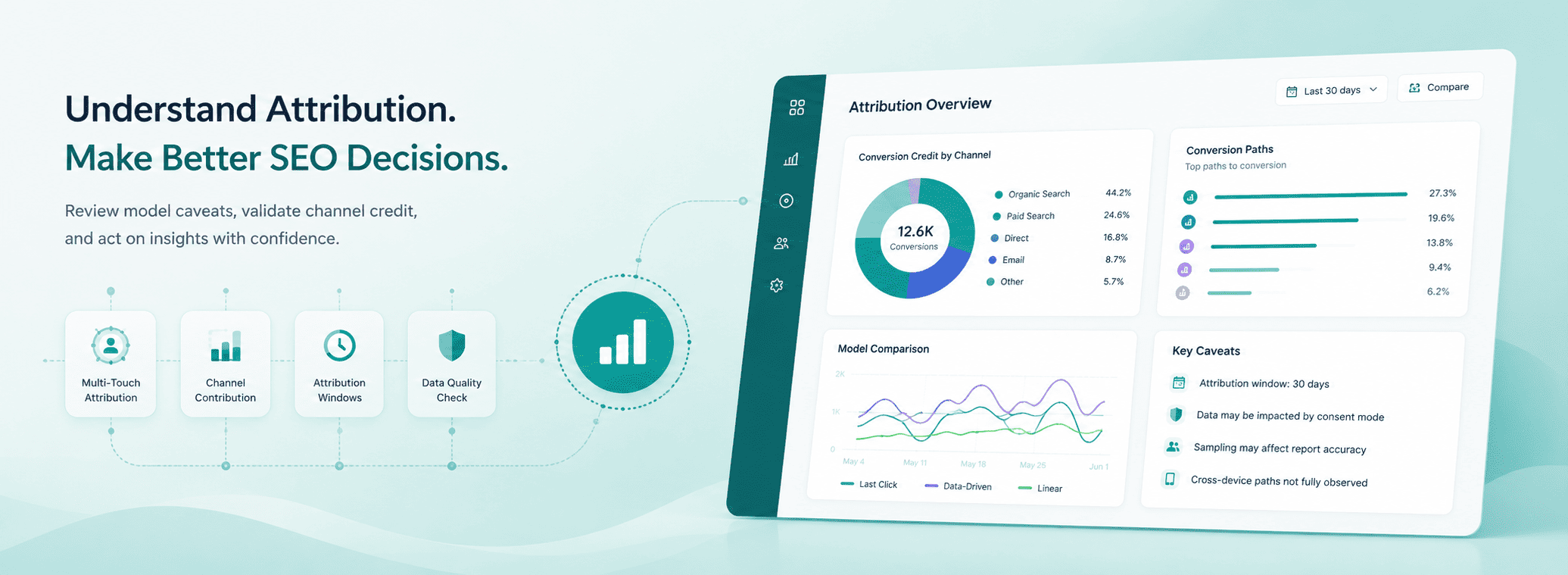
Three steps to a confident decision
Understand which business situation this page was built for and confirm it matches your current context.
Go item by item — each check has a clear pass/hold condition so you know exactly what qualifies.
Use the growth decision statement and analyst questions to brief your team and move forward with confidence.

Attribution Model Caveat Review
Decide whether attribution and user-identity caveats are too material to use channel performance movement as the basis for a budget, campaign, or reporting decision.
What this page helps a team decide
A team is comparing channel performance but needs to know whether attribution model settings, cross-device identity, consent gaps, and integration limits make the recommendation too uncertain.
- Attribution settings.
- Channel grouping rules.
- Identity configuration.
- Consent signal notes.
- Integration map.
- Reporting comparison.
What analysts ask before deciding
What decision is the SEO lead trying to make for attribution model caveat: approve, hold, or send back for evidence?
Which input would make the marketer trust the attribution model caveat read enough to change the page, link, or indexation decision?
What caveat should stay visible before the team changes the page, link, or indexation decision?
Who owns the next action if the review is approved, and what stays on hold if it is not?
What usually goes wrong
- The SEO lead treats source readiness and caveat labeling as settled before checking the connected analytics source is fresh, scoped, and reliable enough before interpreting movement.
- The recommendation skips the event and parameter decision quality caveat, so the next step looks safer than the evidence allows.
- Follow-up moves forward before the approval-gated analytics recommendation approval rule is accepted.
What 10x.in checks
- Check whether the connected analytics source is fresh, scoped, and reliable enough before interpreting movement.
- Review whether the events and parameters used in the decision match the business question and have been tested recently.
- Separate the measured finding from the action it might imply so the team can review the caveat before execution.
- Connect ad cost and creative promise to the post-click path before blaming the campaign.
- Separate decision-driving conversions from diagnostic events and caveated attribution signals.
OpenAnalyst should review Attribution Model Caveat Review, compare the decision evidence with the caveats, and keep the next recommendation approval-gated until the reviewer accepts it.
FAQ
How do we know an attribution caveat is material enough to change the recommendation?
It is material when model settings, identity coverage, consent gaps, channel grouping, or integration limits could change which channel receives credit or which budget action appears justified. In this review, the answer should be tied back to the operating rule rather than left as advice. The analyst should state what changes, what stays held, and what evidence would make the recommendation stronger.
What mistake does this review prevent before a budget decision?
It prevents teams from moving spend because one report favors a channel while the underlying model, identity, or channel grouping caveat makes that comparison unreliable. In this review, the answer should be tied back to the operating rule rather than left as advice. The analyst should state what changes, what stays held, and what evidence would make the recommendation stronger.
When should channel performance stay on hold?
Hold it when conversion paths are too sparse, identity coverage is unclear, non-owned channel tagging is inconsistent, consent behavior changes the sample, or the model setting does not match the decision. In this review, the answer should be tied back to the operating rule rather than left as advice. The analyst should state what changes, what stays held, and what evidence would make the recommendation stronger.

Review Attribution Model Caveats Before SEO Decisions
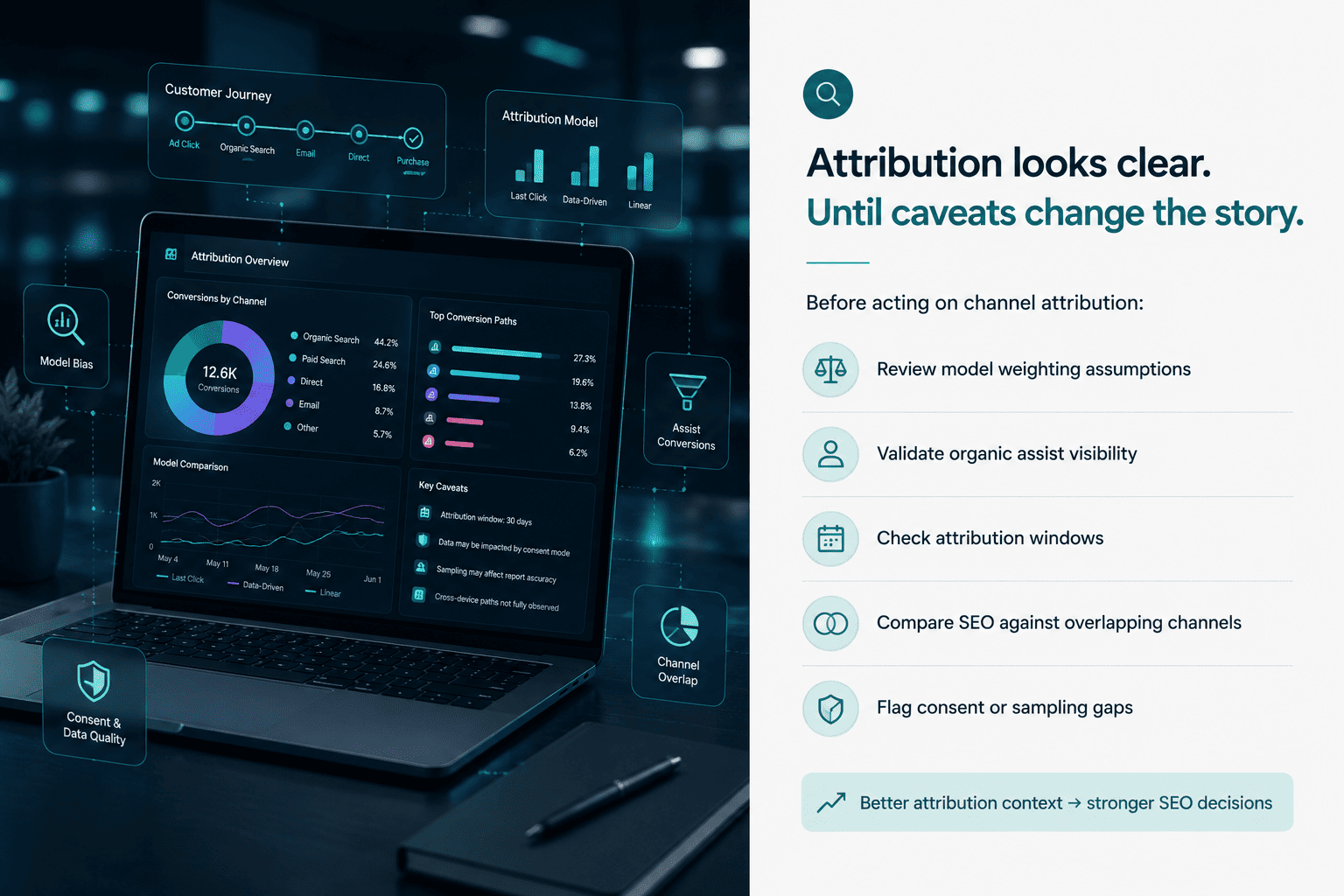
Attribution reports help connect SEO activity to conversions, but every attribution model carries assumptions. Reviewing caveats before acting on attribution insights prevents teams from over-crediting or under-crediting organic search.
SEO often influences discovery early in the journey while paid, direct, or branded visits may capture the final click. Without reviewing attribution caveats, teams can shift budget or priorities based on incomplete channel contribution.
Key Areas to Validate
- Model bias: confirm whether the report favors first-click, last-click, or data-driven weighting.
- Organic assist visibility: check whether SEO appears in assisted conversion paths and earlier touchpoints.
- Attribution window: verify whether the selected time window reflects your actual buying cycle.
- Cross-channel overlap: review how paid search, direct, and email share conversion credit with organic visits.
- Modeled or incomplete data: identify reporting gaps caused by consent mode, sampling, or unavailable user paths.
Why This Matters for SEO
A caveat review keeps SEO measurement realistic. It helps teams understand where attribution can overstate or hide performance, improves channel comparison, and supports better decisions around content investment, landing page optimization, and reporting strategy.