Internal Linking Template SEO Review Workflow
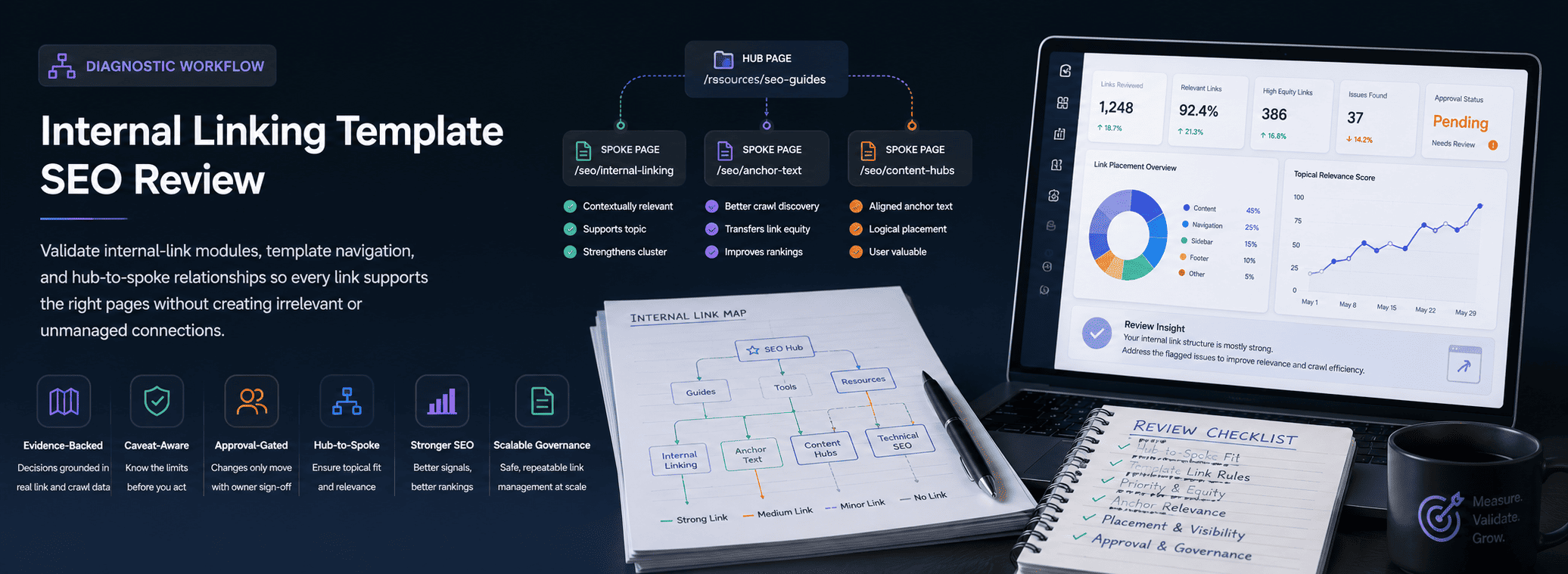
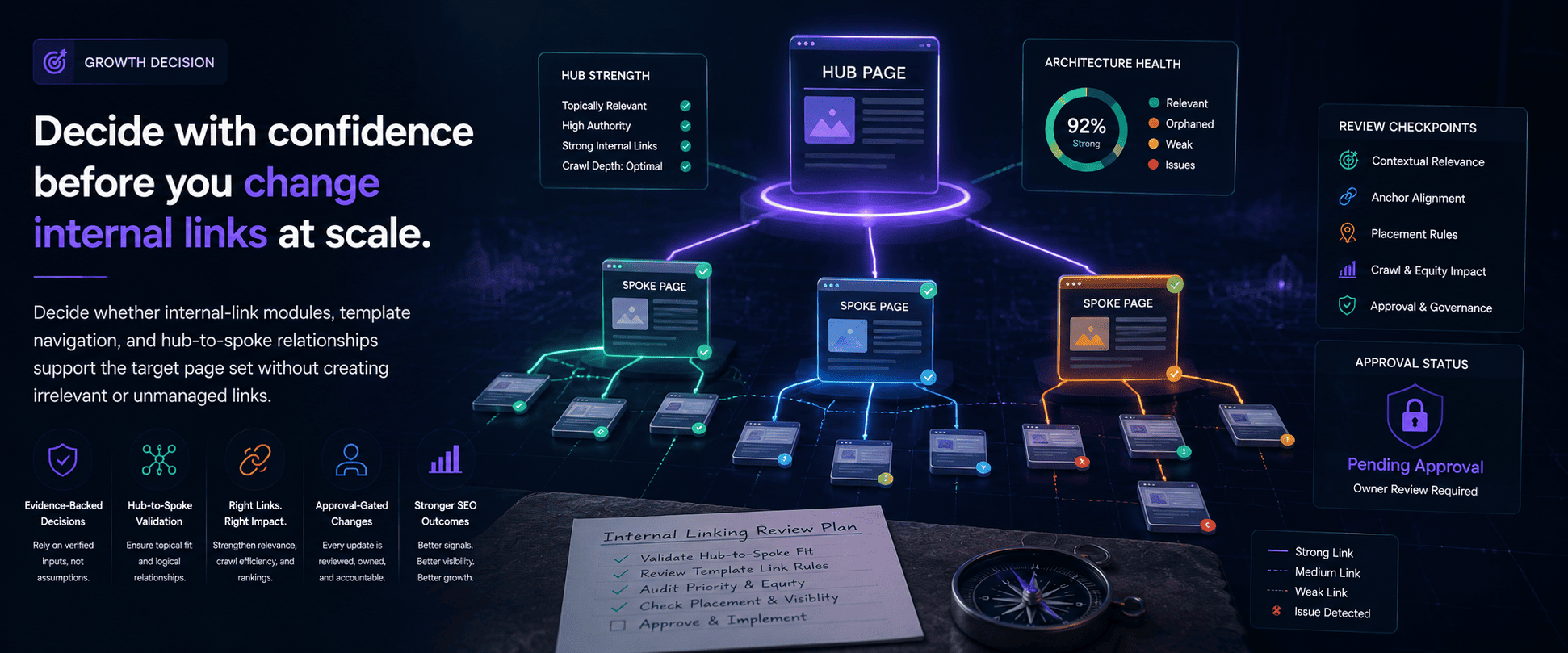
Internal linking template reviews help SEO and growth teams evaluate whether scalable link systems support the correct target pages without creating irrelevant, unmanaged, or low-value internal relationships. When template modules, navigation systems, or hub-to-spoke structures are modified at scale, even small logic issues can affect crawl behavior, topical relevance, and page equity distribution across the site.
This workflow focuses on validating link placement logic, topical alignment, crawl architecture, and approval boundaries before internal-link updates are pushed across templates or navigation systems. :contentReference[oaicite:0]{index=0}
Step 1: Review Hub-to-Spoke Relevance
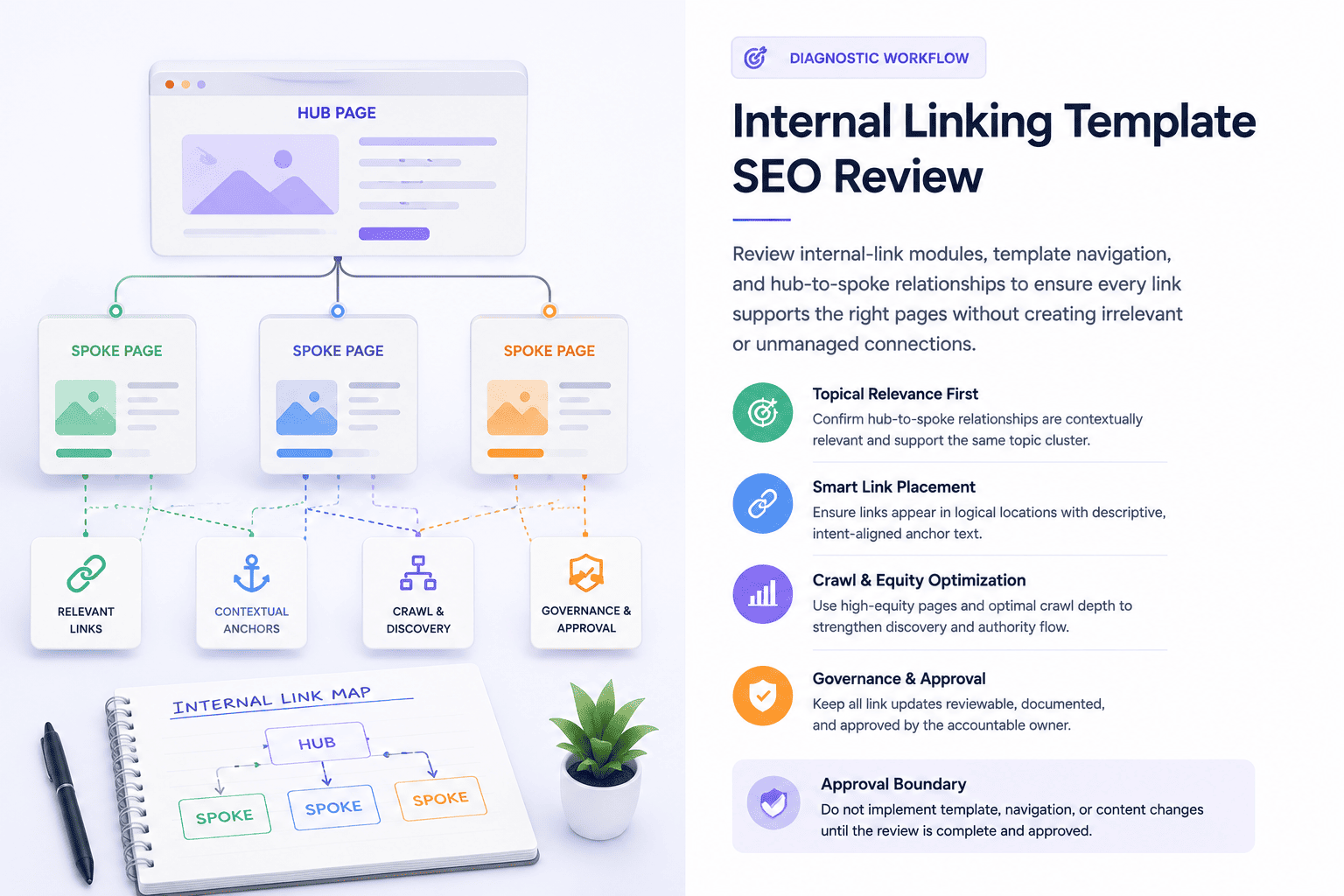
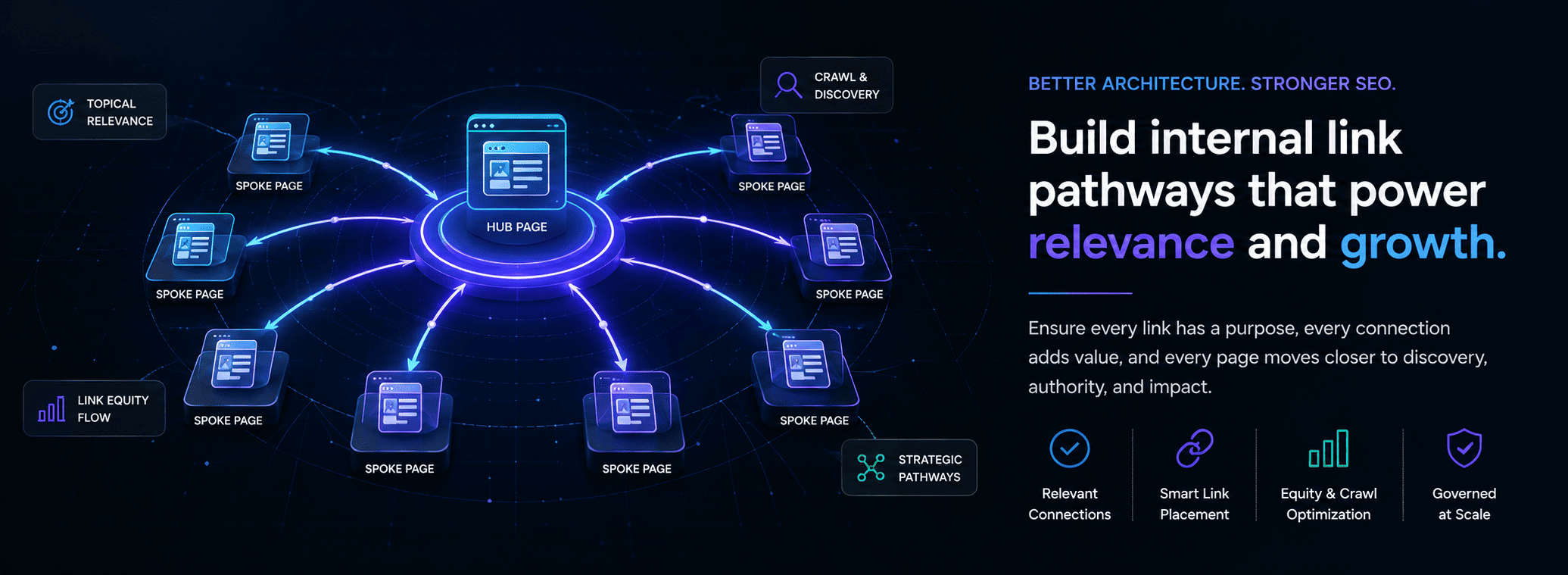
Begin by validating whether the proposed target pages belong inside the same topical cluster. Internal-link modules should strengthen contextual relevance rather than artificially connecting unrelated pages through shared templates.
- Review the hub and spoke inventory
- Validate topical relevance between linked pages
- Identify unrelated or weakly connected page relationships
- Confirm target pages support the intended search entity cluster
- Hold scaled link additions when topical alignment is unclear
Step 2: Validate Template Link Rules
Template-driven linking systems should follow clearly documented placement logic. Teams should understand exactly why each link appears and how rules scale across multiple pages.
- Review template module rules
- Inspect automated link placement conditions
- Validate navigation logic against business intent
- Prevent stale or irrelevant links from scaling sitewide
- Document approval boundaries for template changes
Step 3: Analyze Link Equity and Crawl Impact
Internal links influence crawl depth, authority distribution, and discovery priority. Reviews should evaluate whether high-equity pages support strategically important destinations without diluting relevance or over-linking.
- Review the high-equity page list
- Analyze crawl depth distribution
- Validate priority pages receive meaningful support
- Avoid excessive template-level link repetition
- Confirm important links are visible and discoverable
Step 4: Review Anchor Context and Placement
Anchor text and placement decisions influence how search engines interpret page relationships. Internal links should support user understanding and reinforce topical intent naturally within the page structure.
- Review anchor text samples
- Validate contextual relevance of anchor wording
- Avoid generic or repetitive anchors
- Confirm links appear in meaningful sections
- Prevent hidden or low-visibility template links
Step 5: Maintain Approval-Gated Governance
Internal-link recommendations should remain reviewable and approval-controlled before deployment. Governance processes reduce the risk of large-scale architectural mistakes caused by template automation.
- Track approval ownership for template updates
- Document caveats before publishing changes
- Prevent unreviewed navigation deployments
- Keep recommendations approval-gated until accepted
- Maintain audit visibility for scaled internal-link changes
Failure Risks This Workflow Prevents
Without governance reviews, internal-link systems can unintentionally create irrelevant topical relationships, dilute page equity, increase crawl inefficiency, or propagate stale links across large portions of the website. Template-level mistakes scale quickly, making approval boundaries and architectural reviews critical before publishing navigation or linking updates.
Why This Workflow Matters
Internal linking is not simply a content optimization task — it is a scalable search architecture system. Structured reviews help organizations maintain crawl clarity, topical consistency, authority distribution, and governance accountability while supporting sustainable SEO growth across large page ecosystems.