Shopify Internal Link Architecture Review
Decide which Shopify navigation, collection, product, and content links need approval before SEO page work moves forward.
Decide whether Shopify navigation, homepage links, collection links, product links, or supporting content links are strong enough before approving SEO page work.
Three steps to a confident decision
Understand which business situation this page was built for and confirm it matches your current context.
Go item by item — each check has a clear pass/hold condition so you know exactly what qualifies.
Use the growth decision statement and analyst questions to brief your team and move forward with confidence.

Shopify Internal Link Architecture Review
Decide whether Shopify navigation, homepage links, collection links, product links, or supporting content links are strong enough before approving SEO page work.
What this page helps a team decide
A Shopify team has target collection or product pages, but needs to know whether the site structure and internal links actually support those pages before changing content or building authority.
- navigation map
- homepage link inventory
- collection and subcollection map
- product link sample
- supporting content map
- Search Console page data
- crawl report
- approval log
What analysts ask before deciding
What decision is the ecommerce marketer trying to make for shopify internal link architecture: approve, hold, or send back for evidence?
Which input would make the marketer trust the shopify internal link architecture read enough to change the page, link, or indexation decision?
What caveat should stay visible before the team changes the page, link, or indexation decision?
Who owns the next action if the review is approved, and what stays on hold if it is not?
What usually goes wrong
- The diagnostic workflow is treated as generic content instead of a growth decision.
- The recommendation skips the source caveat, so the next step looks safer than the evidence allows.
- Follow-up moves forward before the reviewer accepts the approval rule.
What 10x.in checks
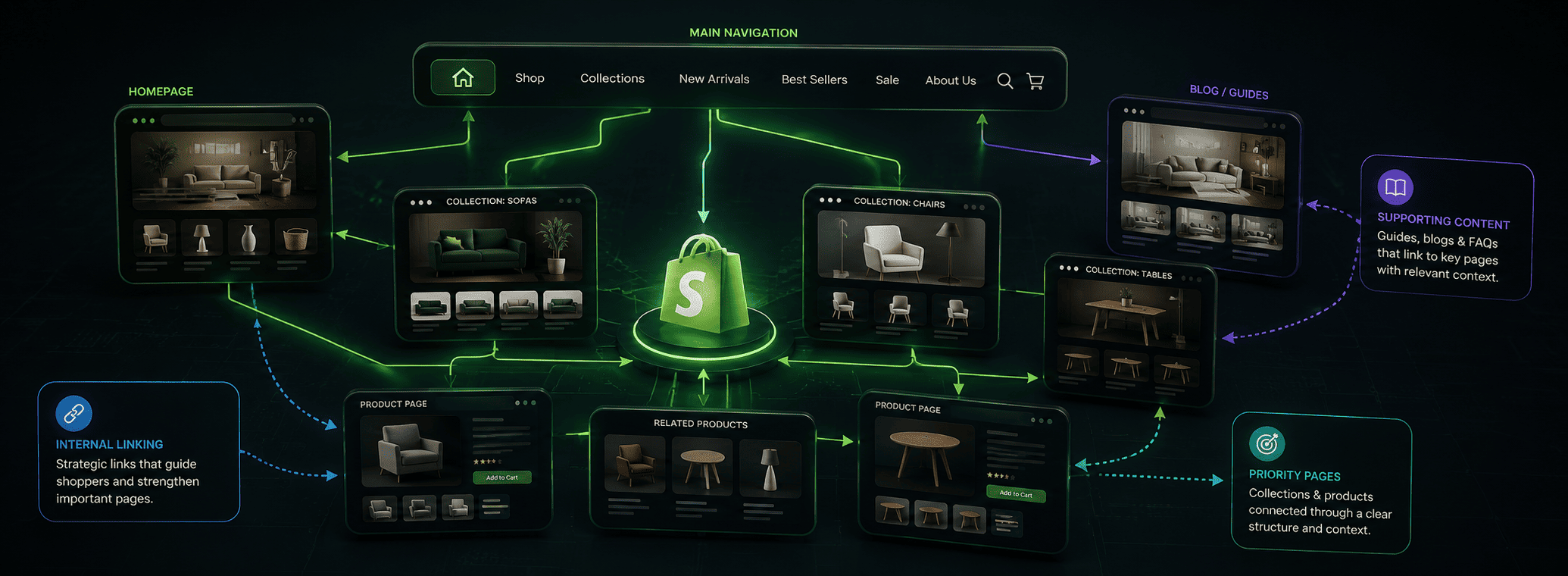
- Confirm that important Shopify pages are reachable through meaningful paths, not only through XML discovery.
- Review whether collection links reflect how buyers and search engines should understand the store categories.
- Check whether guides or support content link to the right Shopify money pages with relevant context.
- Separate low-risk content links from template or navigation changes that affect the whole store.
- Check whether important Shopify pages are reachable through navigation, homepage, collection, or supporting content paths.
- Review whether collection, subcollection, product, and supporting content links reinforce the page that should own search demand.
- Separate link structure recommendations from live implementation until the reviewer accepts the tradeoff.
OpenAnalyst should review Shopify Internal Link Architecture Review, compare the decision evidence with the caveats, and keep the next recommendation approval-gated until the reviewer accepts it.
FAQ
Can OpenAnalyst add internal links without approval?
No. OpenAnalyst should draft the link plan and keep template, navigation, or page updates approval-gated. Link changes can alter merchandising, UX, and conversion paths, so the reviewer needs to accept the tradeoff before implementation starts.
What makes an internal link useful for Shopify SEO?
A useful link improves reachability, context, and buyer path for a priority collection or product page. It should make the destination easier to discover and understand, not simply add another link.
Should every blog post link to a product page?
No. Supporting content should link only when the target page matches the topic, buyer intent, and next best action. When the fit is weak, the link can send the reader to the wrong destination and weaken the recommendation.
When is navigation change risky?
Navigation change is risky when it affects merchandising, UX, theme templates, or multiple page families rather than a single editorial link. That is why navigation and template work should stay approval-gated until the owner accepts the broader impact.
What should the proof artifact show?
The proof artifact should show target page priority, current reachability, recommended links, anchor caveat, owner, and approval state. That gives the reviewer the finding, uncertainty, and next decision in one place.

Shopify Internal Link Architecture Review
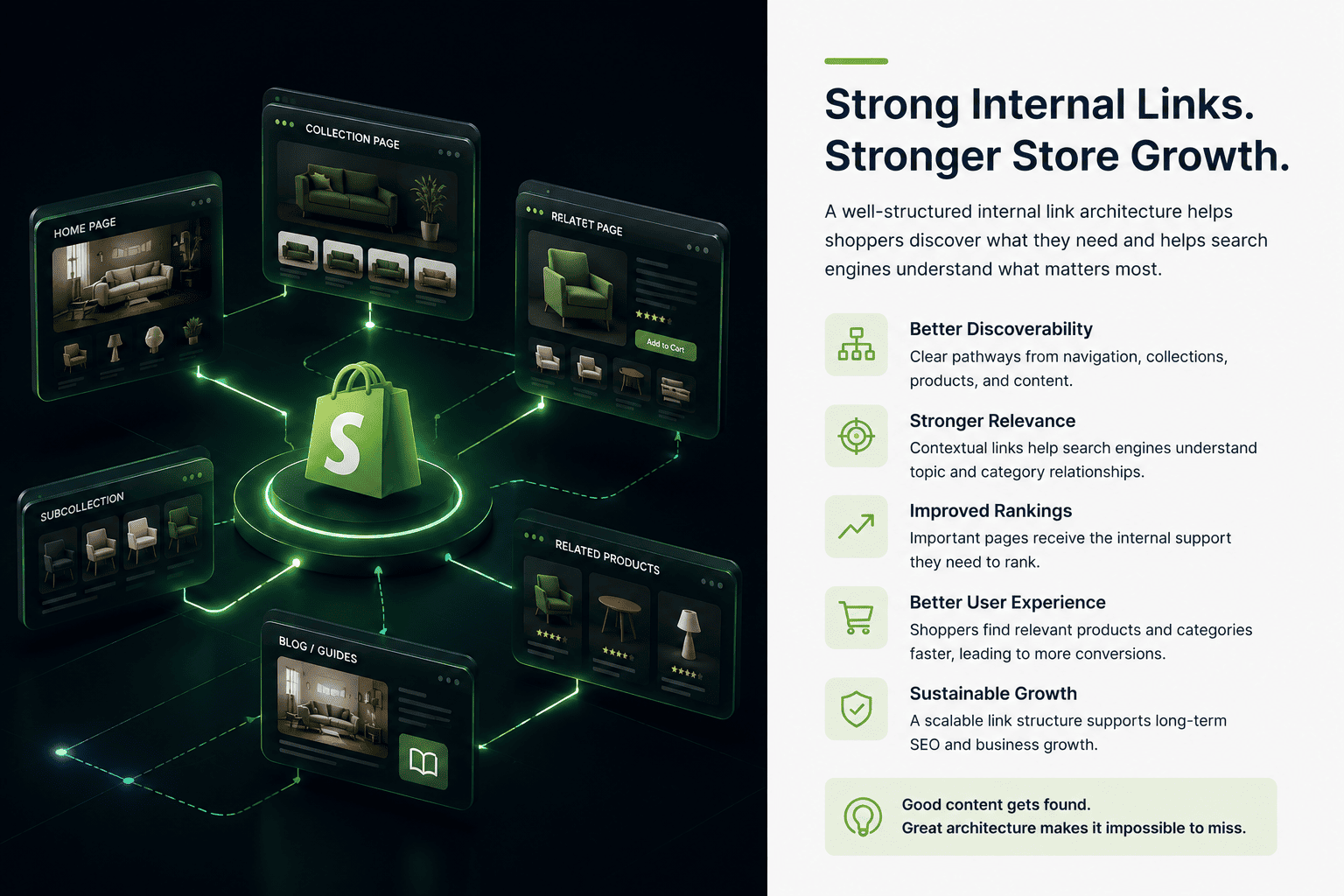
Shopify SEO work should not begin only with content updates, keyword targets, or authority building. A collection or product page can have strong search demand and still underperform if the store structure does not help buyers and search engines find it. Internal links decide which pages are easy to reach, which categories feel important, and which URLs receive contextual support across the storefront.
The Shopify Internal Link Architecture Review helps ecommerce teams decide whether navigation, homepage links, collection links, product links, and supporting content links are strong enough before approving SEO page work. The goal is not to add links everywhere. The goal is to confirm whether priority pages have meaningful paths, relevant context, and a clear owner before the team changes content, indexation, templates, or authority plans.
If the link structure is weak, the recommendation should stay caveated. The right next action may be a link plan, navigation review, or collection structure update before copywriting or link-building begins.
What This Workflow Decides
The workflow answers one practical question: should the Shopify internal link architecture be approved, held, or sent back for evidence before SEO work moves forward? A page should not be treated as a priority if it is only discoverable through XML sitemap discovery or isolated product paths. Important pages need visible, useful connections across the store.
- Approve: Priority pages are reachable through meaningful navigation, collection, product, homepage, or content paths.
- Hold: Internal link support is incomplete, risky, or not strong enough to support the SEO recommendation.
- Send back for evidence: The team needs crawl data, Search Console context, link inventory, or owner approval before action.
- Separate implementation: The link plan can be drafted, but template, navigation, or page changes stay approval-gated.
Review Page Reachability First
The first check is whether important Shopify pages are reachable through meaningful paths. A collection page may exist, rank occasionally, or appear in the sitemap, but that does not prove the store treats it as important. Buyers and search engines need clear routes to the page from navigation, homepage modules, collection structures, related products, or supporting content.
- Does the target page appear in the main navigation or a relevant submenu?
- Is it linked from the homepage when it is commercially important?
- Can buyers reach it through collection and subcollection paths?
- Do related product pages point users toward the right category or comparison path?
- Does the crawl report show the page is internally discoverable, not only indexed through sitemap discovery?
If a priority page is buried or orphaned, content updates may not be enough. The review should identify whether reachability is the current constraint.
Check Collection And Subcollection Logic
Shopify collection links should reflect how buyers and search engines understand the store categories. A collection page that should own search demand needs support from related collections, subcollections, navigation labels, and product pathways. The structure should make category relationships obvious without forcing users to guess where a product belongs.
- Do parent and child collections create a clear category hierarchy?
- Do collection links reinforce the page that should own the target query?
- Are similar collections competing for the same search intent?
- Do collection descriptions or modules link to relevant next-step pages?
- Does the anchor context describe the destination clearly?
This check helps separate collection opportunities from product opportunities. If search demand belongs to a collection page, the internal links should support that page as the category owner.
Review Product Link Support
Product pages can support internal architecture when they point buyers back to useful collections, related products, bundles, guides, or comparison paths. A product page should not be a dead end. It should help shoppers continue through the buying journey and help search engines understand the relationship between products and categories.
- Do product pages link back to their most relevant collection?
- Are related products useful rather than random?
- Do product modules support buyer comparison and discovery?
- Are high-priority products linked from commercially important collections?
- Does the product link sample show consistent, relevant pathways?
If product links are weak, the team may need merchandising or template review before changing SEO copy.
Use Supporting Content Carefully
Guides, blog posts, FAQs, and educational pages can strengthen Shopify SEO when they link to the right money pages with relevant context. But every supporting article should not automatically link to a product page. The link should match the topic, buyer intent, and next best action.
- Does the supporting content explain a topic related to the target page?
- Would the linked collection or product help the reader continue naturally?
- Does the anchor text describe the destination without over-optimization?
- Is the link useful for the buyer, not only added for SEO?
- Does the supporting content map show gaps around priority pages?
When the fit is weak, the link can send readers to the wrong destination and weaken the recommendation. Supporting content should reinforce intent, not create clutter.
Separate Low-Risk Links From Storewide Changes
Not every internal link recommendation carries the same risk. Adding a contextual link inside one guide is usually lower risk than changing navigation, templates, collection modules, or homepage merchandising. Storewide changes can affect UX, conversion paths, and merchandising priorities.
- Lower-risk changes: Editorial links, guide-to-collection links, FAQ links, and contextual support links.
- Higher-risk changes: Main navigation, theme templates, homepage modules, collection hierarchy, and product-page link modules.
- Approval-gated changes: Any update that affects multiple page families, merchandising logic, or buyer navigation.
The review should separate the link structure recommendation from live implementation until the reviewer accepts the tradeoff.
Evidence Sources To Review
A reliable internal link architecture review should use multiple inputs. The navigation map shows the current site structure. The homepage link inventory shows which pages receive prominent support. The collection and subcollection map reveals category logic. Product link samples show page-level behavior. Supporting content maps show contextual support. Search Console and crawl data show whether priority pages are discoverable and receiving signals.
- Navigation map: Shows main structural pathways.
- Homepage link inventory: Shows priority exposure.
- Collection and subcollection map: Shows category relationships.
- Product link sample: Shows product-to-category and related product support.
- Supporting content map: Shows editorial and guide-based link opportunities.
- Search Console page data: Shows visibility, query movement, and page performance.
- Crawl report: Shows discoverability and internal link depth.
- Approval log: Shows owner, caveat, and decision state.
Final Approval Rule
A Shopify Internal Link Architecture Review should end with a clear approve, hold, or send-back decision. Approve the link plan only when priority pages are reachable, contextually supported, and connected to the page that should own search demand.
If navigation risk, template impact, weak context, or missing crawl evidence remains, keep the recommendation caveated. OpenAnalyst can draft the link plan and proof artifact, but implementation should stay approval-gated until the reviewer accepts the owner, caveat, and tradeoff.