What this workflow decides
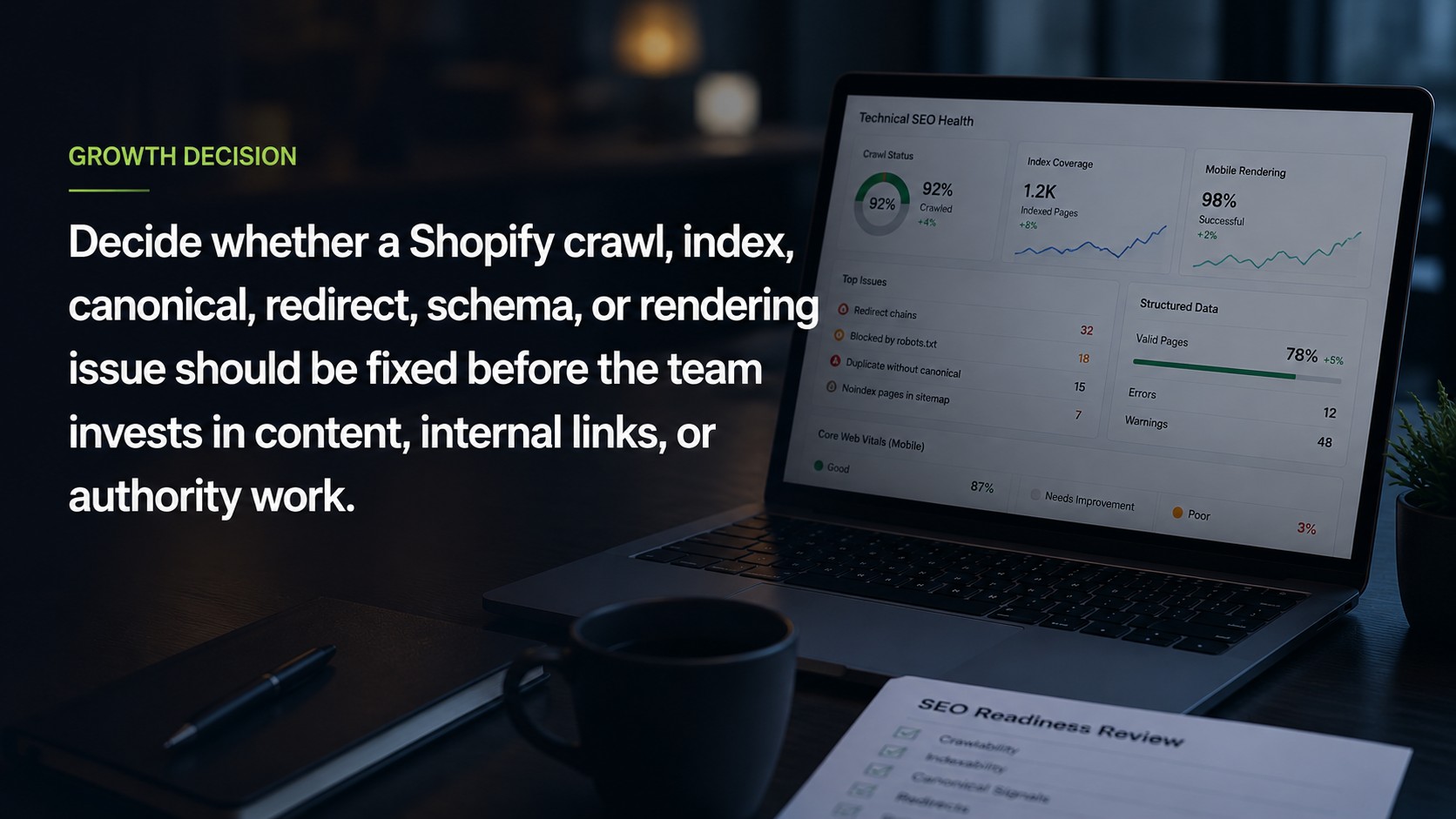
This workflow helps a Shopify SEO or growth team decide whether technical SEO evidence is strong enough to approve implementation work before investing further in content, internal links, or authority building.
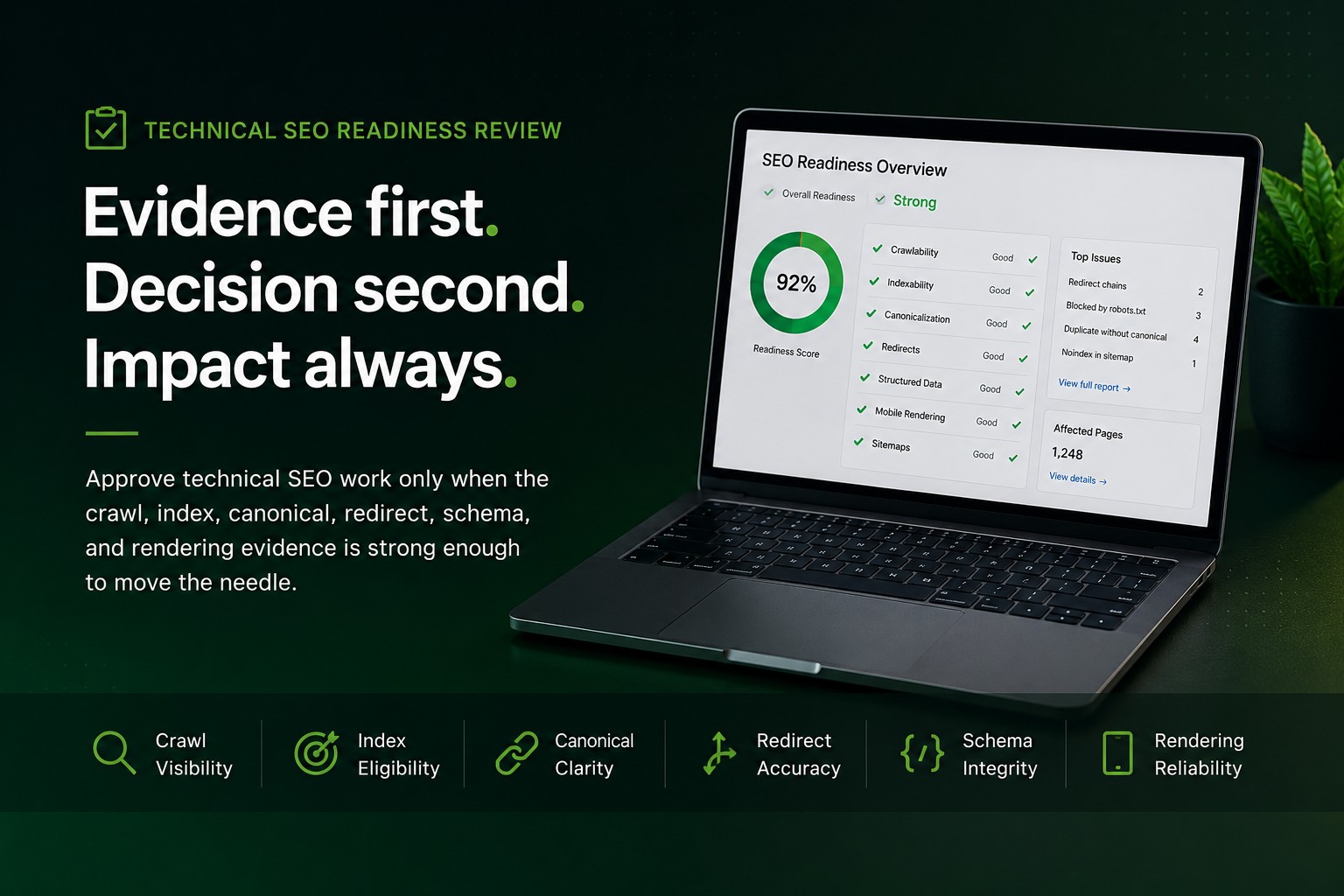
The review focuses on crawlability, indexability, canonical signals, redirects, sitemap configuration, structured data, and mobile rendering. The goal is not to list every possible technical issue. The goal is to decide whether a technical blocker is serious enough to change the growth plan.
When to use this review
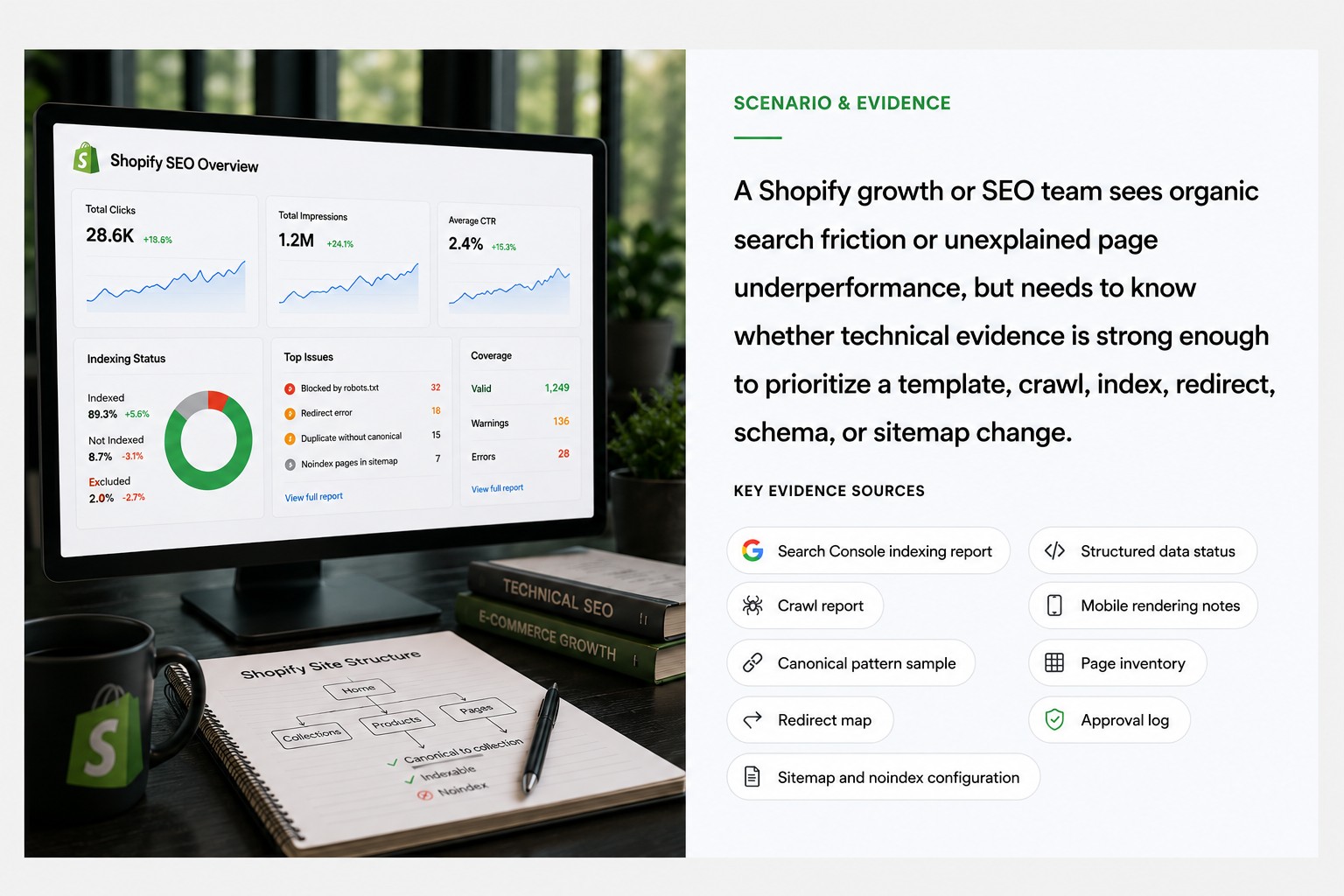
Use this workflow when Shopify pages are underperforming in organic search and the team needs to know whether the problem is technical, editorial, or still unclear.
- Important collection, product, or landing pages are not gaining impressions.
- Search Console shows indexing warnings or unexpected exclusions.
- Crawl data shows blocked, redirected, duplicate, or canonicalized URLs.
- Structured data or rendered content may not match the intended page experience.
- The team is unsure whether to continue content work or fix technical issues first.
Inputs the analyst should inspect
The analyst should compare multiple sources before making a recommendation. A single crawl warning or isolated Search Console message is usually not enough to approve implementation.
- Search Console indexing report
- Crawl report
- Canonical pattern sample
- Redirect map
- Sitemap and noindex configuration
- Structured data status
- Mobile rendering notes
- Page inventory
- Approval log
How to make the decision
The reviewer should separate technical blockers from ordinary cleanup. A technical issue should be prioritized when it changes whether the intended page can be discovered, indexed, consolidated, rendered, or understood by search engines.
Approve technical implementation
Approve the task when the evidence shows a clear affected page set, a repeatable URL or template pattern, and a likely owner. The recommendation should explain what should change, why it matters, and what risk or caveat still remains.
Hold the task
Hold the task when evidence is incomplete, conflicting, or too broad. For example, if crawl data and Search Console data disagree, the review should stay caveated until the affected pages, crawl settings, and indexing state can be checked together.
Send back for more evidence
Send the review back when the recommendation names a technical action but does not show the source finding, affected pattern, approval state, or owner. Without those fields, the task can become an open-ended SEO request instead of a reviewable growth decision.
Checks before approval
- Confirm that important Shopify pages can be crawled and intentionally indexed.
- Review whether search engines can consolidate signals to the intended target URL.
- Check whether redirects, exclusions, and sitemap entries match the current SEO intent.
- Confirm that essential content and structured data render reliably for search engines and users.
- Review canonical patterns and duplicate URL variants before changing page or indexation decisions.
Common failure modes
- The workflow is treated as generic SEO content instead of a growth decision.
- The recommendation skips the source caveat, making the next step look safer than the evidence allows.
- Follow-up work moves forward before the reviewer accepts the approval rule.
Recommended output
The final review should include the observed issue, affected Shopify page set, evidence source, caveat, recommended owner, and approval state. This keeps the decision clear for SEO, content, development, and growth teams.
OpenAnalyst should keep the next recommendation approval-gated until the reviewer accepts the evidence, caveat, and owner.
What happens next
If the review is approved, the owner can move the technical fix into implementation with the affected pattern and approval state attached. If the review is not approved, content, internal linking, or authority work should stay on hold only when the unresolved issue affects discovery, index eligibility, consolidation, rendering, or structured data.