Paid Traffic Offer Fit Diagnosis Before Scaling Ecommerce Campaigns
Paid traffic can generate clicks quickly, but scale only works when the offer matches audience expectations and the buying path feels strong enough to convert consistently. Without reviewing offer fit before launch, ecommerce teams often spend budget on traffic that looks active but fails to produce reliable returns.
A paid traffic offer fit diagnosis helps review offer readiness before increasing spend. It combines evidence checks, conversion signals, caveat review, anonymized operating patterns, and approval boundaries so teams can move with confidence instead of guessing.
For ecommerce ads analysis, this workflow matters because an offer can appear strong internally while underperforming in real campaign conditions. A structured review helps identify friction early and protects budget before traffic scales.
Why Paid Traffic Offer Fit Matters Before Increasing Spend
Paid traffic amplifies whatever already exists inside the offer and conversion flow.
If the offer is highly relevant, ads scale efficiently.
If the offer feels weak or disconnected, traffic becomes expensive and inconsistent.
Offer fit directly affects:
- Click-through quality
- Landing page engagement
- Add-to-cart rate
- Checkout progression
- Average order value
- Return on ad spend
- Creative testing confidence
A diagnostic workflow helps verify readiness before spend increases.
1. Review Offer-to-Audience Fit
Start by reviewing whether the offer matches the audience coming from paid traffic.
Check:
- Offer relevance to audience pain point
- Headline clarity
- Value proposition
- Pricing expectation
- Competitive positioning
- Visual product appeal
- Perceived urgency
Example:
If paid traffic targets users looking for convenience but the landing page emphasizes technical product specs first, offer fit may feel weak.
Traffic may click but fail to convert.
2. Validate Paid Traffic Message Match
Ad messaging creates expectation before the user lands.
The offer page should continue that exact expectation.
Review:
- Ad headline vs page headline
- Creative angle vs product angle
- Discount promise
- Offer timing
- CTA consistency
- Visual continuity
Strong alignment improves trust and conversion readiness.
3. Review Conversion Readiness Signals
Before scaling traffic, confirm the offer page feels conversion-ready.
- Pricing visible
- Primary CTA clear
- Product images strong
- Reviews present
- Trust indicators visible
- Shipping details clear
- Refund policy visible
Missing trust signals often reduce purchase confidence.
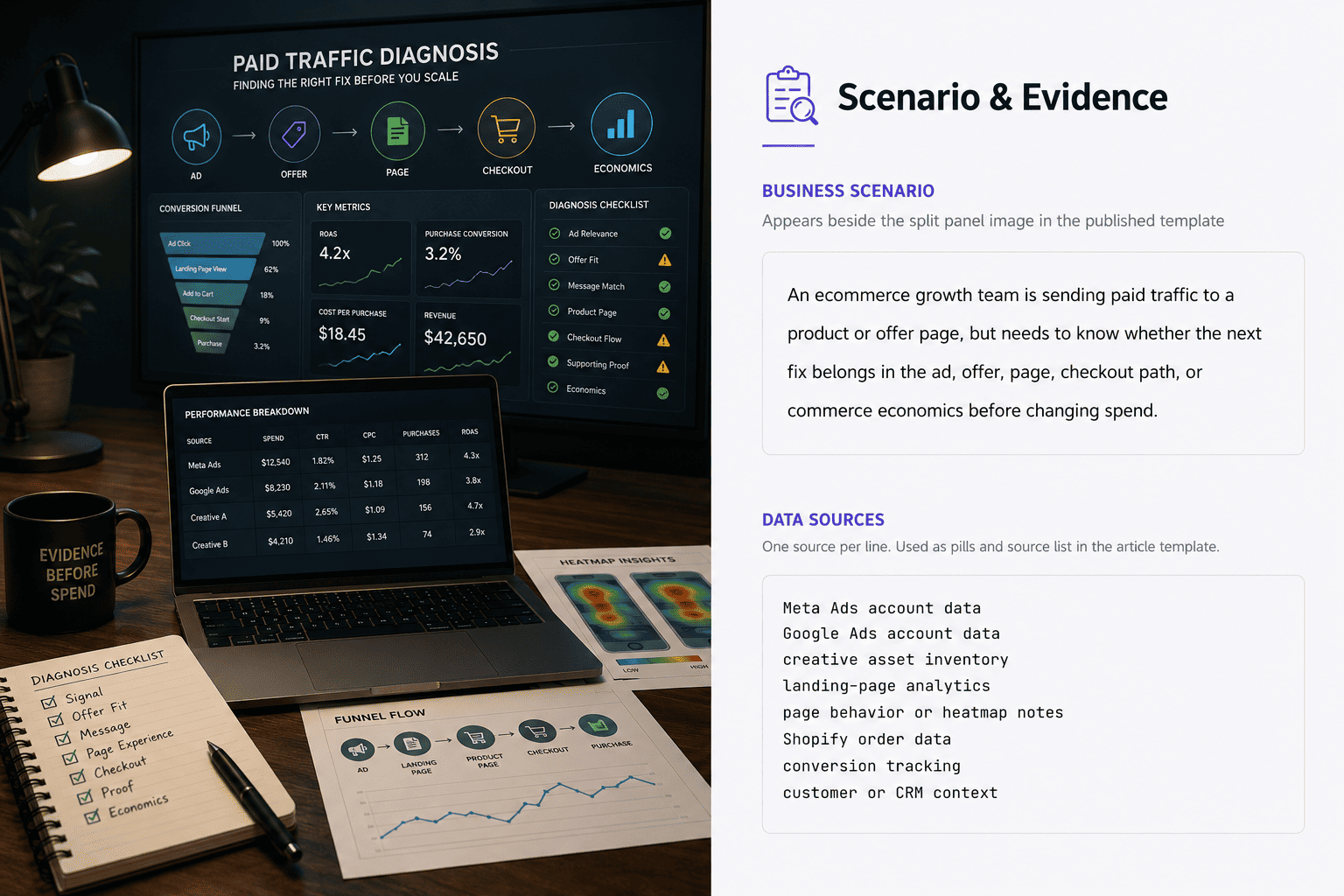
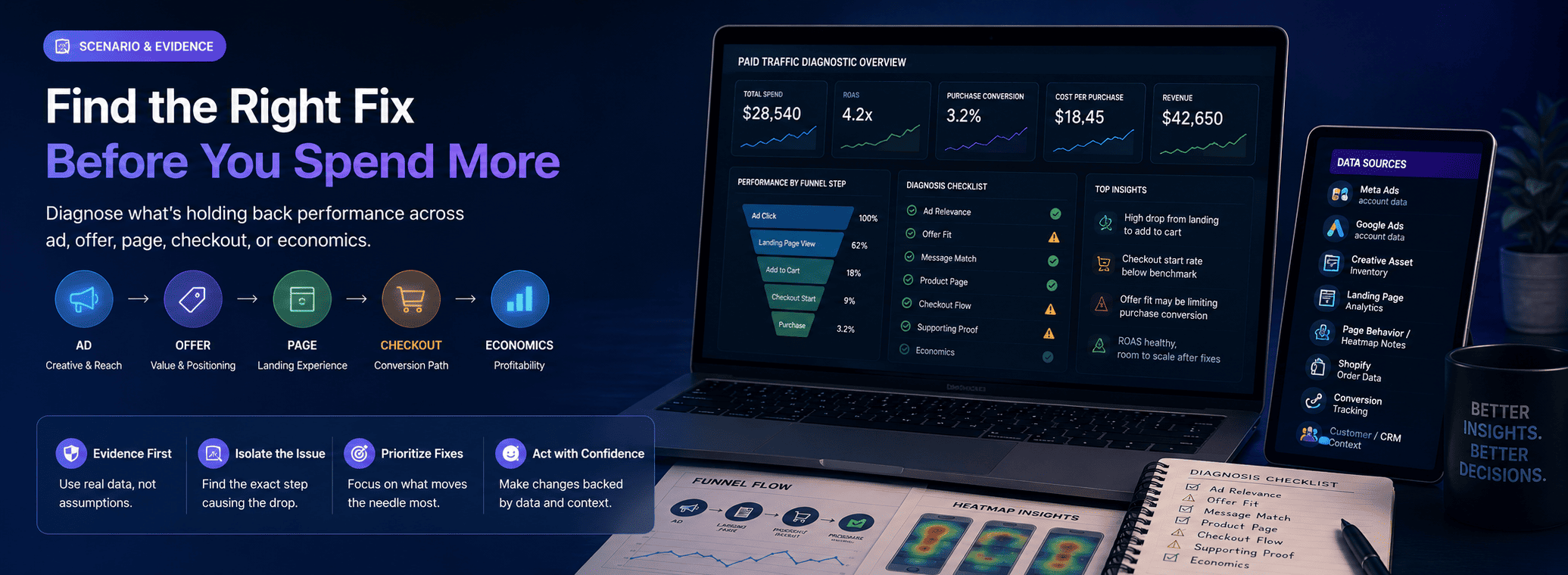
4. Diagnose Funnel Performance Signals
Offer fit should also be validated through funnel behavior.
Review:
- Landing page bounce rate
- Scroll depth
- CTA clicks
- Add-to-cart conversion
- Checkout starts
- Purchase completion
Patterns often reveal where fit weakens.
Example:
Strong clicks + weak add-to-cart usually means offer or product page friction.
5. Review Caveats Before Launch
Some offers can launch with known limitations.
Examples:
- Minor creative mismatch
- Mobile image adjustment pending
- Upsell testing incomplete
- Secondary CTA refinement needed
- Limited product proof available
These should be documented clearly.
6. Compare Against Operating Patterns
Historical ecommerce campaign patterns help benchmark readiness.
Compare:
- Click-through rate range
- Add-to-cart benchmarks
- Checkout progression
- AOV patterns
- Traffic quality by audience
- Offer acceptance rate
Pattern review helps reduce assumptions.
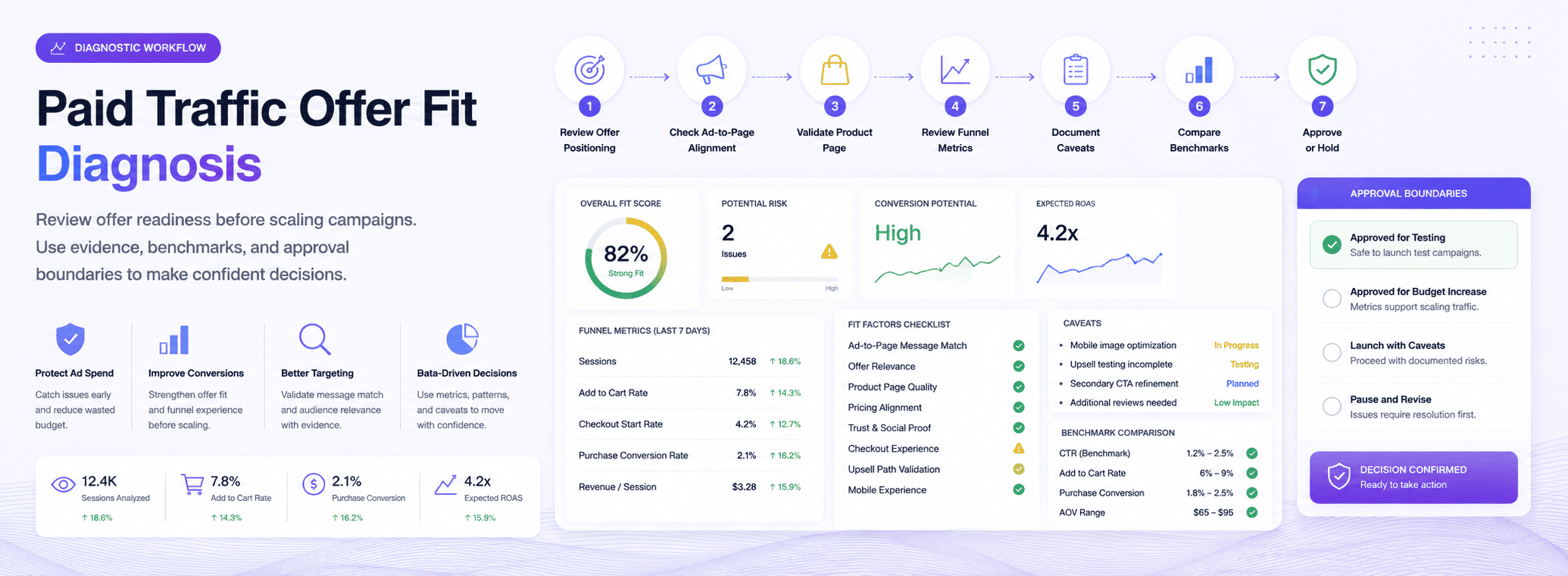
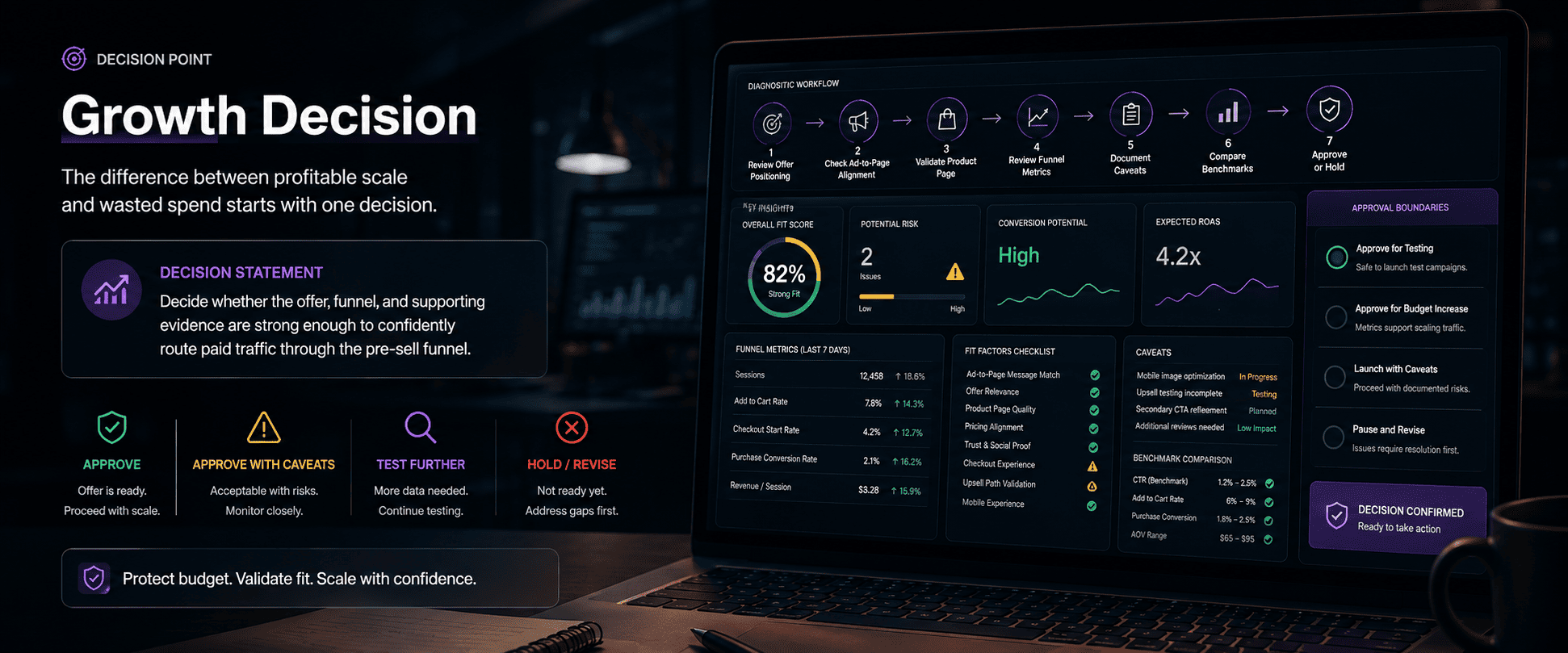
7. Define Approval Boundaries
Before spend increases, teams should agree on approval rules.
- Approved for testing
- Approved for budget increase
- Launch with caveats
- Pause and revise
This avoids unclear ownership.
Diagnostic Workflow for Teams
- Review offer positioning
- Check ad-to-page alignment
- Validate product page
- Review funnel metrics
- Document caveats
- Compare benchmarks
- Approve or hold
Common Offer Fit Problems
- Weak value proposition
- Audience mismatch
- Price resistance
- Poor trust signals
- Creative mismatch
- Weak CTA visibility
- Checkout friction
- Low perceived urgency
Final Takeaway
A paid traffic offer fit diagnosis helps ecommerce teams protect spend before scaling campaigns.
It validates whether the offer, page experience, and traffic intent align strongly enough to convert efficiently.
When offer fit is reviewed carefully with evidence and approval boundaries, paid traffic decisions become faster, safer, and more profitable.