Story-Led Email Campaign Readiness Checklist for Lifecycle Revenue and Conversion Performance
Story-led email campaigns perform best when the message feels relevant, timely, and aligned with what the subscriber already wants. A campaign may look visually polished and technically complete, but if the audience fit, offer timing, narrative structure, or conversion tracking are unclear, the email can lose attention before it creates revenue.
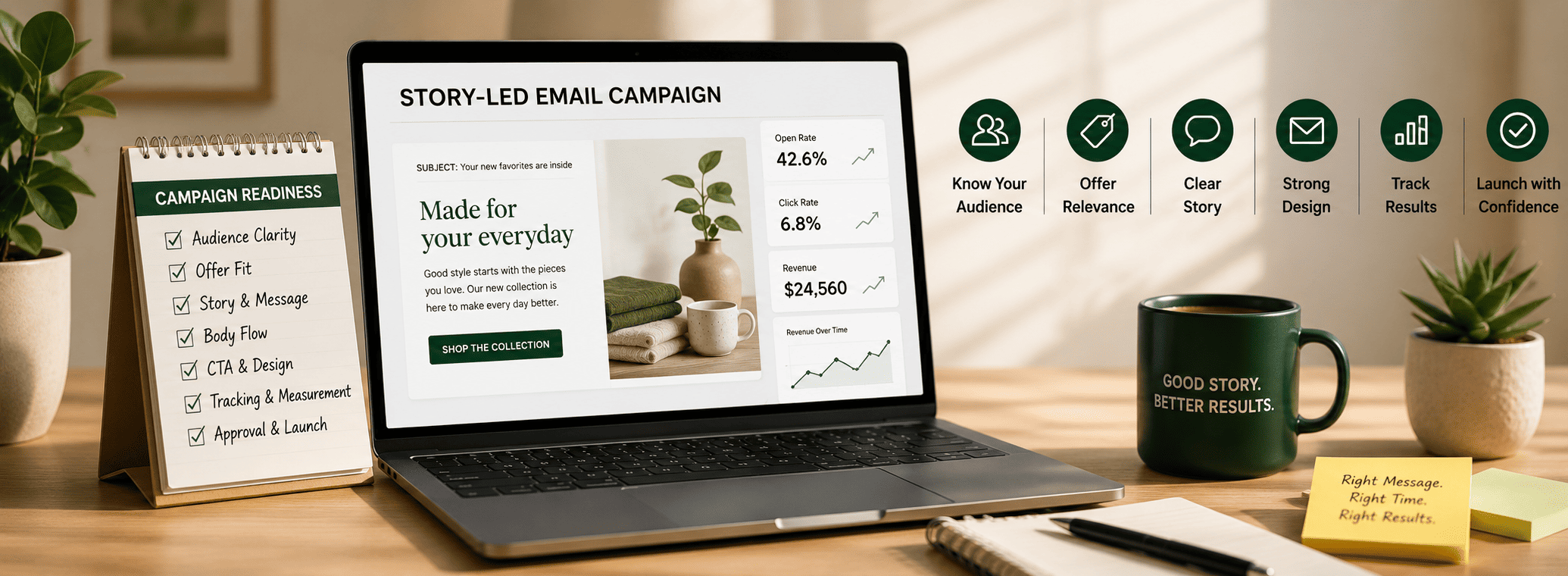
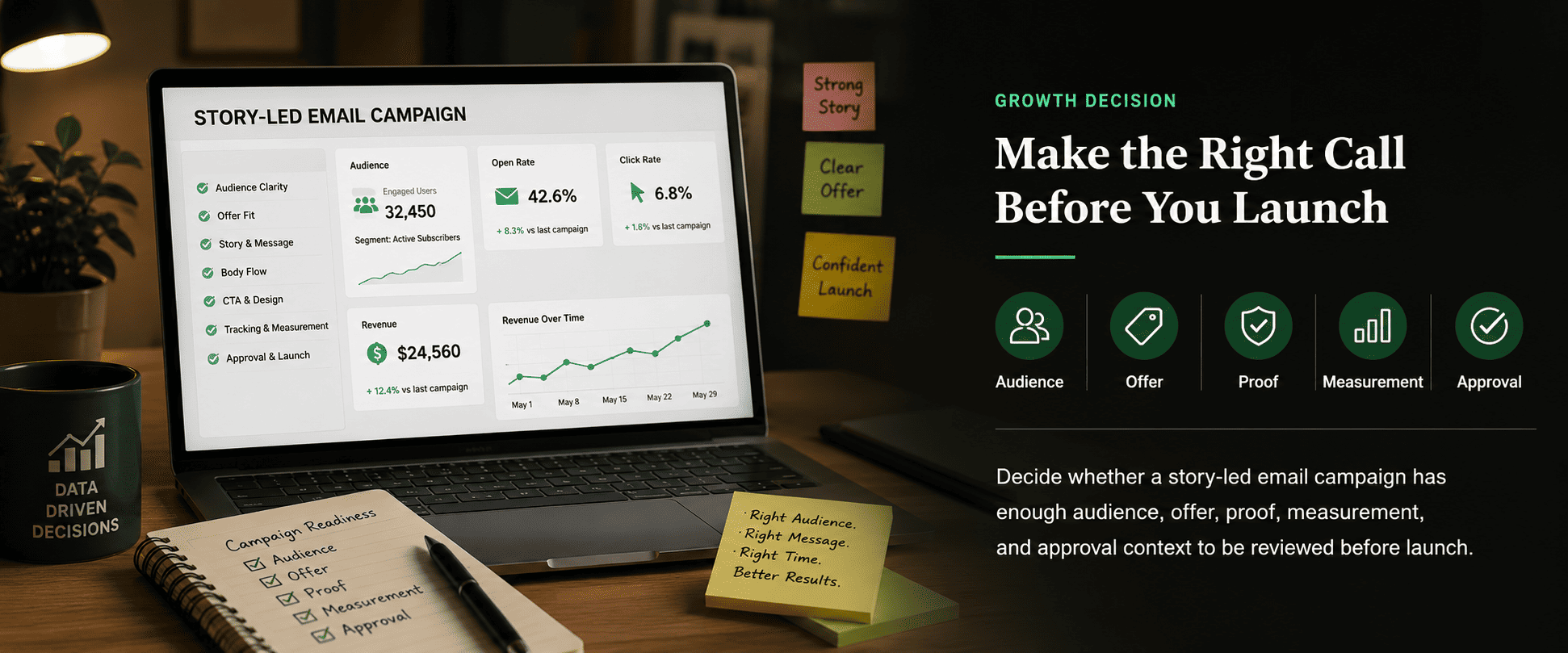
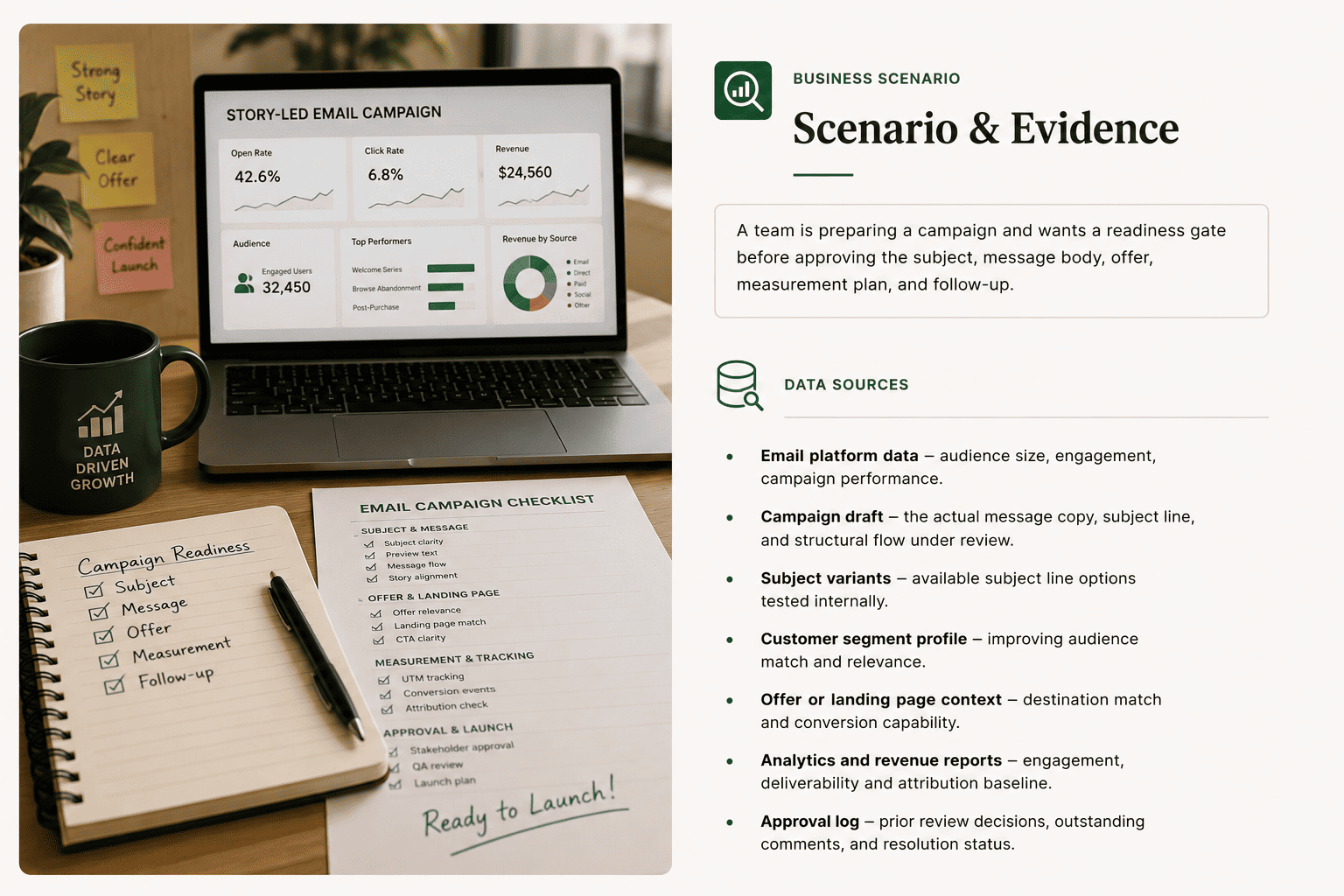
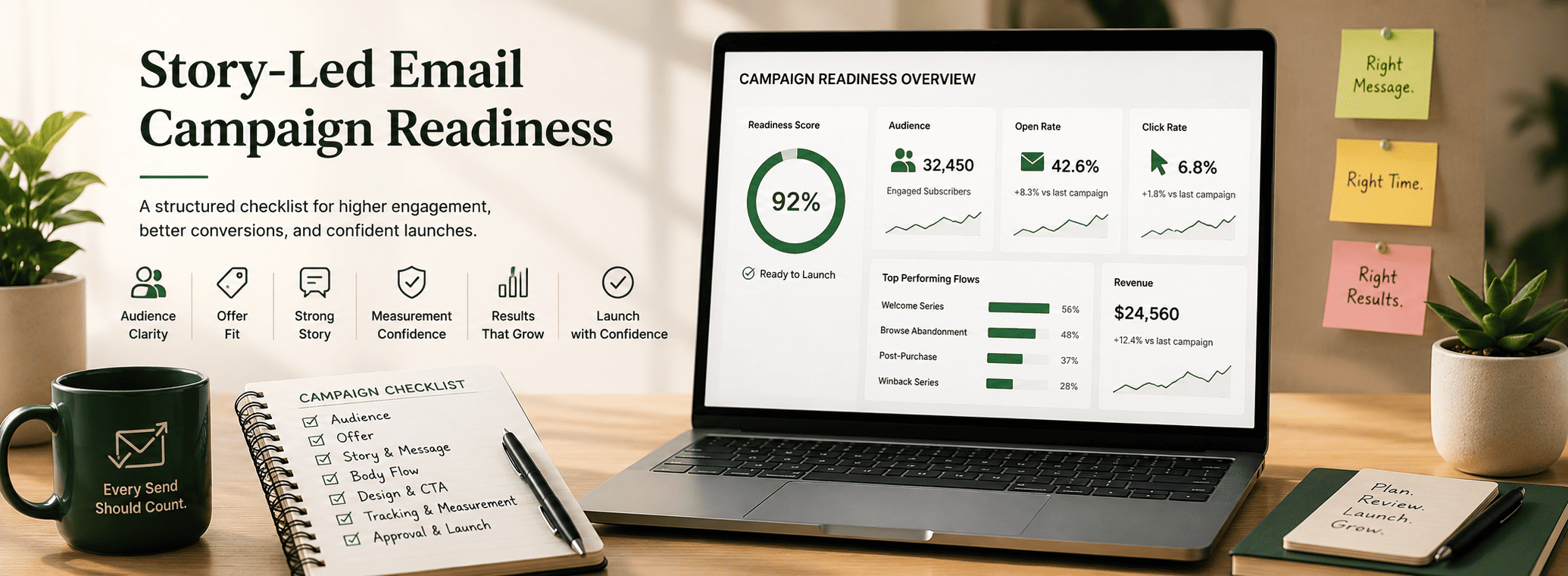
A story-led email campaign readiness checklist helps lifecycle marketers review whether the campaign is truly prepared before launch. Instead of checking only whether the email is scheduled and approved, the checklist verifies audience clarity, narrative quality, offer fit, body flow, measurement confidence, and final launch readiness.
For lifecycle email teams, the goal is not only sending more campaigns. The goal is sending campaigns that feel intentional, connect with the subscriber naturally, and convert with measurable confidence.
Why Story-Led Email Campaigns Need a Readiness Checklist
Subscribers receive constant messages from brands every day. Most emails compete for limited attention. A story-led email performs better because it builds interest before asking for action.
That process requires structure. The message must feel relevant, easy to follow, and valuable enough for the reader to continue.
A readiness checklist creates consistency before launch and helps the team answer important questions:
- Does the subscriber understand why this email matters?
- Does the campaign connect emotionally or practically?
- Is the offer aligned with the audience receiving it?
- Is the message clear from subject line through CTA?
- Can performance be measured accurately after launch?
- Is approval complete and risk understood?
1. Audience Clarity Before Writing
Every strong story-led email begins with audience clarity.
Before reviewing copy, confirm:
- Which segment receives the campaign
- Why this audience should care now
- What customer stage they are in
- Whether they are new, engaged, or repeat buyers
- What recent behavior triggered the send
- What pain point or desire the email addresses
Without clear audience targeting, even strong creative underperforms.
Examples
- First-time subscribers need brand trust and introduction
- Returning customers may respond better to product context
- VIP segments may need exclusivity and urgency
- Inactive subscribers may need a simpler re-entry message
2. Offer Fit and Relevance
Once the audience is clear, validate whether the offer belongs in the story.
Review:
- Main product or promotion
- Pricing relevance
- Offer urgency
- Availability window
- Landing page alignment
- Inventory confidence
- Expected conversion behavior
A story can create interest, but conversion happens only when the offer feels useful and timely.
3. Subject Line and Entry Hook
The opening determines whether the subscriber continues reading.
Review:
- Subject line clarity
- Preview text relevance
- Open curiosity without confusion
- Tone match with brand voice
- Promise alignment with email body
Good story-led campaigns feel natural immediately.
The first sentence should help the subscriber understand why the email matters now.
4. Body Flow and Narrative Structure
Story-led campaigns work because the message builds logically.
Review the flow:
- Opening context
- Main customer problem
- Why the issue matters
- Brand or product solution
- Proof or supporting detail
- Clear next step
A useful review question:
“Would the subscriber naturally keep reading to the CTA?”
Watch for:
- Long copy without structure
- Multiple unrelated ideas
- Weak transitions
- Too many offers
- CTA appearing too early
- CTA appearing too late
5. Visual and CTA Alignment
Visual hierarchy should support the story.
- Headline supports narrative
- Hero image matches offer
- Product blocks feel relevant
- CTA stands out clearly
- Design remains readable on mobile
- Spacing feels clean
The CTA should feel like the natural next step.
6. Measurement Confidence Before Launch
Story-led campaigns also need measurement readiness.
Review:
- UTM parameters
- Campaign naming
- Link tracking
- Revenue attribution
- Goal tracking
- Conversion reporting
- Dashboard visibility
If measurement breaks, performance becomes hard to trust.
7. Approval and Final Launch Review
Before scheduling:
- Copy approved
- Links tested
- Images verified
- Segment confirmed
- Offer active
- Tracking verified
- Stakeholder approval complete
- Fallback plan documented
Example: Ready to Launch
Segment is correct.
Story explains customer pain clearly.
Offer matches audience.
CTA is clear.
Tracking verified.
Decision: Approve launch.
Example: Needs Revision
Creative looks strong, but the offer does not align with subscriber intent.
Tracking exists, but the CTA feels disconnected.
Decision: Revise before launch.
Final Checklist Summary
- Audience clarity
- Offer fit
- Subject line
- Story structure
- Visual hierarchy
- CTA flow
- Tracking readiness
- Approval complete
A story-led email campaign readiness checklist helps lifecycle marketers ship campaigns with more confidence. It turns strategy into a repeatable launch review, improves message quality, protects conversion measurement, and helps every send feel intentional before the email reaches subscribers.