Which Funnel Metric Should Growth Teams Fix First?
Growth teams rarely have a shortage of metrics. Traffic dashboards are full, analytics tools surface dozens of warnings, and funnel reports constantly highlight multiple opportunities at once. The challenge is rarely “finding a number.” The real challenge is deciding which funnel metric deserves attention first.
A conversion funnel usually contains several visible pressure points at the same time. Traffic may be declining while checkout abandonment increases. Lead quality may weaken while average order value improves. Offer engagement may rise while downstream revenue quality falls.
Because every metric can look urgent, teams often spread effort too widely. That slows experimentation and reduces clarity.
A strong funnel review creates prioritization. Instead of reacting to every movement, the team identifies which metric creates the highest leverage for conversion growth right now.
Why Funnel Metric Prioritization Matters
Every stage in a funnel affects downstream performance.
If top-of-funnel traffic is weak, fewer visitors enter the journey. If stage conversion is poor, qualified visitors leave before reaching the offer. If lead quality is low, acquisition appears healthy but revenue suffers later.
Fixing the wrong metric creates wasted work.
For example:
- Increasing traffic will not help if checkout completion is broken.
- Improving landing page copy may not matter if low-intent leads dominate.
- Running new acquisition campaigns may hurt efficiency when offer conversion is already unstable.
Growth teams need a repeatable framework that determines which metric has the strongest business impact before work begins.
Metric One: Traffic Volume
Traffic volume measures how many users enter the funnel.
This becomes the priority when:
- Conversion rate remains stable
- Revenue per visitor is healthy
- Qualified acquisition channels are shrinking
- Search or paid campaigns are underperforming
Example:
A landing page converts well at 7%, but organic traffic drops 25% month over month. The team should focus traffic recovery first because funnel efficiency remains healthy.
Useful review questions:
- Are qualified sessions declining?
- Did search visibility change?
- Did campaign reach drop?
- Is traffic loss isolated to one source?
Metric Two: Stage Conversion
Stage conversion measures movement between funnel steps.
This often becomes highest priority because even small improvements compound downstream.
Examples:
- Landing page to signup
- Product page to add-to-cart
- Checkout start to payment completion
Prioritize this when:
- Traffic is stable
- A clear drop-off appears between stages
- Users abandon at a repeatable point
- Recent changes affected conversion behavior
Example:
Traffic remains flat but checkout completion drops from 58% to 41% after a shipping policy update. This becomes the immediate priority.
Metric Three: Lead Quality
Lead quality determines whether incoming users are likely buyers.
This matters when top-line conversion looks strong but business outcomes weaken later.
Common signs:
- High signup volume but poor activation
- More leads with lower purchase intent
- High CPL efficiency but weak close rate
- Campaign engagement rising while customer quality drops
Example:
Paid social generates many leads, but CRM records show weak downstream conversion compared with email referrals. Lead quality becomes the real bottleneck.
Metric Four: Offer Value
Offer value measures how compelling the promise feels to the user.
Traffic may arrive and stages may technically work, but users still avoid committing.
Watch for:
- High bounce after offer exposure
- Low CTA interaction
- Weak engagement on pricing or benefits
- Frequent objections from sales or support
Example:
Traffic is strong and checkout works, but conversion stalls because pricing feels unclear compared with competitors.
In that case the offer itself deserves attention before adding more traffic.
Metric Five: Revenue Quality
Revenue quality checks whether conversion translates into profitable business.
This matters when:
- AOV declines
- Refunds rise
- Retention weakens
- Low-margin purchases dominate
Example:
Checkout conversion improves, but customers purchase lower-value products and churn quickly. Funnel metrics look positive, yet revenue quality declines.
Growth teams should prioritize the revenue layer first before scaling acquisition.
How Growth Teams Decide What Comes First
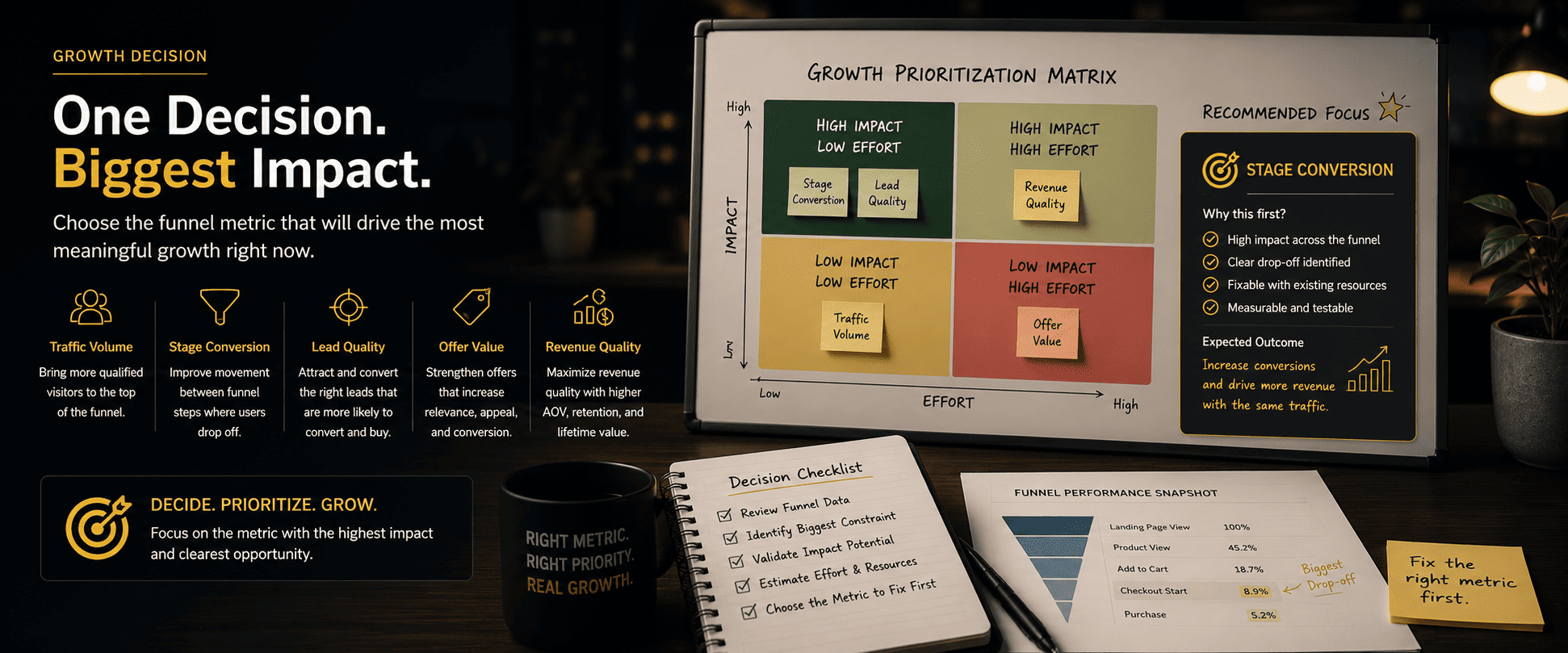
Use a simple prioritization sequence:
- Check whether traffic volume is healthy.
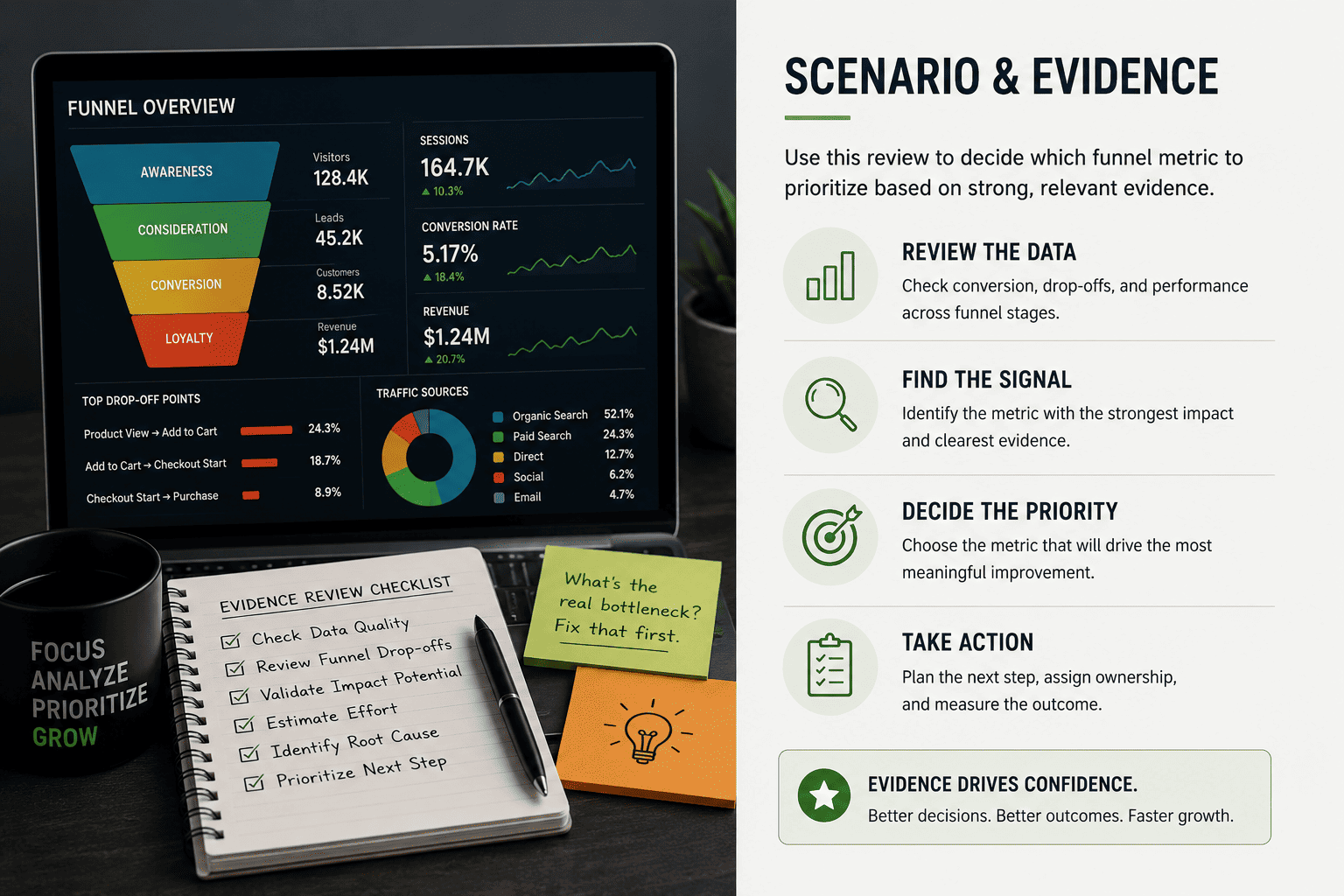
- Review major drop-off points.
- Validate lead quality.
- Evaluate offer performance.
- Confirm revenue quality.
Then ask:
- Which metric blocks the most downstream value?
- Which issue affects the highest number of users?
- Which problem has strongest evidence?
- Which fix can be measured clearly?
- Which decision has owner approval?
That creates focus and avoids backlog confusion.
Common Prioritization Mistakes
- Choosing the biggest number instead of the highest leverage issue
- Ignoring downstream revenue quality
- Running experiments before validating analytics
- Fixing symptoms instead of root bottlenecks
- Prioritizing opinion over measurable funnel evidence
A growth team wins by connecting metrics to impact.
Final Decision Framework
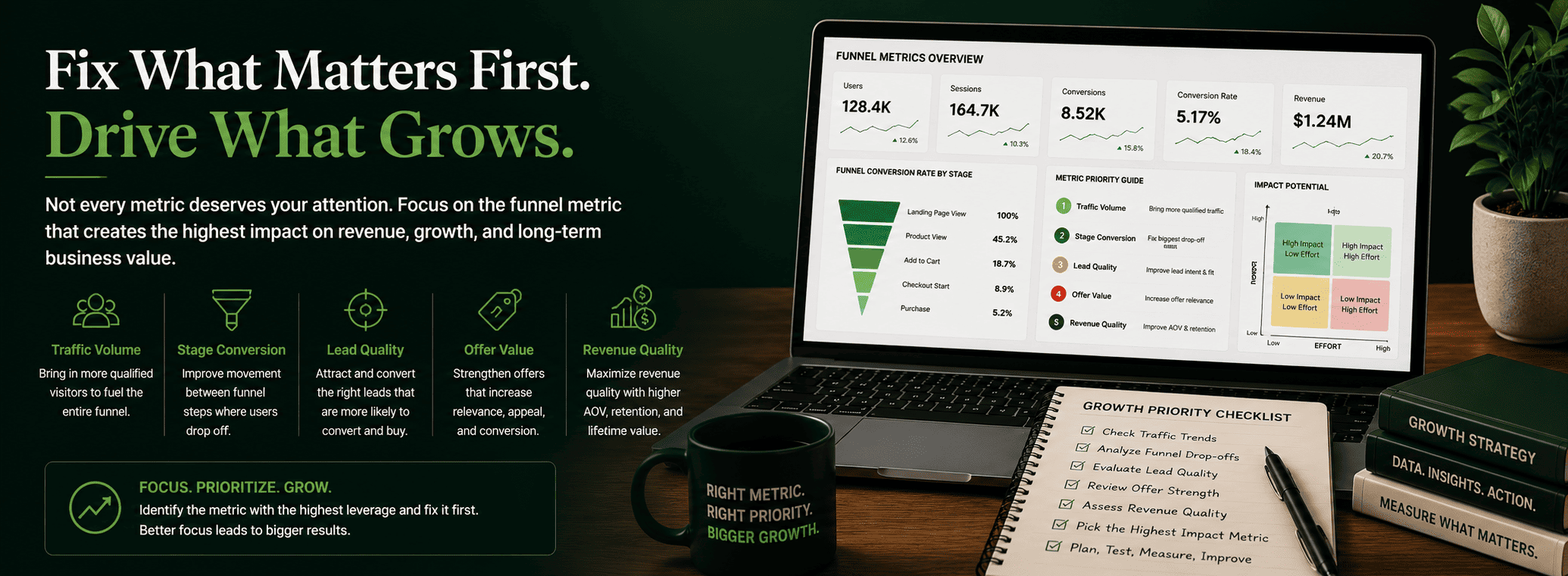
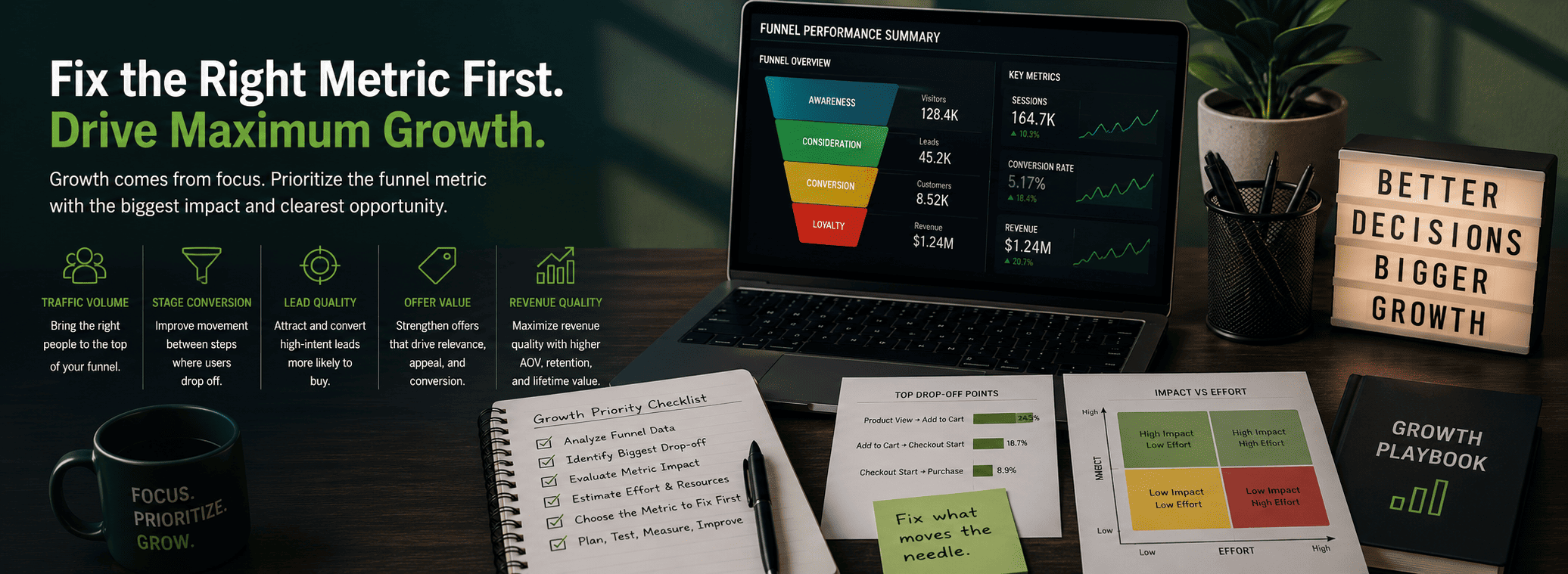
The best funnel metric to fix first is the one creating the strongest measurable constraint on revenue movement right now.
Sometimes that means traffic.
Sometimes it means stage conversion.
Sometimes it means lead quality or offer strength.
The goal is not improving every metric at once.
The goal is identifying the metric with the highest leverage, strongest supporting evidence, and clearest ownership so the next growth action moves the funnel forward with confidence.