Shopify Storefront Launch Decision Memo
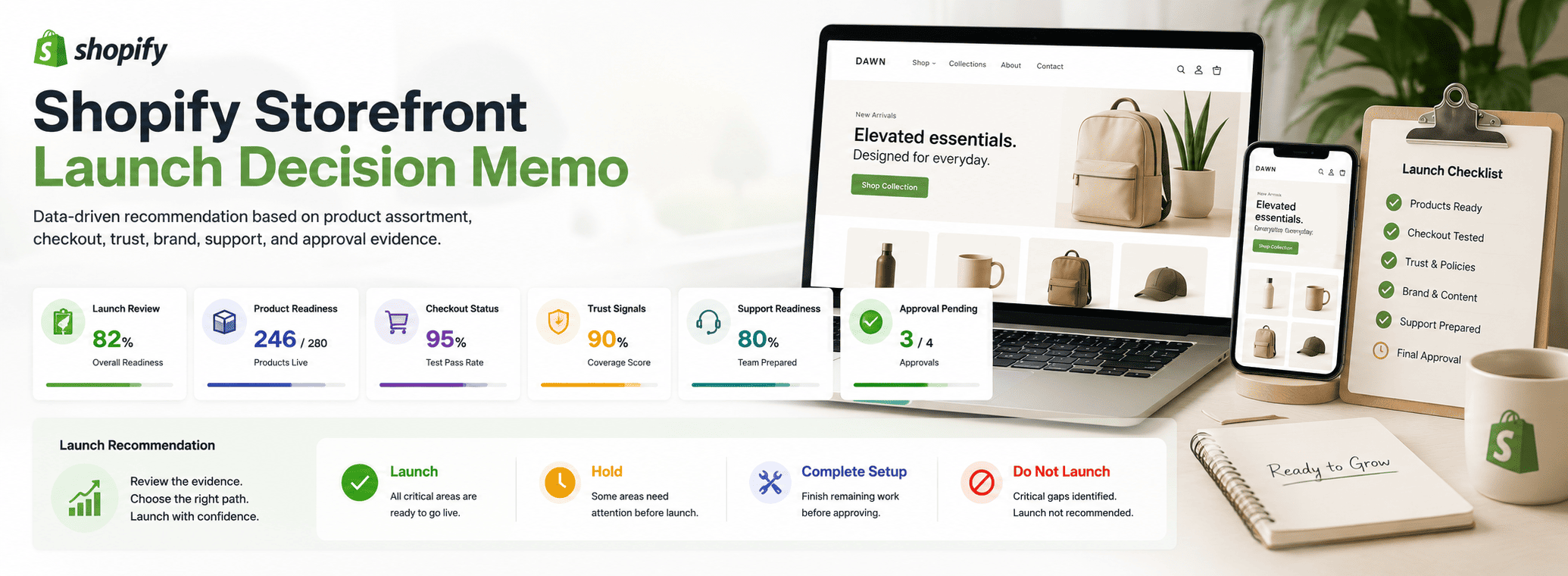
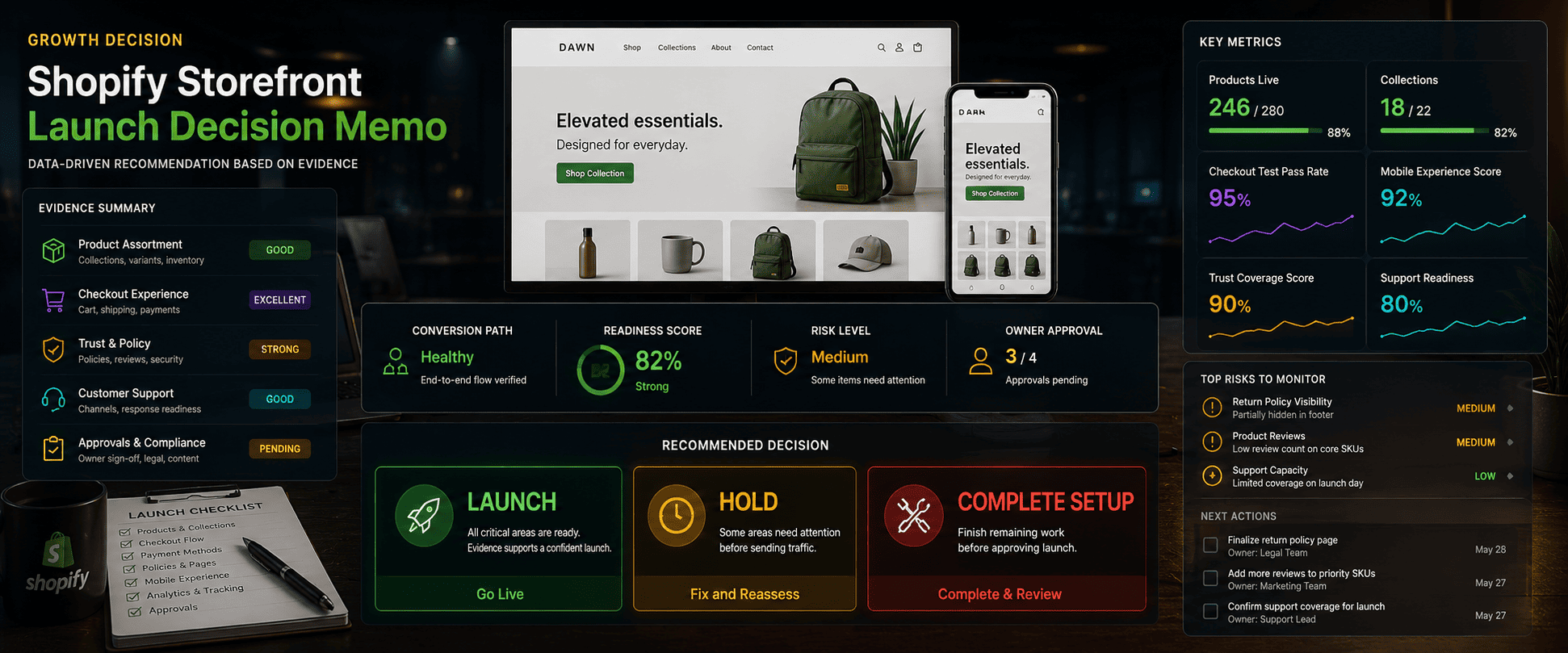
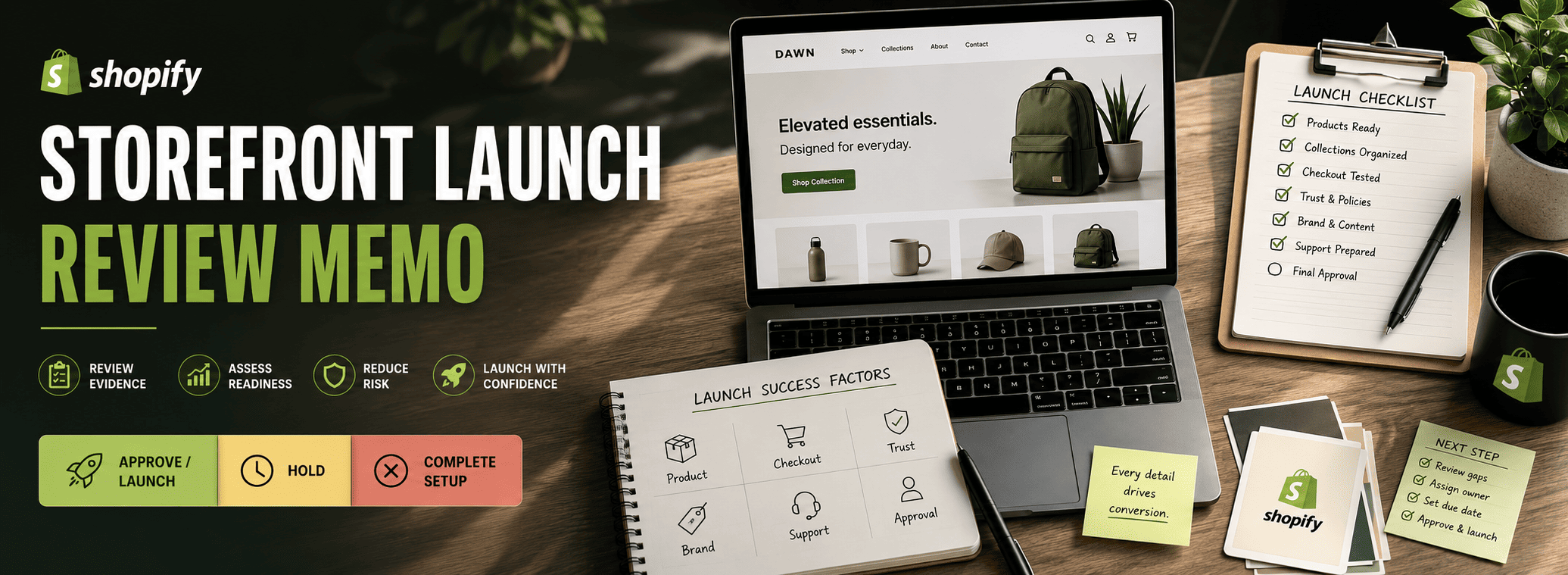
Launching a Shopify storefront is a business decision, not only a publishing step. A store can look complete while still carrying conversion blockers that weaken traffic efficiency, reduce trust, create checkout abandonment, or leave support teams unprepared once visitors arrive. The Shopify Storefront Launch Decision Memo turns storefront setup evidence into one clear recommendation: launch, hold, receive limited traffic, or complete setup work before approval.
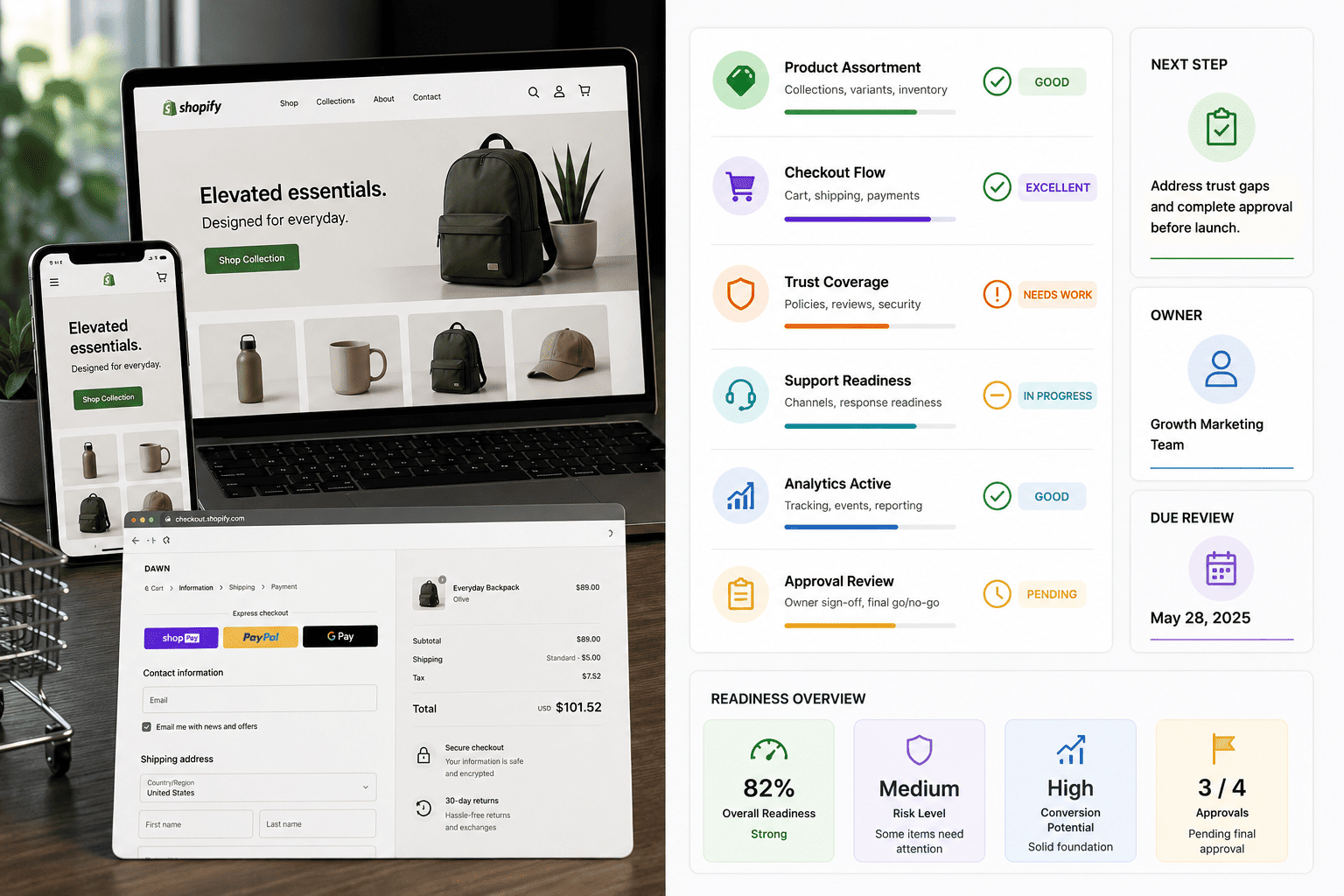
The memo helps a growth lead summarize readiness without exposing internal-only implementation details. Product assortment, checkout, payment, shipping, trust coverage, brand presentation, support context, analytics setup, and approval ownership all matter. A launch decision becomes more reliable when every major conversion step is checked against visible evidence rather than assumptions.
The goal is simple: state what is verified, what is missing, which caveat could reverse the decision, and who owns the next action.
What This Memo Decides
The memo should answer whether the Shopify storefront is ready for launch or traffic. It should not only say that the store is “almost ready.” It should identify the launch constraint and translate that evidence into an actionable recommendation.
- Launch: The storefront is ready, and traffic can begin with normal monitoring.
- Launch with limits: The store can receive controlled traffic while specific caveats are monitored.
- Hold: A critical issue blocks launch, traffic, or merchandising changes.
- Complete setup: Product, checkout, trust, support, or analytics work must be finished before approval.
- Send back for evidence: The reviewer cannot validate readiness from the current inputs.
Review Product Assortment Readiness
Product assortment is the first launch constraint to check. A storefront may be live, but if priority products are missing, variants are confusing, collections are incomplete, or inventory is unclear, buyers may not be able to evaluate the offer properly.
- Priority products are published and assigned to the right collections.
- Product titles, descriptions, pricing, variants, and inventory states are clear.
- Images load correctly across desktop and mobile.
- Featured products match the intended launch campaign or traffic plan.
- Collection navigation helps buyers compare and continue shopping.
If the launch depends on one hero collection, that collection should be clean before traffic begins. A broken or incomplete assortment can make a strong campaign look weak because the buyer path does not support the offer.
Validate Checkout, Payment, And Shipping
Checkout readiness is one of the highest-risk areas in a Shopify launch. The reviewer should test the path from product page to cart, checkout, payment confirmation, and order email. A store should not receive scaled traffic if checkout behavior is uncertain.
- Add-to-cart works for priority products and variants.
- Cart totals, discounts, taxes, and shipping calculations display correctly.
- Payment methods process successfully.
- Mobile checkout works without layout or input issues.
- Order confirmation page and email trigger correctly.
- Order data can be reviewed after test purchase completion.
If checkout, payment, or shipping evidence is missing, the memo should hold launch or approve only a limited soft launch after the responsible owner accepts the caveat.
Check Trust Coverage And Brand Presentation
Buyers often abandon when the store does not answer trust questions. The memo should review whether the storefront gives enough confidence before asking for purchase. Trust coverage includes policies, reviews, proof, contact access, secure checkout signals, and consistent brand presentation.
- Shipping, returns, refund, privacy, and contact pages are visible.
- Reviews or proof elements appear where buyers need reassurance.
- Brand colors, typography, logo usage, and product imagery feel consistent.
- Homepage and product pages clearly explain what the store sells.
- CTAs, promotional messaging, and page hierarchy support the buyer path.
The goal is not design perfection. The goal is conversion clarity. If the store creates curiosity but does not resolve proof, policy, or next-step concerns, more traffic may only scale hesitation.
Review Analytics And Traffic Evidence
A launch memo should separate observed inputs from assumptions. Google Analytics, Search Console, product-page analytics, order data, review platform signals, and support inbox evidence can all help validate whether the store is ready for traffic and measurement.
- Google Analytics is installed and tracking key page and conversion events.
- Product-page analytics show whether buyers engage with important details.
- Search Console is ready if organic visibility will be monitored.
- Order data can distinguish sales activity from payment or cash-timing quality.
- Review and support channels are available for buyer feedback.
Revenue-informed analysis should distinguish sales activity from durable customer quality. If payment signal, order quality, or cash timing is missing, the memo should avoid turning early source movement into a payback conclusion.
Confirm Support And Operating Readiness
Some launch problems are not page problems. They are operating problems: no follow-up owner, no support coverage, weak delivery path, unclear promotion, or no process for handling launch-day issues. The memo should identify whether the post-purchase and support path is ready.
- Support inbox is monitored by a named owner.
- FAQ content answers common buyer questions.
- Escalation paths exist for shipping, payment, product, or refund issues.
- The team knows which promotions and launch offers are active.
- Customer-result feedback can be reviewed after launch.
If the operating owner or follow-up path is unclear, the recommendation should be a process fix before a creative, traffic, or merchandising change.
Make Evidence And Caveats Visible
The memo should show what evidence is present, what is missing, and which caveat could reverse the launch decision. This prevents the recommendation from looking safer than the evidence allows.
- Verified: Inputs the reviewer has checked and accepted.
- Missing: Evidence needed before launch or traffic approval.
- Caveated: Risks that do not block action but must stay visible.
- Owner: The person responsible for the next step.
- Held: Work that should not move forward until approval is accepted.
Final Decision Rule
A Shopify Storefront Launch Decision Memo should end with one clear recommendation. Launch when product assortment is usable, checkout completes reliably, trust coverage is visible, support is ready, analytics can measure the path, and ownership is clear.
Hold or limit traffic when a missing input could change the decision. The most useful memo does not debate whether the store “looks ready.” It names the constraint, assigns the next action, keeps the caveat visible, and gives the reviewer a launch decision they can approve with confidence.