Define What The YouTube Channel Growth Review Decides
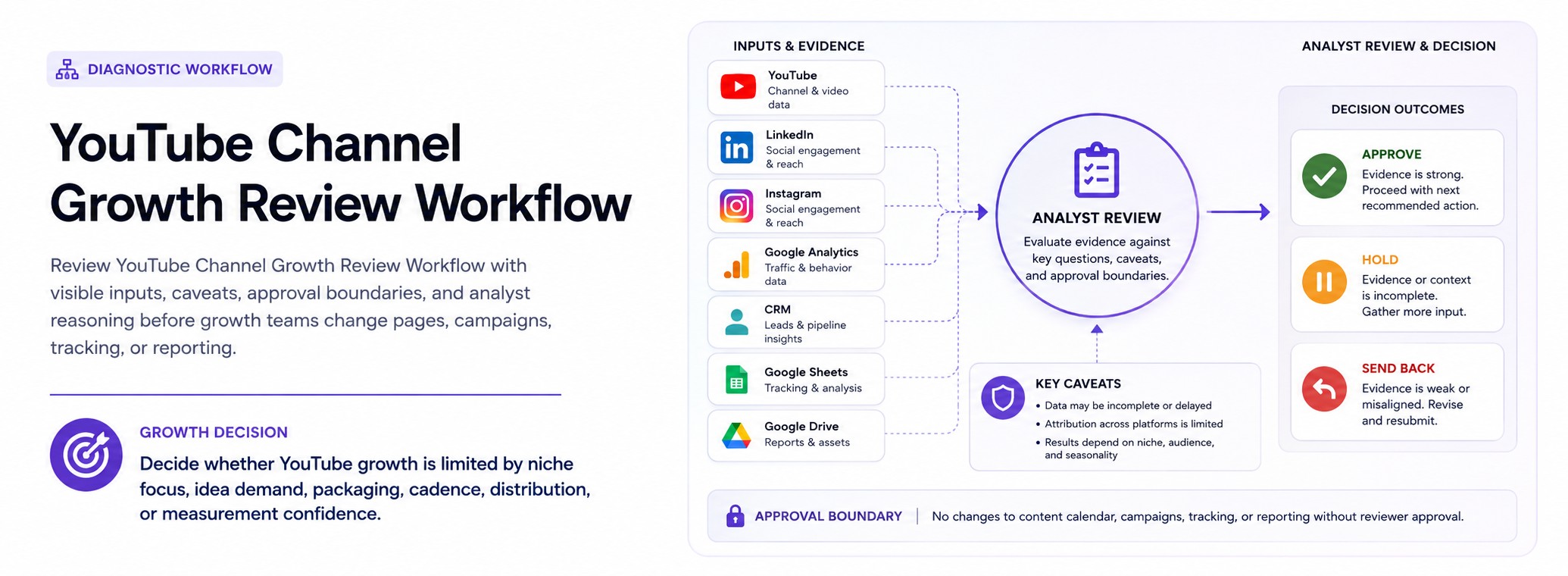
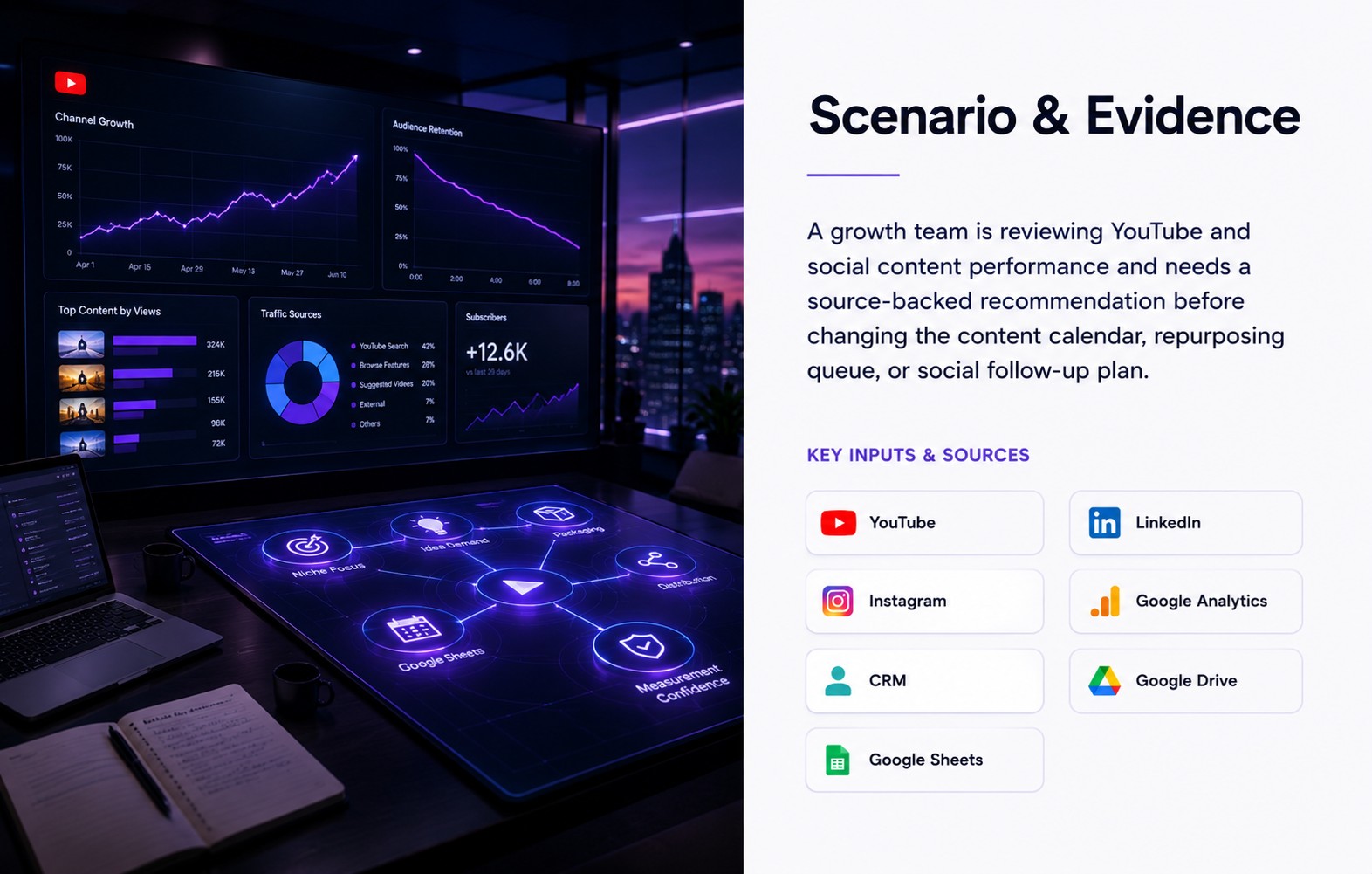
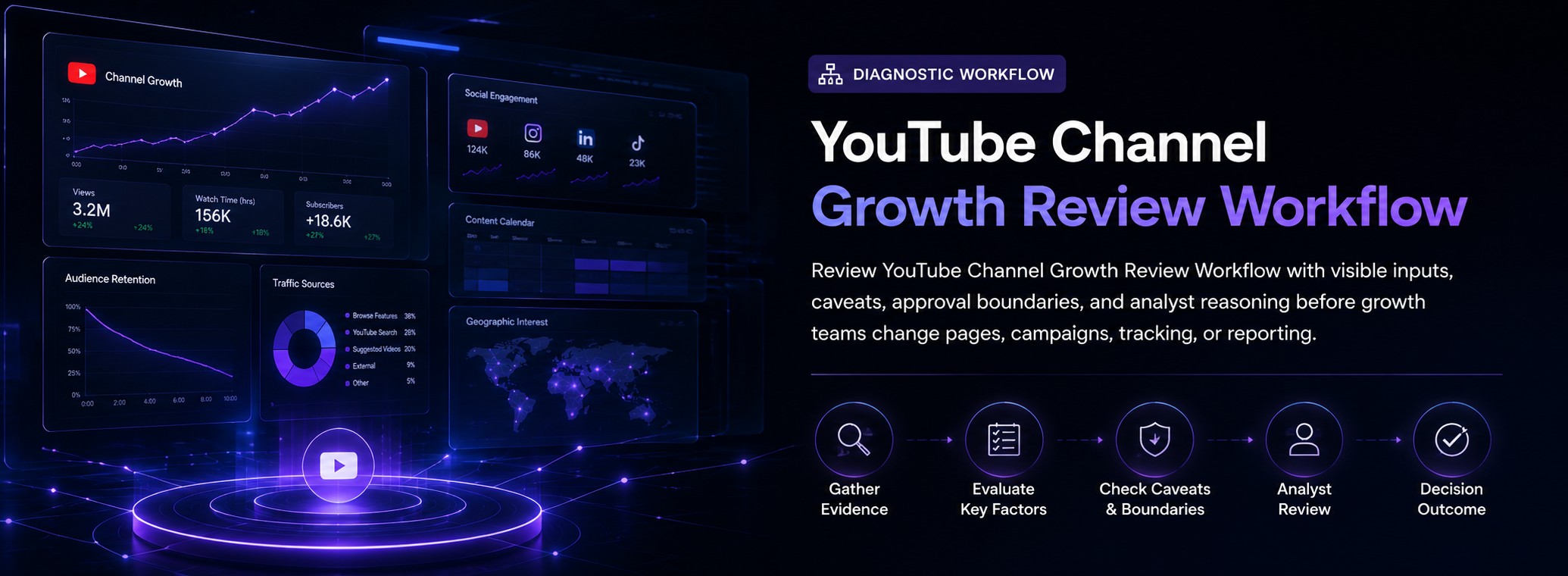
A YouTube channel growth review evaluates whether channel performance is limited by niche focus, idea demand, packaging, cadence, distribution, or measurement confidence before the team changes the content calendar, production queue, or repurposing plan. The review separates visible performance signals from assumptions about why growth is slow so the team does not scale the wrong lever.
The output is a source-backed recommendation the reviewer can approve, hold, or send back. The review should not become a generic performance report. It should identify which constraint matters most and produce a next action with clear evidence, caveat, and owner.
- Define the growth decision before reviewing channel performance.
- Identify which constraint limits growth before changing any lever.
- Separate channel activity from channel growth evidence.
- Assign ownership for the next approved action.
- Document the hold condition if evidence is incomplete.
A decision to change the content calendar or production cadence should not be driven by a single metric. It should be driven by evidence that the identified constraint explains the growth gap and the proposed change addresses it directly.
Evaluate Channel Focus And Audience Fit
Weak YouTube growth is frequently a focus problem rather than a volume problem. A channel that covers too many unrelated topics confuses both the audience and the recommendation system. The review evaluates whether the channel has a recognizable content lane the audience can understand and the algorithm can classify.
If the next video pulls the channel in another direction or serves an audience different from the one being built, increasing cadence only amplifies the confusion. The reviewer should hold publishing changes and recommend a content-lane review first.
- Confirm the channel has a clear, recognizable content lane.
- Check whether the next video reinforces the intended audience.
- Review whether topic diversity supports or dilutes channel identity.
- Evaluate whether the recommendation system can classify the content.
- Document focus gaps before approving production increases.
A focused channel gives the audience a reason to return and the algorithm a consistent signal. Scaling an unfocused channel amplifies noise rather than growth.
Validate Content Idea Demand Before Production
A video should not move into production without evidence that the audience wants it. The review checks whether the next content idea has visible demand through search behavior, competitive performance, or audience signals. An idea that feels useful to the creator may have no measurable audience demand.
If demand is weak or unproven, the right next step is a revised topic, a narrower audience job, or a comparison against stronger-performing content before committing production resources.
- Check search volume or audience signals for the topic.
- Compare against existing high-performing content on the same topic.
- Confirm the idea solves a specific audience job.
- Validate demand exists beyond the team's own assumptions.
- Document demand gaps before approving production.
Demand should be confirmed before production begins. An idea without demand consumes resources that could have been applied to a topic with proven audience interest.
Review Packaging Clarity Before Publishing
A useful content idea can underperform when the package does not clearly signal who the video is for, why it matters now, or what the viewer will receive. The title, thumbnail, hook, and topic framing must communicate value before the viewer decides to click or scroll past.
The review evaluates whether the packaging makes the value obvious in the first moment. If the viewer